
Before Memmo my notes were scattered across PDFs. Now a workspace pulls everything into one place — I see exactly what's still left to study.
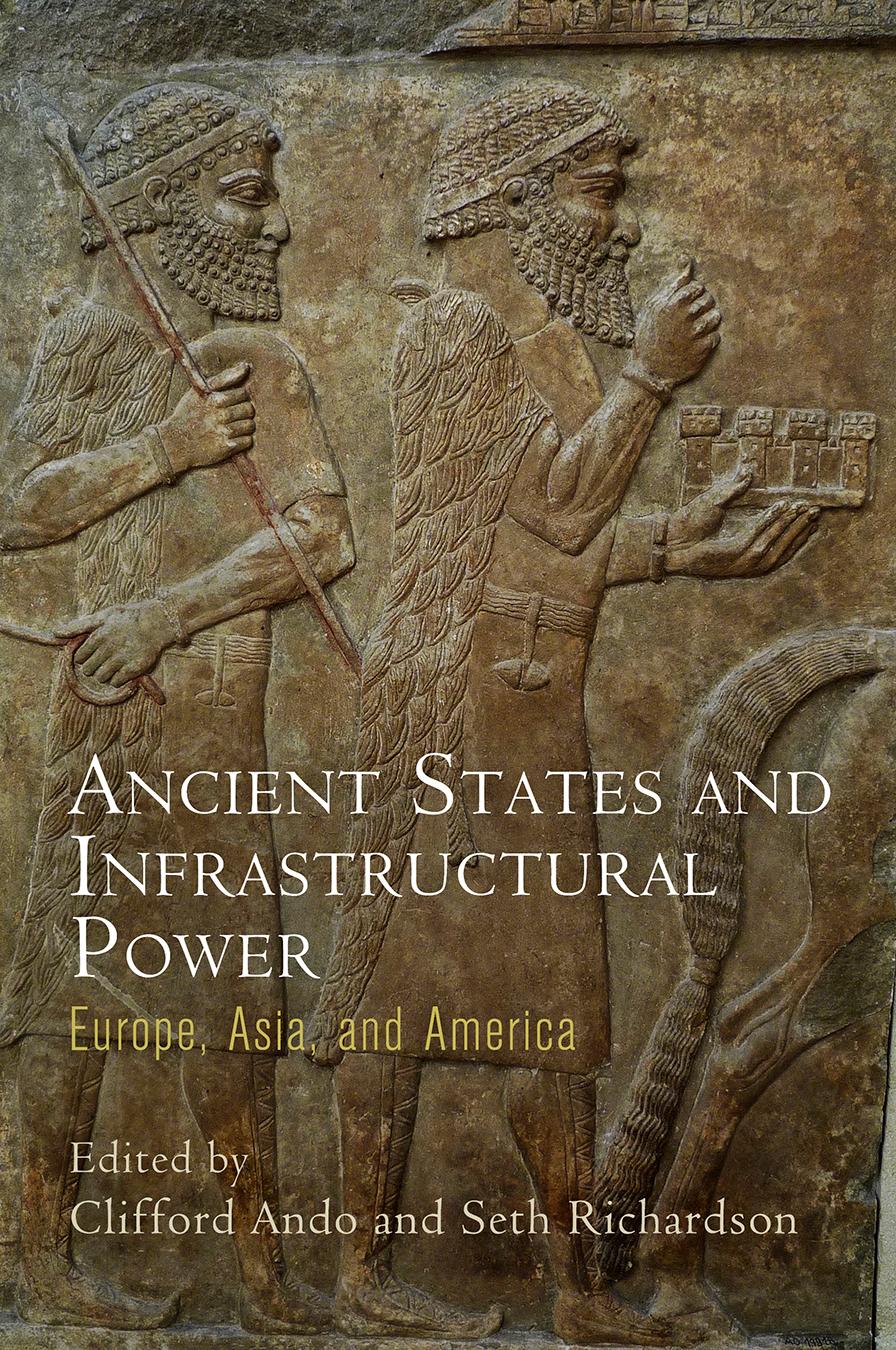
While ancient states are often characterized in terms of the powers that they claimed to possess, the contributors to this book argue that they were in fact fundamentally weak, both in the exercise of force outside of war and in the infrastructural and regulatory powers that such force would, in theory, defend. In Ancient States and Infrastructural Power a distinguished group of scholars examines the ways in which early states built their territorial, legal, and political powers before they had the capabilities to enforce them.
The volume brings Greek and Roman historians together with specialists on early Mesopotamia, late antique Persia, ancient China, Visigothic Iberia, and the Inca empire to compare various models of state power across regional and disciplinary divisions. How did the polis become the body that regulates property rights? Why did Chinese and Persian states maintain aristocracies that sometimes challenged their autocracies? How did Babylon and Rome promote the state as the custodian of moral goods? In worlds without clear borders, how did societies from Rome to Byzantium come to share legal and social identities rooted in concepts of territory? From the Inca empire to Visigothic Iberia, why did tributary practices reinforce territorial ideas about membership?
Contributors address how states first claimed and developed the ability to delineate territory, promote laws, and establish political identity; and they investigate how the powers that states appropriated came to be seen as their natural and normal domain.
Contributors: Clifford Ando, R. Alan Covey, Damián Fernández, Anthony Kaldellis, Emily Mackil, Richard Payne, Seth Richardson, Wang Haicheng, John Weisweiler.
Before Memmo my notes were scattered across PDFs. Now a workspace pulls everything into one place — I see exactly what's still left to study.
Memmo's summaries are gold before exams. I don't have to re-read 800 pages two weeks before — just the important parts.
The AI chat has saved me the night before an exam more than once. I just keep asking until I get it — no waiting on a study group to reply.
The quizzes hit exactly what I need to know. Memmo tracks what I get stuck on — so I only practice what's worth it.
Flashcards with spaced repetition are magic. Memmo knows when I'm about to forget something and brings it back.
The AI podcasts are my favorite. I listen on my way to school and get a recap without sitting at a computer.

Handbok i kvalitativa metoder
281 kr

Hållbar utveckling: en introduktion för ingenjörer och andra problemlösare
334 kr

Brymans Samhällsvetenskapliga metoder
390 kr

Projektledning
491 kr

Den orättvisa hälsan: om socioekonomiska skillnader i hälsa och livslängd
326 kr

Organizational Leadership
429 kr

Vetenskapsteori för nybörjare
196 kr

På väg mot läraryrket
172 kr

Det sociala livet i skolan: Socialpsykologiska perspektiv
253 kr

Betygsättningens didaktik
151 kr

Personality
402 kr

Studying Leadership
404 kr

Managing Innovation
477 kr

Introduktion till samhällsvetenskaplig metod
347 kr

The Psychology of Sex and Gender
698 kr

Evidens och kunskap för socialt arbete
207 kr

Introduction to Leadership
605 kr