
Before Memmo my notes were scattered across PDFs. Now a workspace pulls everything into one place — I see exactly what's still left to study.
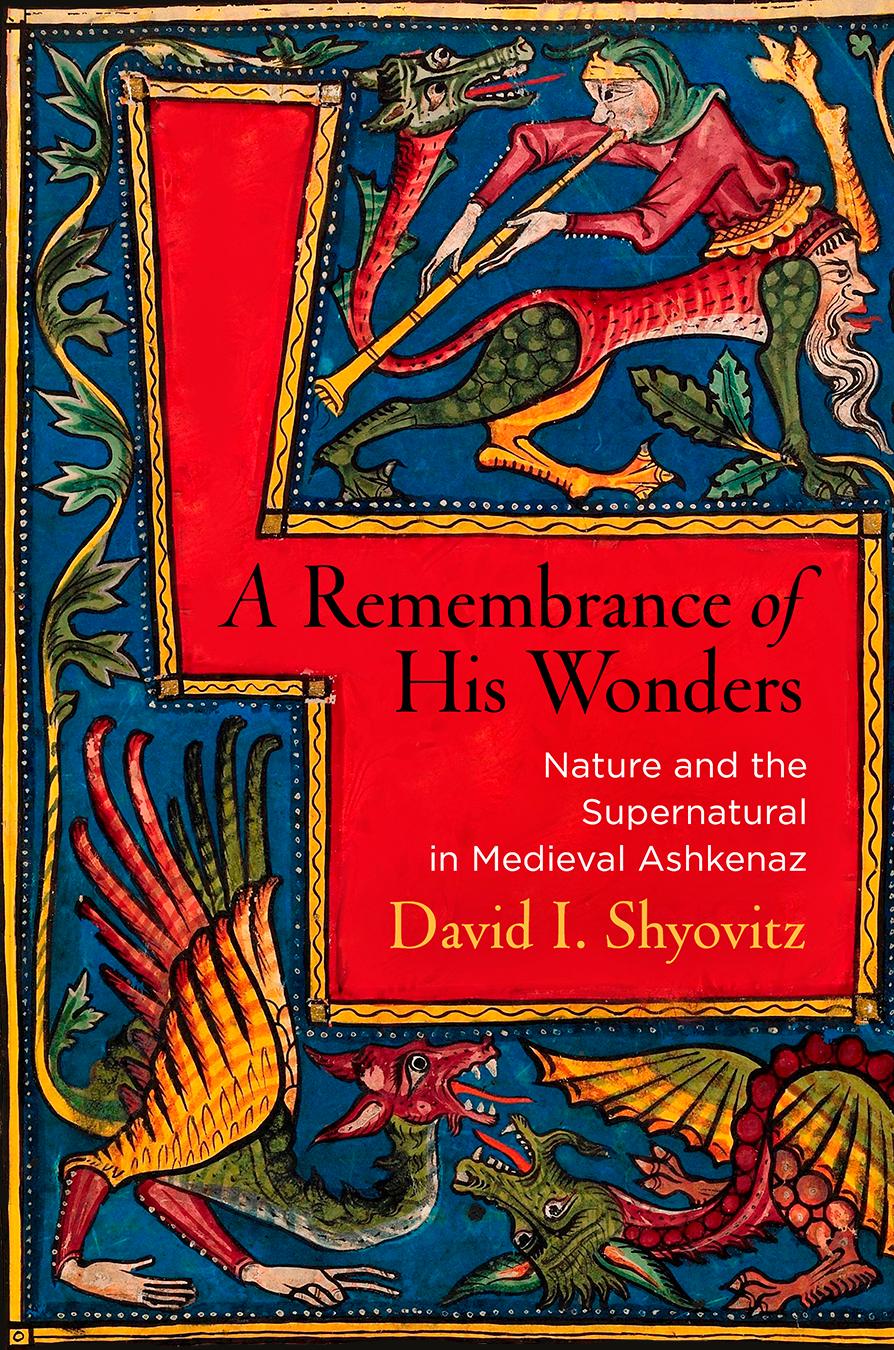
The twelfth and thirteenth centuries witnessed an explosion of Christian interest in the meaning and workings of the natural world—a "discovery of nature" that profoundly reshaped the intellectual currents and spiritual contours of European society—yet to all appearances, the Jews of medieval northern Europe (Ashkenaz) were oblivious to the shifts reshaping their surrounding culture. Scholars have long assumed that rather than exploring or contemplating the natural world, the Jews of medieval Ashkenaz were preoccupied solely with the supernatural and otherworldly: magic and mysticism, demonology and divination, as well as the zombies, werewolves, dragons, flying camels, and other monstrous and wondrous creatures that destabilized any pretense of a consistent and encompassing natural order.
In A Remembrance of His Wonders, David I. Shyovitz disputes this long-standing and far-reaching consensus. Analyzing a wide array of neglected Ashkenazic writings on the natural world in general, and the human body in particular, Shyovitz shows how Jews in Ashkenaz integrated regnant scientific, magical, and mystical currents into a sophisticated exploration of the boundaries between nature and the supernatural. Ashkenazic beliefs and practices that have often been seen as signs of credulity and superstition in fact mirrored—and drew upon—contemporaneous Christian debates over the relationship between God and the natural world. In charting these parallels between Jewish and Christian thought, Shyovitz focuses especially upon the mediating role of polemical texts and encounters that served as mechanisms for the transmission of religious doctrines, scientific facts, and cultural mores. Medieval Jews' preoccupation with the apparently "supernatural" reflected neither ignorance nor intellectual isolation but rather a determined effort to understand nature's inner workings and outer limits and to integrate and interrogate the theologies and ideologies of the broader European Christian society.
Before Memmo my notes were scattered across PDFs. Now a workspace pulls everything into one place — I see exactly what's still left to study.
Memmo's summaries are gold before exams. I don't have to re-read 800 pages two weeks before — just the important parts.
The AI chat has saved me the night before an exam more than once. I just keep asking until I get it — no waiting on a study group to reply.
The quizzes hit exactly what I need to know. Memmo tracks what I get stuck on — so I only practice what's worth it.
Flashcards with spaced repetition are magic. Memmo knows when I'm about to forget something and brings it back.
The AI podcasts are my favorite. I listen on my way to school and get a recap without sitting at a computer.

Handbok i kvalitativa metoder
281 kr

Hållbar utveckling: en introduktion för ingenjörer och andra problemlösare
334 kr

Brymans Samhällsvetenskapliga metoder
390 kr

Projektledning
491 kr

Den orättvisa hälsan: om socioekonomiska skillnader i hälsa och livslängd
326 kr

Vetenskapsteori för nybörjare
196 kr

Organizational Leadership
429 kr

På väg mot läraryrket
172 kr

Det sociala livet i skolan: Socialpsykologiska perspektiv
253 kr

Betygsättningens didaktik
151 kr

Personality
402 kr

Studying Leadership
404 kr

Managing Innovation
477 kr

Introduktion till samhällsvetenskaplig metod
347 kr

The Psychology of Sex and Gender
698 kr

Evidens och kunskap för socialt arbete
207 kr

Introduction to Leadership
605 kr