
Before Memmo my notes were scattered across PDFs. Now a workspace pulls everything into one place — I see exactly what's still left to study.
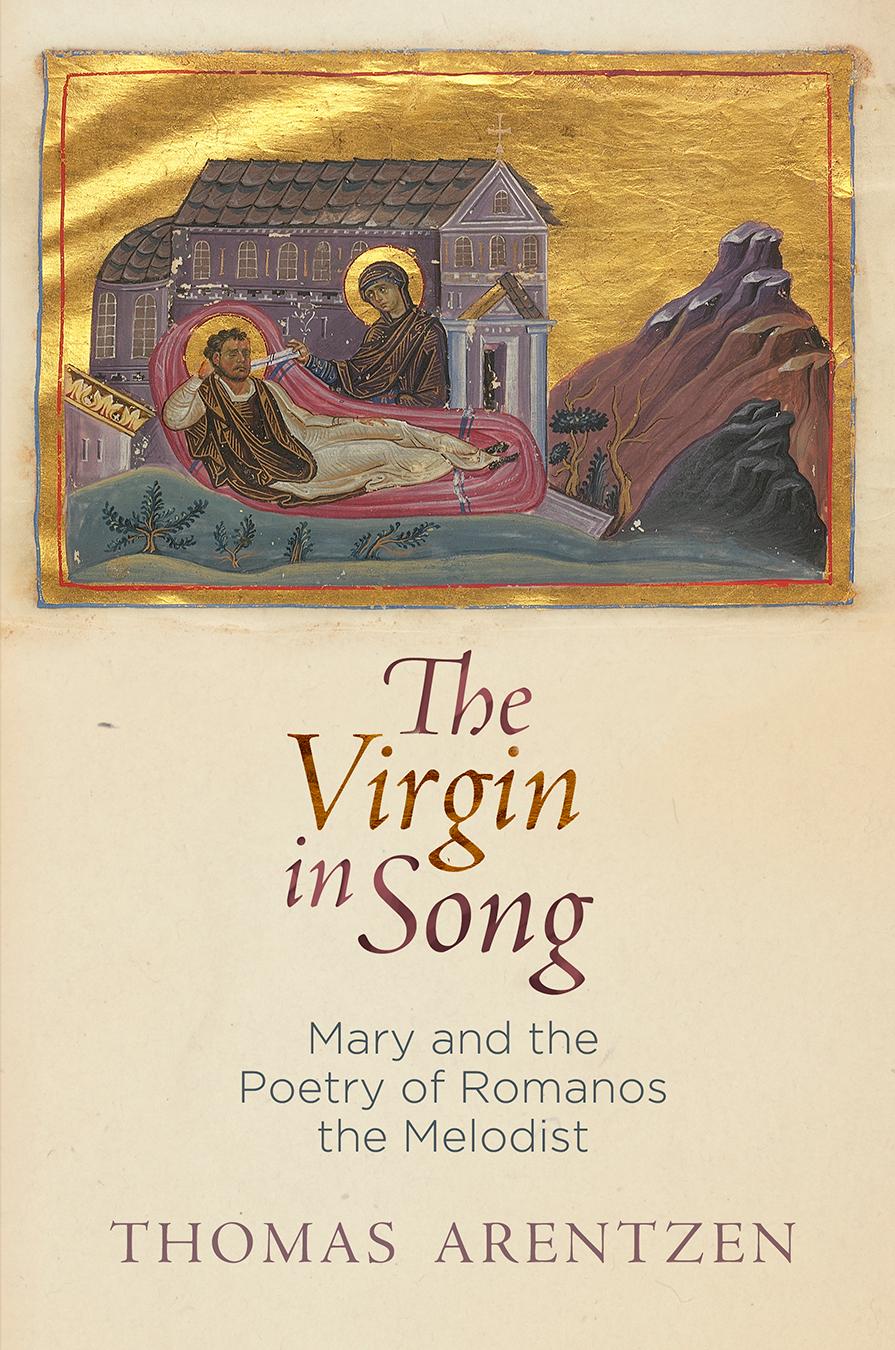
According to legend, the Virgin appeared one Christmas Eve to an artless young man standing in one of Constantinople's most famous Marian shrines. She offered him a scroll of papyrus with the injunction that he swallow it, and following the Virgin's command, he did so. Immediately his voice turned sweet and gentle as he spontaneously intoned his hymn "The Virgin today gives birth." So was born the career of Romanos the Melodist (ca. 485-560), one of the greatest liturgical poets of Byzantium, author of at least sixty long hymns, or kontakia, that were chanted during the night vigils preceding major feasts and festivals.
In The Virgin in Song, Thomas Arentzen explores the characterization of Mary in these kontakia and the ways in which the kontakia echoed the cult of the Virgin. He focuses on three key moments in her story as marked in the liturgical calendar: her encounter with Gabriel at the Annunciation, her child's birth at Christmas, and the death of her son on Good Friday. Consistently, Arentzen contends, Romanos counters expectations by shifting emphasis away from Christ himself to focus on Mary—as the subject of the erotic gaze, as a breastfeeding figure of abundance and fertility, and finally as an authoritatively vocal woman who conveys the secrets of her son and the joys of the resurrection.
Through his hymns, Romanos inspired an affective relationship between Mary and his audience, bringing the human and the holy into dialogue. By plumbing her emotional depths, the poet traces her process of understanding as she apprehends the mysteries that she embodies. By giving her a powerful voice, he grants subjectivity to a maiden who becomes a mediator. Romanos shaped a figure, Arentzen argues, who related intimately to her flock in a formative period of Christian orthodoxy.
Before Memmo my notes were scattered across PDFs. Now a workspace pulls everything into one place — I see exactly what's still left to study.
Memmo's summaries are gold before exams. I don't have to re-read 800 pages two weeks before — just the important parts.
The AI chat has saved me the night before an exam more than once. I just keep asking until I get it — no waiting on a study group to reply.
The quizzes hit exactly what I need to know. Memmo tracks what I get stuck on — so I only practice what's worth it.
Flashcards with spaced repetition are magic. Memmo knows when I'm about to forget something and brings it back.
The AI podcasts are my favorite. I listen on my way to school and get a recap without sitting at a computer.

Handbok i kvalitativa metoder
281 kr

Hållbar utveckling: en introduktion för ingenjörer och andra problemlösare
334 kr

Brymans Samhällsvetenskapliga metoder
390 kr

Projektledning
491 kr

Den orättvisa hälsan: om socioekonomiska skillnader i hälsa och livslängd
326 kr

Organizational Leadership
429 kr

Vetenskapsteori för nybörjare
196 kr

På väg mot läraryrket
172 kr

Det sociala livet i skolan: Socialpsykologiska perspektiv
253 kr

Betygsättningens didaktik
151 kr

Personality
402 kr

Studying Leadership
404 kr

Managing Innovation
477 kr

Introduktion till samhällsvetenskaplig metod
347 kr

The Psychology of Sex and Gender
698 kr

Evidens och kunskap för socialt arbete
207 kr

Introduction to Leadership
605 kr