
Before Memmo my notes were scattered across PDFs. Now a workspace pulls everything into one place — I see exactly what's still left to study.
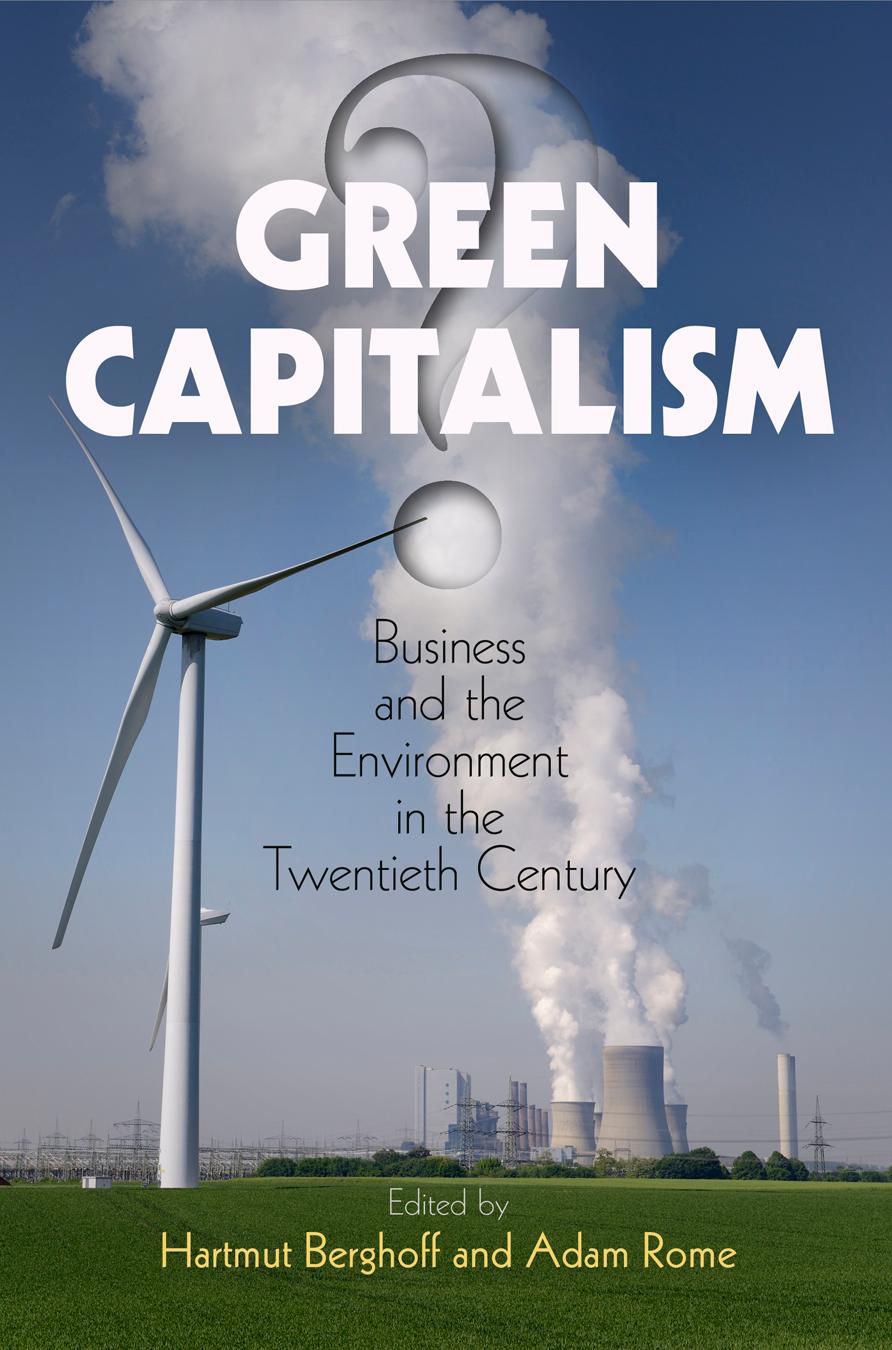
At a time when the human impact on the environment is more devastating than ever, business initiatives frame the quest to "green" capitalism as the key to humanity's long-term survival. Indeed, even before the rise of the environmental movement in the 1970s, businesses sometimes had reasons to protect parts of nature, limit their production of wastes, and support broader environmental reforms. In the last thirty years, especially, many businesses have worked hard to reduce their direct and indirect environmental footprint. But are these efforts exceptional, or can capitalism truly be environmentally conscious?
Green Capitalism? offers a critical, historically informed perspective on building a more sustainable economy. Written by scholars of business history and environmental history, the essays in this volume consider the nature of capitalism through historical overviews of twentieth-century businesses and a wide range of focused case studies. Beginning early in the century, contributors explore the response of business leaders to environmental challenges in an era long before the formation of the modern regulatory state. Moving on to midcentury environmental initiatives, scholars analyze failed business efforts to green products and packaging—such as the infamous six-pack ring—in the 1960s and 1970s. The last section contains case studies of businesses that successfully managed greening initiatives, from the first effort by an electric utility to promote conservation, to the environmental overhaul of a Swedish mining company, to the problem of household waste in pre-1990 West Germany. Ranging in geographic scope from Europe to the United States, Green Capitalism? raises questions about capitalism in different historical, sociocultural, and political contexts.
Contributors: Hartmut Berghoff, Ann-Kristin Bergquist, Brian C. Black, William D. Bryan, Julie Cohn, Leif Fredrickson, Hugh S. Gorman, Geoffrey Jones, David Kinkela, Roman Köster, Joseph A. Pratt, Adam Rome, Christine Meisner Rosen.
Before Memmo my notes were scattered across PDFs. Now a workspace pulls everything into one place — I see exactly what's still left to study.
Memmo's summaries are gold before exams. I don't have to re-read 800 pages two weeks before — just the important parts.
The AI chat has saved me the night before an exam more than once. I just keep asking until I get it — no waiting on a study group to reply.
The quizzes hit exactly what I need to know. Memmo tracks what I get stuck on — so I only practice what's worth it.
Flashcards with spaced repetition are magic. Memmo knows when I'm about to forget something and brings it back.
The AI podcasts are my favorite. I listen on my way to school and get a recap without sitting at a computer.

Handbok i kvalitativa metoder
281 kr

Hållbar utveckling: en introduktion för ingenjörer och andra problemlösare
334 kr

Brymans Samhällsvetenskapliga metoder
390 kr

Projektledning
491 kr

Den orättvisa hälsan: om socioekonomiska skillnader i hälsa och livslängd
326 kr

Vetenskapsteori för nybörjare
196 kr

Organizational Leadership
429 kr

På väg mot läraryrket
172 kr

Det sociala livet i skolan: Socialpsykologiska perspektiv
253 kr

Betygsättningens didaktik
151 kr

Personality
402 kr

Studying Leadership
404 kr

Managing Innovation
477 kr

Introduktion till samhällsvetenskaplig metod
347 kr

The Psychology of Sex and Gender
698 kr

Evidens och kunskap för socialt arbete
207 kr

Introduction to Leadership
605 kr