
Before Memmo my notes were scattered across PDFs. Now a workspace pulls everything into one place — I see exactly what's still left to study.
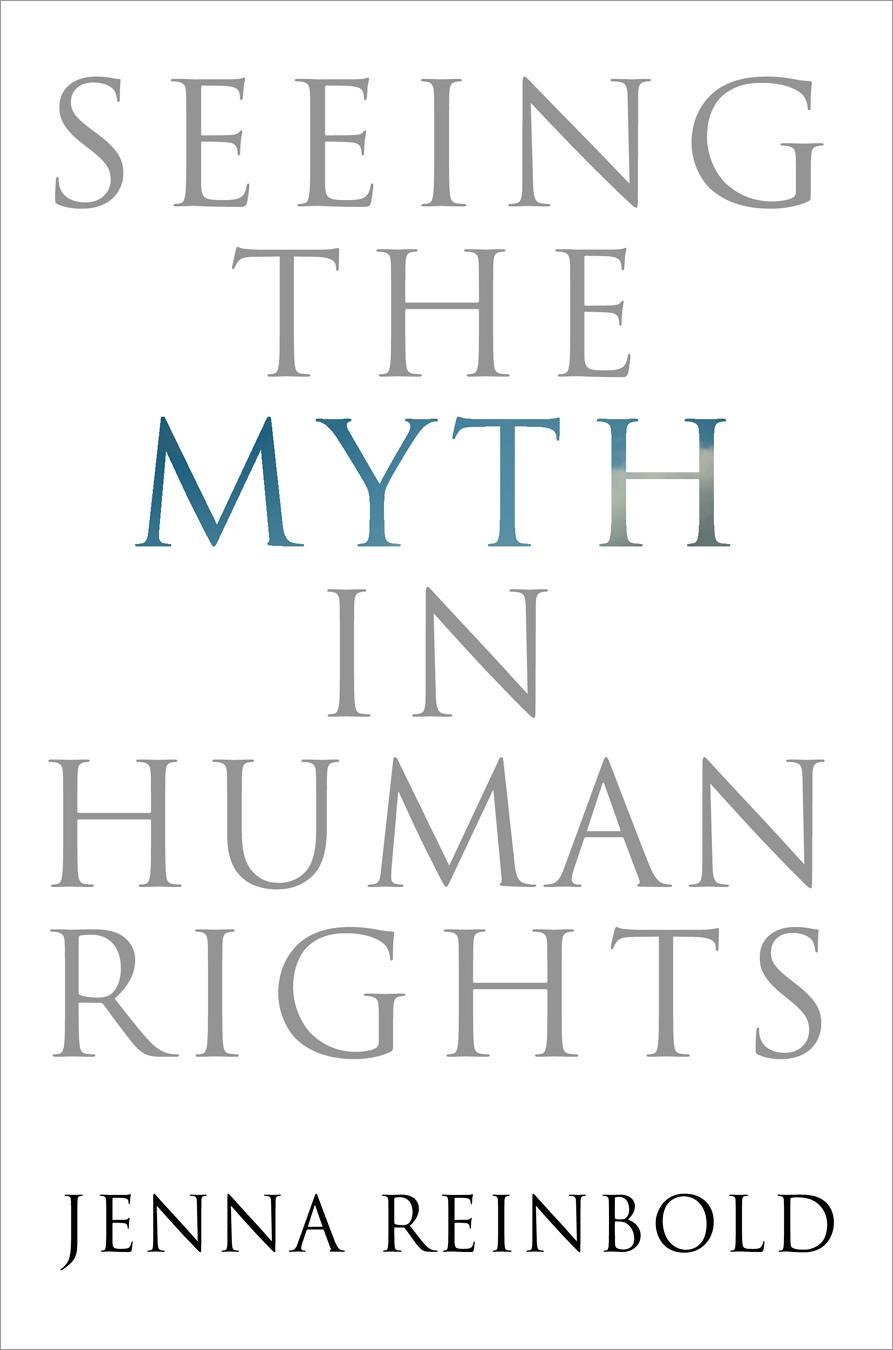
The 1948 Universal Declaration of Human Rights has been called one of the most powerful documents in human history. Today, the mere accusation of violations of the rights outlined in this document cows political leaders and riles the international community. Yet as a nonbinding document with no mechanism for enforcement, it holds almost no legal authority. Indeed, since its adoption, the Declaration's authority has been portrayed not as legal or political but as moral. Rather than providing a set of rules to follow or laws to obey, it represents a set of standards against which the world's societies are measured. It has achieved a level of rhetorical power and influence unlike anything else in modern world politics, becoming the foundational myth of the human rights project.
Seeing the Myth in Human Rights presents an interdisciplinary investigation into the role of mythmaking in the creation and propagation of the Universal Declaration. Pushing beyond conventional understandings of myth, which tend to view such narratives as vehicles either for the spreading of particular religious dogmas or for the spreading of erroneous, even duplicitous, discourses, Jenna Reinbold mobilizes a robust body of scholarship within the field of religious studies to help us appreciate myth as a mode of human labor designed to generate meaning, solidarity, and order. This usage does not merely parallel today's scholarship on myth; it dovetails in unexpected ways with a burgeoning body of scholarship on the origin and function of contemporary human rights, and it puts the field of religious studies into conversation with the fields of political philosophy, critical legal studies, and human rights historiography. For Reinbold, myth is a phenomenon that is not merely germane to the exploration of specific religious narratives but is key to a broader understanding of the nature of political authority in the modern world.
Before Memmo my notes were scattered across PDFs. Now a workspace pulls everything into one place — I see exactly what's still left to study.
Memmo's summaries are gold before exams. I don't have to re-read 800 pages two weeks before — just the important parts.
The AI chat has saved me the night before an exam more than once. I just keep asking until I get it — no waiting on a study group to reply.
The quizzes hit exactly what I need to know. Memmo tracks what I get stuck on — so I only practice what's worth it.
Flashcards with spaced repetition are magic. Memmo knows when I'm about to forget something and brings it back.
The AI podcasts are my favorite. I listen on my way to school and get a recap without sitting at a computer.

Handbok i kvalitativa metoder
281 kr

Hållbar utveckling: en introduktion för ingenjörer och andra problemlösare
334 kr

Brymans Samhällsvetenskapliga metoder
390 kr

Projektledning
491 kr

Den orättvisa hälsan: om socioekonomiska skillnader i hälsa och livslängd
326 kr

Organizational Leadership
429 kr

Vetenskapsteori för nybörjare
196 kr

På väg mot läraryrket
172 kr

Det sociala livet i skolan: Socialpsykologiska perspektiv
253 kr

Betygsättningens didaktik
151 kr

Personality
402 kr

Studying Leadership
404 kr

Managing Innovation
477 kr

Introduktion till samhällsvetenskaplig metod
347 kr

The Psychology of Sex and Gender
698 kr

Evidens och kunskap för socialt arbete
207 kr

Introduction to Leadership
605 kr