
Before Memmo my notes were scattered across PDFs. Now a workspace pulls everything into one place — I see exactly what's still left to study.
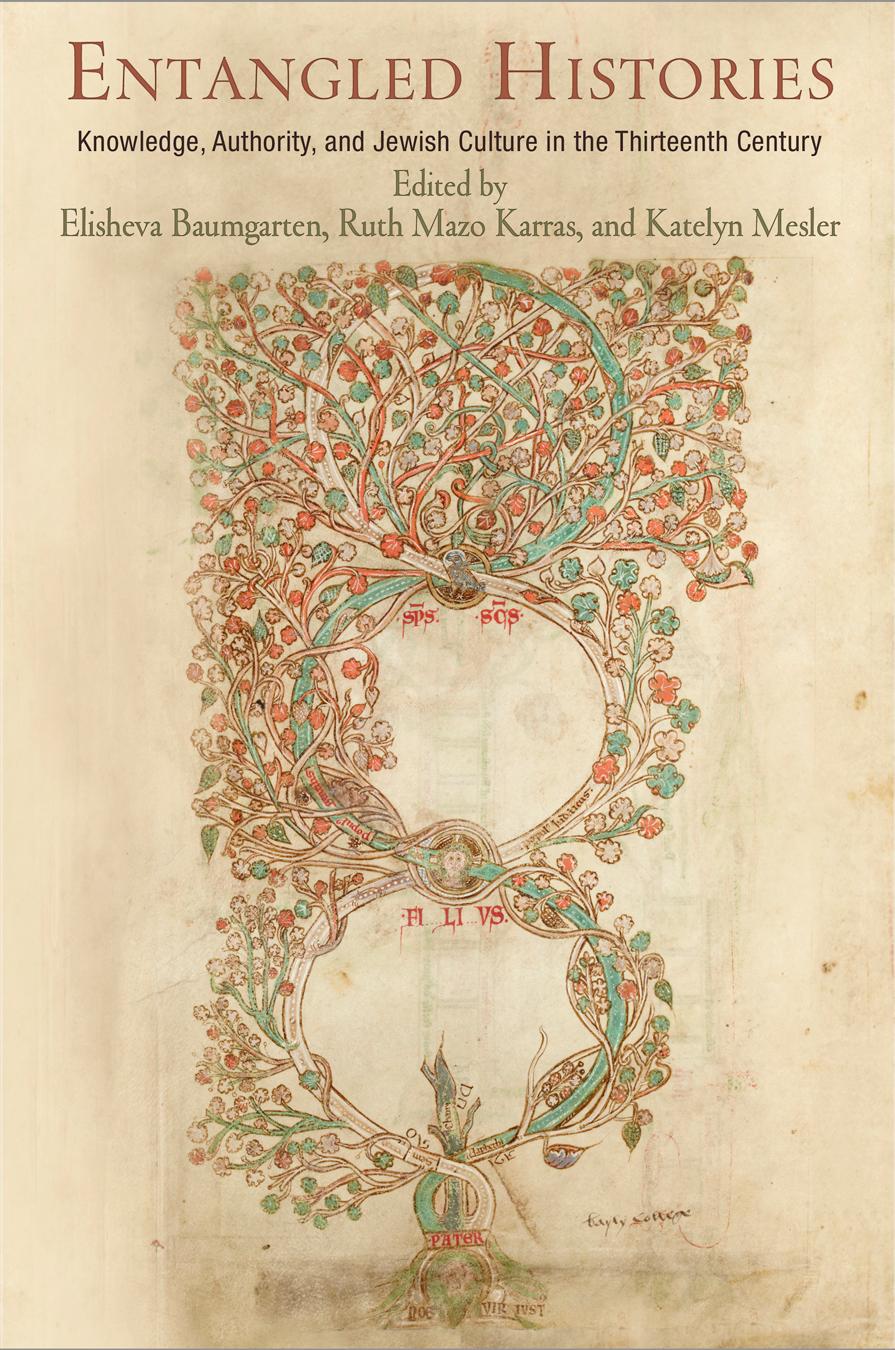
From Halakhic innovation to blood libels, from the establishment of new mendicant orders to the institutionalization of Islamicate bureaucracy, and from the development of the inquisitorial process to the rise of yeshivas, universities, and madrasas, the long thirteenth century saw a profusion of political, cultural, and intellectual changes in Europe and the Mediterranean basin. These were informed by, and in turn informed, the religious communities from which they arose. In city streets and government buildings, Jews, Christians, and Muslims lived, worked, and disputed with one another, sharing and shaping their respective cultures in the process. The interaction born of these relationships between minority and majority cultures, from love and friendship to hostility and violence, can be described as a complex and irreducible "entanglement." The contributors to Entangled Histories: Knowledge, Authority, and Jewish Culture in the Thirteenth Century argue that this admixture of persecution and cooperation was at the foundation of Jewish experience in the Middle Ages.
The thirteen essays are organized into three major sections, focusing in turn on the exchanges among intellectual communities, on the interactions between secular and religious authorities, and on the transmission of texts and ideas across geographical, linguistic, and cultural boundaries. Rather than trying to resolve the complexities of entanglement, contributors seek to outline their contours and explain how they endured. In the process, they examine relationships not only among Jewish, Christian, and Muslim communities but also between communities within Judaism—those living under Christian rule and those living under Muslim rule, and between the Jews of southern and northern Europe. The resulting volume develops a multifaceted account of Jewish life in Europe and the Mediterranean basin at a time when economic, cultural, and intellectual exchange coincided with heightened interfaith animosity.
Contributors: Elisheva Baumgarten, Piero Capelli, Mordechai Z. Cohen, Judah Galinsky, Elisabeth Hollender, Kati Ihnat, Ephraim Kanarfogel, Katelyn Mesler, Ruth Mazo Karras, Sarah J. Pearce, Rami Reiner, Yossef Schwartz, Uri Shachar, Rebecca Winer, Luke Yarbrough.
Before Memmo my notes were scattered across PDFs. Now a workspace pulls everything into one place — I see exactly what's still left to study.
Memmo's summaries are gold before exams. I don't have to re-read 800 pages two weeks before — just the important parts.
The AI chat has saved me the night before an exam more than once. I just keep asking until I get it — no waiting on a study group to reply.
The quizzes hit exactly what I need to know. Memmo tracks what I get stuck on — so I only practice what's worth it.
Flashcards with spaced repetition are magic. Memmo knows when I'm about to forget something and brings it back.
The AI podcasts are my favorite. I listen on my way to school and get a recap without sitting at a computer.

Handbok i kvalitativa metoder
281 kr

Hållbar utveckling: en introduktion för ingenjörer och andra problemlösare
334 kr

Brymans Samhällsvetenskapliga metoder
390 kr

Projektledning
491 kr

Den orättvisa hälsan: om socioekonomiska skillnader i hälsa och livslängd
326 kr

Vetenskapsteori för nybörjare
196 kr

Organizational Leadership
429 kr

På väg mot läraryrket
172 kr

Det sociala livet i skolan: Socialpsykologiska perspektiv
253 kr

Betygsättningens didaktik
151 kr

Personality
402 kr

Studying Leadership
404 kr

Managing Innovation
477 kr

Introduktion till samhällsvetenskaplig metod
347 kr

The Psychology of Sex and Gender
698 kr

Evidens och kunskap för socialt arbete
207 kr

Introduction to Leadership
605 kr