
Before Memmo my notes were scattered across PDFs. Now a workspace pulls everything into one place — I see exactly what's still left to study.
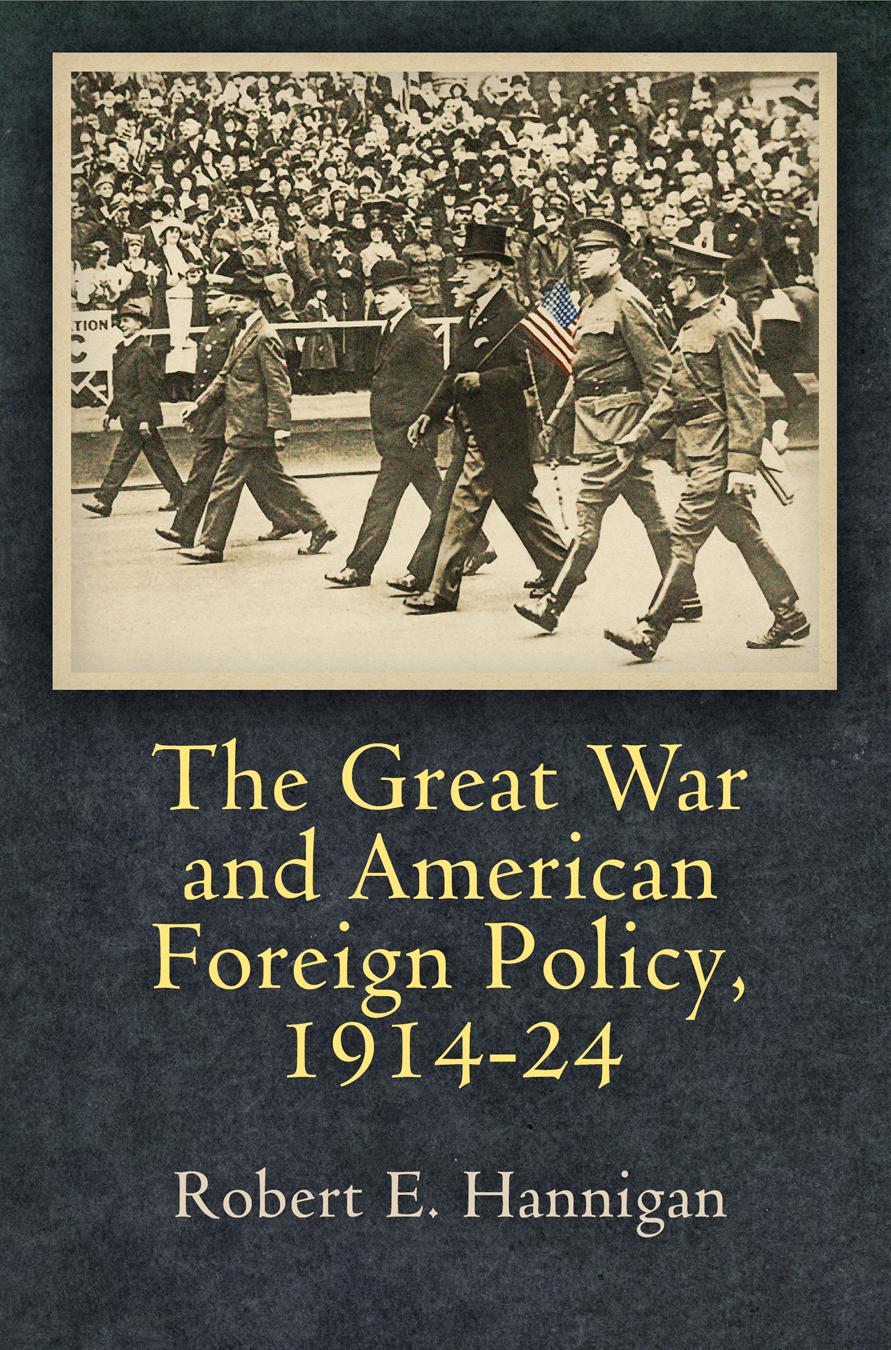
World War I constituted a milestone in the development of the United States as a world power. As the European powers exhausted themselves during the conflict, the U.S. government deployed its growing economic leverage, its military might, and its diplomacy to shape the outcome of the war and to influence the future of international relations.
In The Great War and American Foreign Policy, 1914-1924, Robert E. Hannigan challenges the conventional belief that the United States entered World War I only because its hand was forced, and he disputes the claim that Washington was subsequently driven by a desire to make the world "safe for democracy." Democratic President Woodrow Wilson's rhetoric emphasized peace, self-determination, and international cooperation. But his foreign policy, Hannigan claims, is better understood if analyzed against the backdrop of American policy—not only toward Europe, but also toward East Asia and the rest of the western hemisphere—as it had been developing since the turn of the twentieth century. On the broadest level, Wilson sought to shore up and stabilize an international order promoted and presided over by London since the early 1800s, this in the conviction that under such conditions the United States would inevitably ascend to a global position comparable to, if not eclipsing, that of Great Britain. Hannigan argues, moreover, that these fundamental objectives continued to guide Wilson's Republican successors in their efforts to stabilize the postwar world.
The book reexamines the years when the United States was ostensibly neutral (1914-17), the subsequent period of American military involvement (1917-18), the Paris Peace Conference of 1919, the ensuing battle for ratification of the Treaty of Versailles (in 1919-20), and the activities of Wilson's successors—culminating with the Dawes Plan of 1924.
Before Memmo my notes were scattered across PDFs. Now a workspace pulls everything into one place — I see exactly what's still left to study.
Memmo's summaries are gold before exams. I don't have to re-read 800 pages two weeks before — just the important parts.
The AI chat has saved me the night before an exam more than once. I just keep asking until I get it — no waiting on a study group to reply.
The quizzes hit exactly what I need to know. Memmo tracks what I get stuck on — so I only practice what's worth it.
Flashcards with spaced repetition are magic. Memmo knows when I'm about to forget something and brings it back.
The AI podcasts are my favorite. I listen on my way to school and get a recap without sitting at a computer.

Handbok i kvalitativa metoder
281 kr

Hållbar utveckling: en introduktion för ingenjörer och andra problemlösare
334 kr

Brymans Samhällsvetenskapliga metoder
390 kr

Projektledning
491 kr

Den orättvisa hälsan: om socioekonomiska skillnader i hälsa och livslängd
326 kr

Vetenskapsteori för nybörjare
196 kr

Organizational Leadership
429 kr

På väg mot läraryrket
172 kr

Det sociala livet i skolan: Socialpsykologiska perspektiv
253 kr

Betygsättningens didaktik
151 kr

Personality
402 kr

Studying Leadership
404 kr

Managing Innovation
477 kr

Introduktion till samhällsvetenskaplig metod
347 kr

The Psychology of Sex and Gender
698 kr

Evidens och kunskap för socialt arbete
207 kr

Introduction to Leadership
605 kr