
Before Memmo my notes were scattered across PDFs. Now a workspace pulls everything into one place — I see exactly what's still left to study.
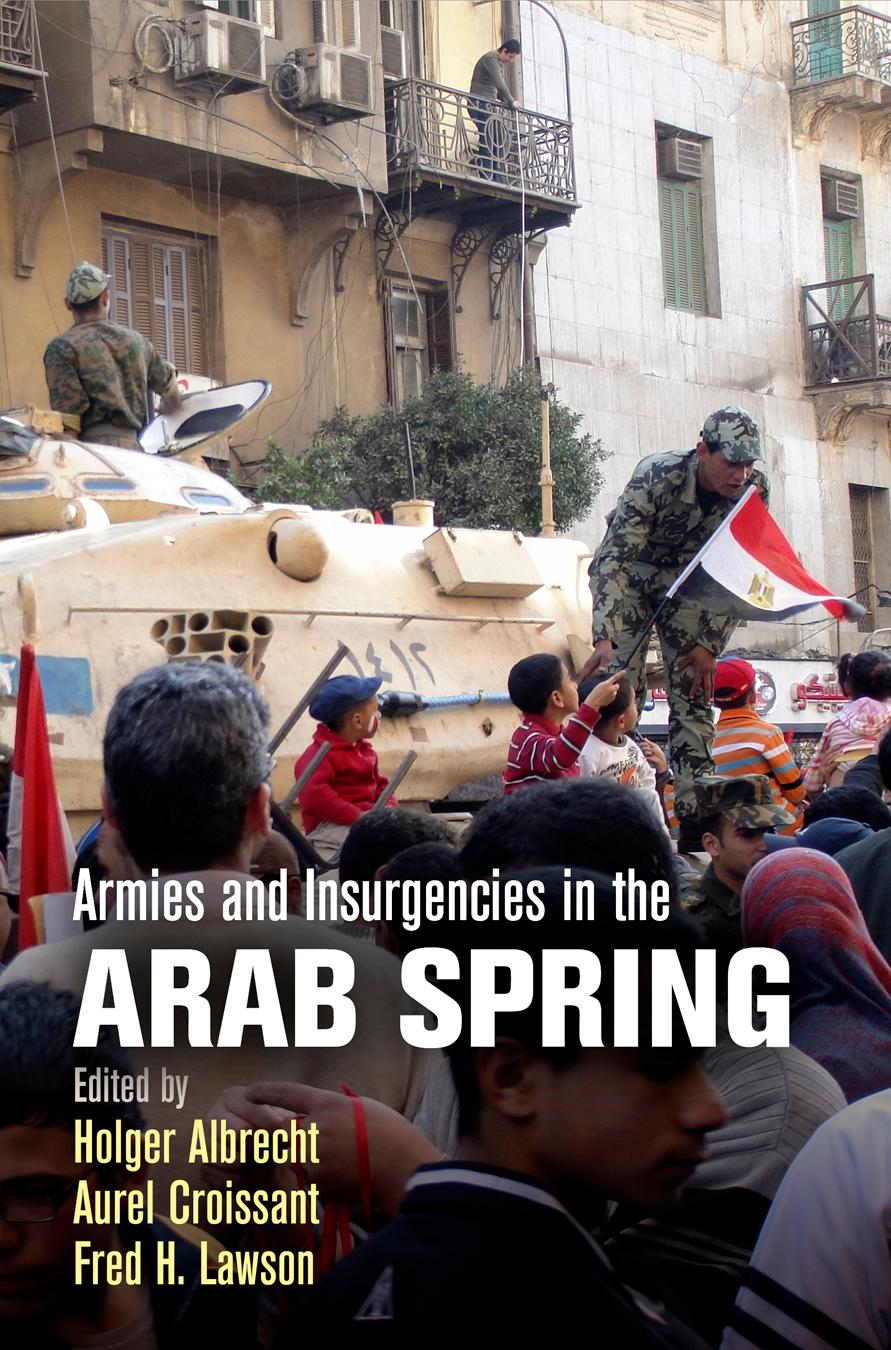
Following the popular uprisings that swept across the Arab world beginning in 2010, armed forces remained pivotal actors in politics throughout the region. As demonstrators started to challenge entrenched autocratic rulers in Tunis, Cairo, Sana'a, and Manama, the militaries stormed back into the limelight and largely determined whether any given ruler survived the protests. In Tunisia, Egypt, and Yemen, senior officers pulled away from their presidents, while in Algeria, Bahrain, and Syria, they did not. More important, military officers took command in shaping the new order and conflict trajectories throughout that region.
Armies and Insurgencies in the Arab Spring explores the central problems surrounding the role of armed forces in the contemporary Arab world. How and why do military apparatuses actively intervene in politics? What explains the fact that in some countries, military officers and rank-and-file take steps to defend an incumbent, while in others they defect and refrain from suppressing popular protest? What are the institutional legacies of the military's engagement during, and in the immediate aftermath of, mass uprisings?
Focusing on these questions, editors Holger Albrecht, Aurel Croissant, and Fred H. Lawson have organized Armies and Insurgencies in the Arab Spring into three sections. The first employs case studies to make comparisons within and between regions; the second examines military engagements in the Arab uprisings in Yemen, Bahrain, and Syria; and the third looks at political developments following the cresting of the protest wave in Egypt, Tunisia, Libya, and the Gulf. The collection promotes better understanding not only of the particular history of military engagement in the Arab Spring but also of significant aspects of the transformation of political-military relations in other regions of the contemporary world.
Contributors: Holger Albrecht, Risa A. Brooks, Cherine Chams El-Dine, Virginie Collombier, Aurel Croissant, Philippe Droz-Vincent, Kevin Koehler, Fred H. Lawson, Shana Marshall, Dorothy Ohl, David Pion-Berlin, Tobias Selge, Robert Springborg.
Before Memmo my notes were scattered across PDFs. Now a workspace pulls everything into one place — I see exactly what's still left to study.
Memmo's summaries are gold before exams. I don't have to re-read 800 pages two weeks before — just the important parts.
The AI chat has saved me the night before an exam more than once. I just keep asking until I get it — no waiting on a study group to reply.
The quizzes hit exactly what I need to know. Memmo tracks what I get stuck on — so I only practice what's worth it.
Flashcards with spaced repetition are magic. Memmo knows when I'm about to forget something and brings it back.
The AI podcasts are my favorite. I listen on my way to school and get a recap without sitting at a computer.

Handbok i kvalitativa metoder
281 kr

Hållbar utveckling: en introduktion för ingenjörer och andra problemlösare
334 kr

Brymans Samhällsvetenskapliga metoder
390 kr

Projektledning
491 kr

Den orättvisa hälsan: om socioekonomiska skillnader i hälsa och livslängd
326 kr

Vetenskapsteori för nybörjare
196 kr

Organizational Leadership
429 kr

På väg mot läraryrket
172 kr

Det sociala livet i skolan: Socialpsykologiska perspektiv
253 kr

Betygsättningens didaktik
151 kr

Personality
402 kr

Studying Leadership
404 kr

Managing Innovation
477 kr

Introduktion till samhällsvetenskaplig metod
347 kr

The Psychology of Sex and Gender
698 kr

Evidens och kunskap för socialt arbete
207 kr

Introduction to Leadership
605 kr