
Before Memmo my notes were scattered across PDFs. Now a workspace pulls everything into one place — I see exactly what's still left to study.
In 1948, two years before Cold War tensions resulted in the invasion of South Korea by North Korea that started the Korean War, the first major political confrontation between leftists and rightists occurred on the South Korean island of Cheju, where communist activists disrupted United Nations-sanctioned elections and military personnel were deployed. What began as a counterinsurgency operation targeting 350 local rebels resulted in the deaths of roughly 30,000 uninvolved civilians, 10 percent of the island's population.
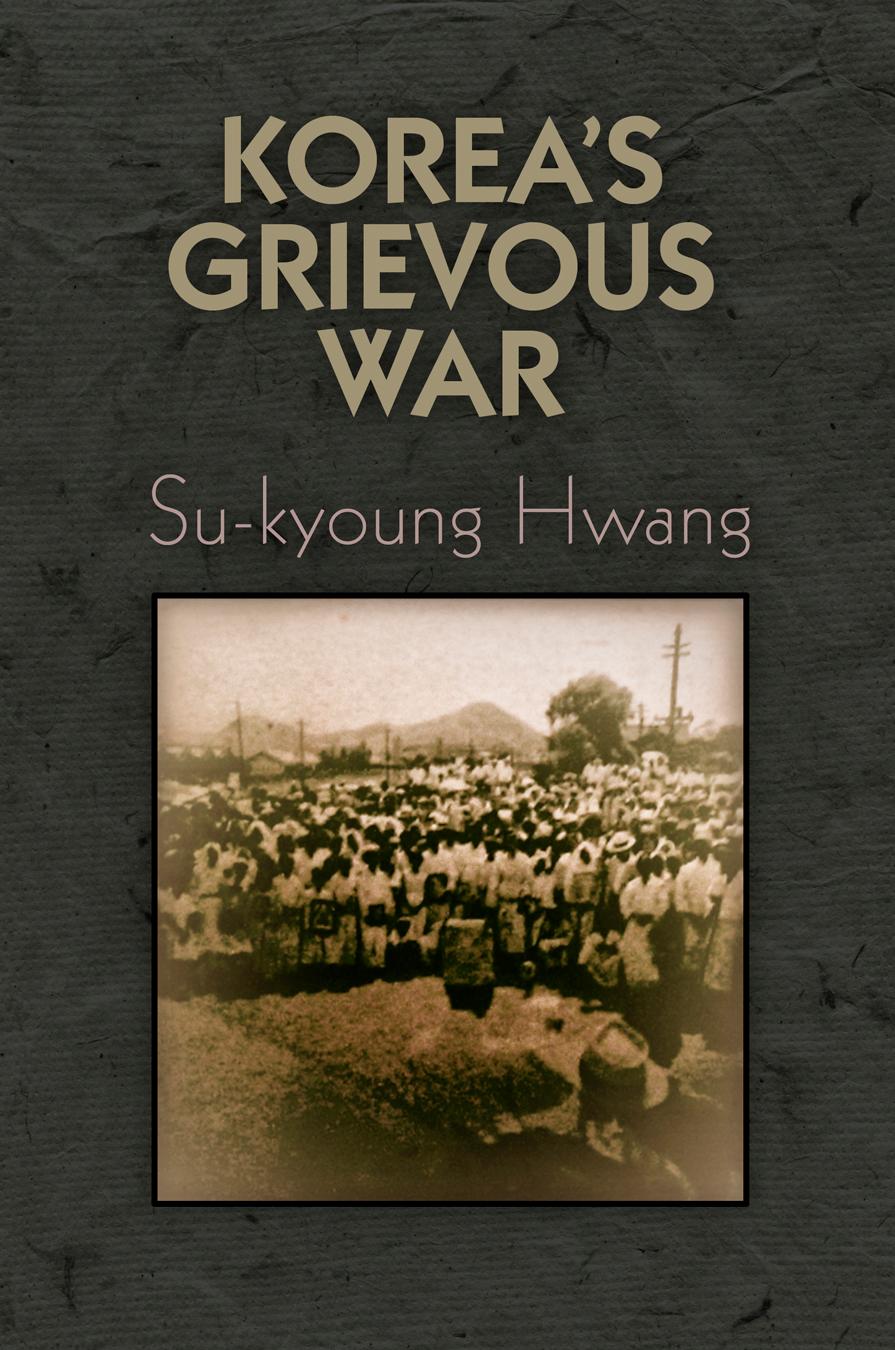
Su-kyoung Hwang's Korea's Grievous War recounts the civilian experience of anticommunist violence, beginning with the Cheju Uprising in 1948 and continuing through the Korean War until 1953. Wartime declarations of emergency by both the U.S. and Korean governments were issued to contain communism, but a major consequence of their actions was to contribute to the loss of more than two million civilian lives. Hwang inventories the persecutions of left-leaning intellectuals under the South Korean regime of Syngman Rhee and the executions of political prisoners and innocent civilians to "prevent" their collaboration with North Korea. She highlights the role of the United States in observing, documenting, and yet failing to intervene in the massacres and of the U.S. Air Force's three-year firebombing campaign in North and South Korea.
Hwang draws on archival research and personally conducted interviews to recount vividly the acts of anticommunist violence at the human level and illuminate the sufferings of civilian victims. Korea's Grievous War presents the historical background, political motivations, legal bases, and social consequences of anticommunist violence, tracing the enduring legacy of this destruction in the testimonies of survivors and bereaved families that only now can give voice to the lived experience of this grievous war and its aftermath.
Before Memmo my notes were scattered across PDFs. Now a workspace pulls everything into one place — I see exactly what's still left to study.
Memmo's summaries are gold before exams. I don't have to re-read 800 pages two weeks before — just the important parts.
The AI chat has saved me the night before an exam more than once. I just keep asking until I get it — no waiting on a study group to reply.
The quizzes hit exactly what I need to know. Memmo tracks what I get stuck on — so I only practice what's worth it.
Flashcards with spaced repetition are magic. Memmo knows when I'm about to forget something and brings it back.
The AI podcasts are my favorite. I listen on my way to school and get a recap without sitting at a computer.

Handbok i kvalitativa metoder
281 kr

Hållbar utveckling: en introduktion för ingenjörer och andra problemlösare
334 kr

Brymans Samhällsvetenskapliga metoder
390 kr

Projektledning
491 kr

Den orättvisa hälsan: om socioekonomiska skillnader i hälsa och livslängd
326 kr

Vetenskapsteori för nybörjare
196 kr

Organizational Leadership
429 kr

På väg mot läraryrket
172 kr

Det sociala livet i skolan: Socialpsykologiska perspektiv
253 kr

Betygsättningens didaktik
151 kr

Personality
402 kr

Studying Leadership
404 kr

Managing Innovation
477 kr

Introduktion till samhällsvetenskaplig metod
347 kr

The Psychology of Sex and Gender
698 kr

Evidens och kunskap för socialt arbete
207 kr

Introduction to Leadership
605 kr