
Before Memmo my notes were scattered across PDFs. Now a workspace pulls everything into one place — I see exactly what's still left to study.
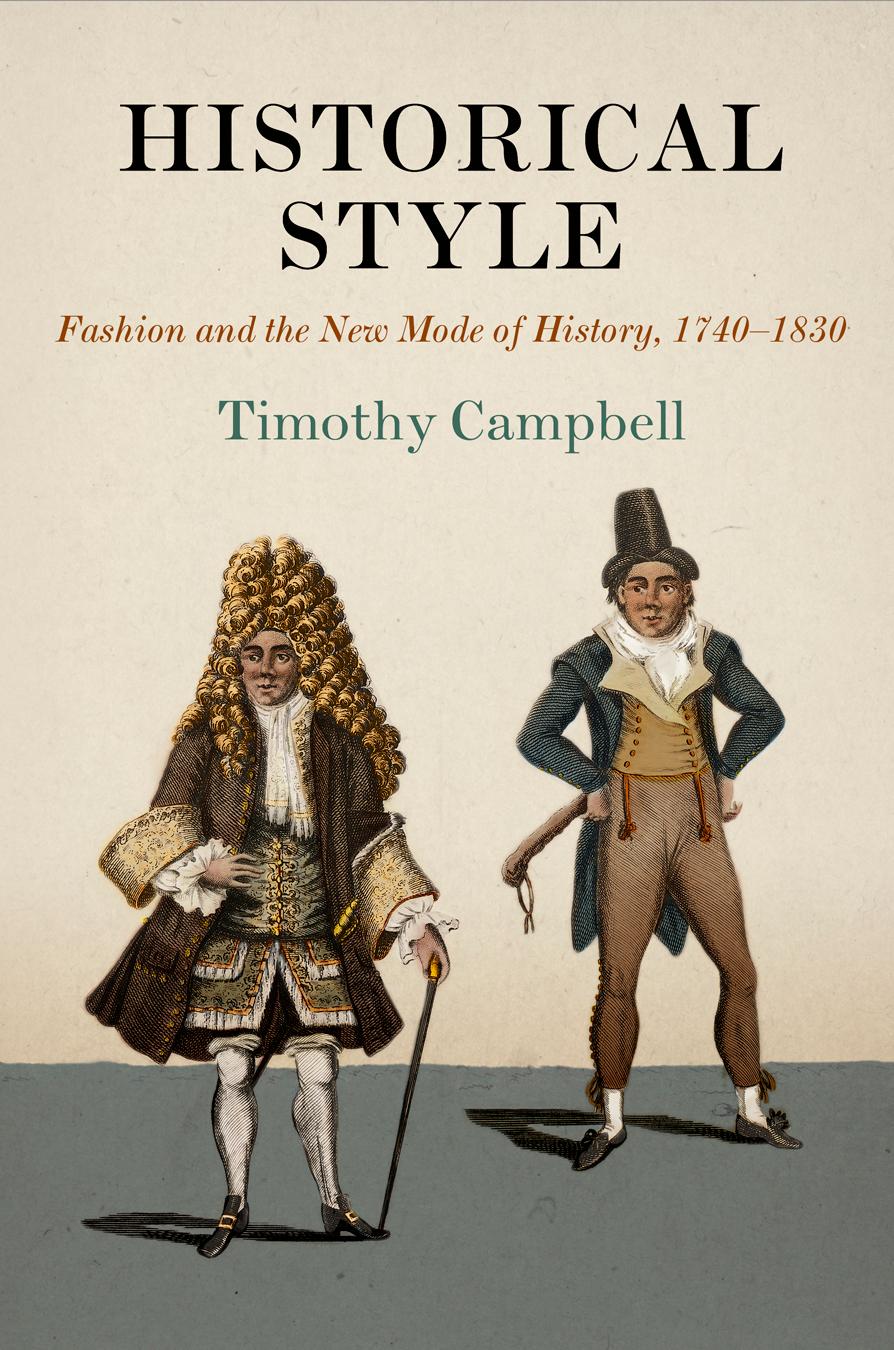
Historical Style connects the birth of eighteenth-century British consumer society to the rise of historical self-consciousness. Prior to the eighteenth century, British style was slow to change and followed the cultural and economic imperatives of monarchical regimes. By the 1750s, however, a growing fashion press extolled, in writing and illustration, the new phenomenon of periodized fashion trends. As fashion fads came in and out of style, and as fashion texts circulated and obsolesced, Britons were forced to confront the material persistence of out-of-date fashions. Timothy Campbell argues that these fashion texts and objects shaped British perception of time and history by producing new curiosity about the very recent past, as well as a new self-consciousness about the means by which the past could be understood.
In a panoptic sweep, Historical Style brings together art history, philosophy, and literary history to portray an era increasingly aware of itself. Burgeoning consumer society, Campbell contends, highlighted the distinction between the past and the present, created an expectation of continual change, and forged a sense of history as something that could be tracked through material objects. Campbell assembles a wide range of writings, images, and objects to render this eighteenth-century landscape: commercial dress displays and David Hume's ideas of novelty as historical form; popular illustrations of recent fashion trends and Sir Joshua Reynolds's aesthetic precepts; fashion periodicals and Sir Walter Scott's costume-saturated historical fiction. In foregrounding fashion to trace eighteenth-century historicism, Historical Style draws upon the interdisciplinary, multimedia archival impressions that fashionable dress has left behind, as well as the historical and conceptual resources within the field of fashion studies that literary and cultural historians of eighteenth-century and Romantic Britain have often neglected.
Before Memmo my notes were scattered across PDFs. Now a workspace pulls everything into one place — I see exactly what's still left to study.
Memmo's summaries are gold before exams. I don't have to re-read 800 pages two weeks before — just the important parts.
The AI chat has saved me the night before an exam more than once. I just keep asking until I get it — no waiting on a study group to reply.
The quizzes hit exactly what I need to know. Memmo tracks what I get stuck on — so I only practice what's worth it.
Flashcards with spaced repetition are magic. Memmo knows when I'm about to forget something and brings it back.
The AI podcasts are my favorite. I listen on my way to school and get a recap without sitting at a computer.

Handbok i kvalitativa metoder
281 kr

Hållbar utveckling: en introduktion för ingenjörer och andra problemlösare
334 kr

Brymans Samhällsvetenskapliga metoder
390 kr

Projektledning
491 kr

Den orättvisa hälsan: om socioekonomiska skillnader i hälsa och livslängd
326 kr

Vetenskapsteori för nybörjare
196 kr

Organizational Leadership
429 kr

På väg mot läraryrket
172 kr

Det sociala livet i skolan: Socialpsykologiska perspektiv
253 kr

Betygsättningens didaktik
151 kr

Personality
402 kr

Studying Leadership
404 kr

Managing Innovation
477 kr

Introduktion till samhällsvetenskaplig metod
347 kr

The Psychology of Sex and Gender
698 kr

Evidens och kunskap för socialt arbete
207 kr

Introduction to Leadership
605 kr