
Before Memmo my notes were scattered across PDFs. Now a workspace pulls everything into one place — I see exactly what's still left to study.
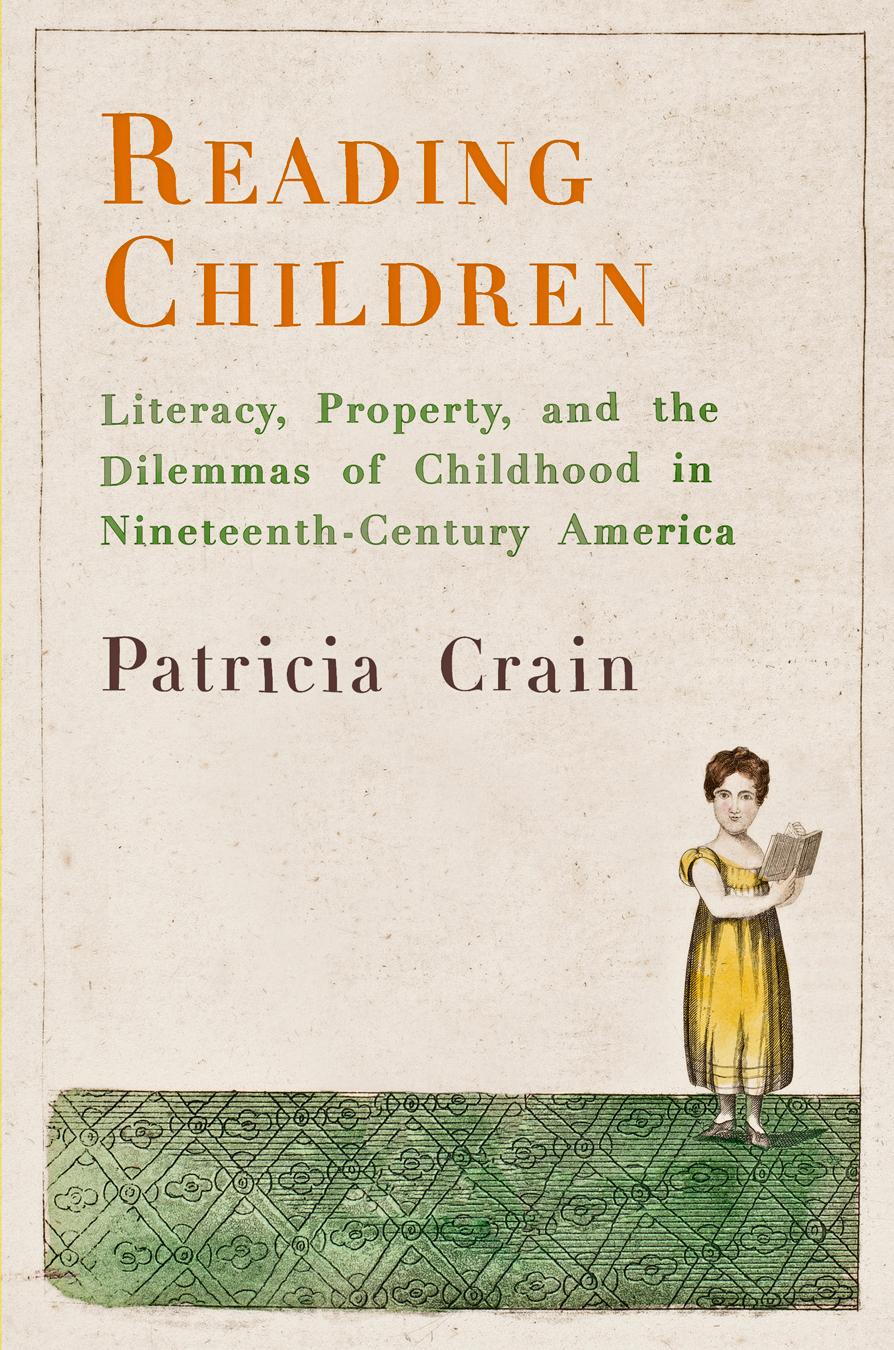
What does it mean for a child to be a "reader" and how did American culture come to place such a high value on this identity? Reading Children offers a history of the relationship between children and books in Anglo-American modernity, exploring long-lived but now forgotten early children's literature, discredited yet highly influential pedagogical practices, the property lessons inherent in children's book ownership, and the emergence of childhood itself as a literary property.
The nursery and schoolroom version of the social contract, Crain argues, underwrote children's entry not only into reading and writing but also into a world of commodity and property relations. Increasingly positioned as an indispensable form of cultural capital by the end of the eighteenth century, literacy became both the means and the symbol of children's newly recognized self-possession and autonomy. At the same time, as children's legal and economic status was changing, "childhood" emerged as an object of nostalgia for adults. Literature for children enacted the terms of children's self-possession, often with explicit references to property, contracts, or inheritances, and yet also framed adult longing for an imagined past called "childhood."
Dozens of colorful illustrations chart the ways in which early literature for children was transformed into spectacle through new image technologies and a burgeoning marketplace that capitalized on nostalgic fantasies of childhood conflated with bowdlerized fantasies of history. Reading Children offers new terms for thinking about the imbricated and mutually constitutive histories of literacy, property, and childhood in the eighteenth and nineteenth centuries that ground current anxieties and long-held beliefs about childhood and reading.
Before Memmo my notes were scattered across PDFs. Now a workspace pulls everything into one place — I see exactly what's still left to study.
Memmo's summaries are gold before exams. I don't have to re-read 800 pages two weeks before — just the important parts.
The AI chat has saved me the night before an exam more than once. I just keep asking until I get it — no waiting on a study group to reply.
The quizzes hit exactly what I need to know. Memmo tracks what I get stuck on — so I only practice what's worth it.
Flashcards with spaced repetition are magic. Memmo knows when I'm about to forget something and brings it back.
The AI podcasts are my favorite. I listen on my way to school and get a recap without sitting at a computer.

Handbok i kvalitativa metoder
281 kr

Hållbar utveckling: en introduktion för ingenjörer och andra problemlösare
334 kr

Brymans Samhällsvetenskapliga metoder
390 kr

Projektledning
491 kr

Den orättvisa hälsan: om socioekonomiska skillnader i hälsa och livslängd
326 kr

Vetenskapsteori för nybörjare
196 kr

Organizational Leadership
429 kr

På väg mot läraryrket
172 kr

Det sociala livet i skolan: Socialpsykologiska perspektiv
253 kr

Betygsättningens didaktik
151 kr

Personality
402 kr

Studying Leadership
404 kr

Managing Innovation
477 kr

Introduktion till samhällsvetenskaplig metod
347 kr

The Psychology of Sex and Gender
698 kr

Evidens och kunskap för socialt arbete
207 kr

Introduction to Leadership
605 kr