
Before Memmo my notes were scattered across PDFs. Now a workspace pulls everything into one place — I see exactly what's still left to study.
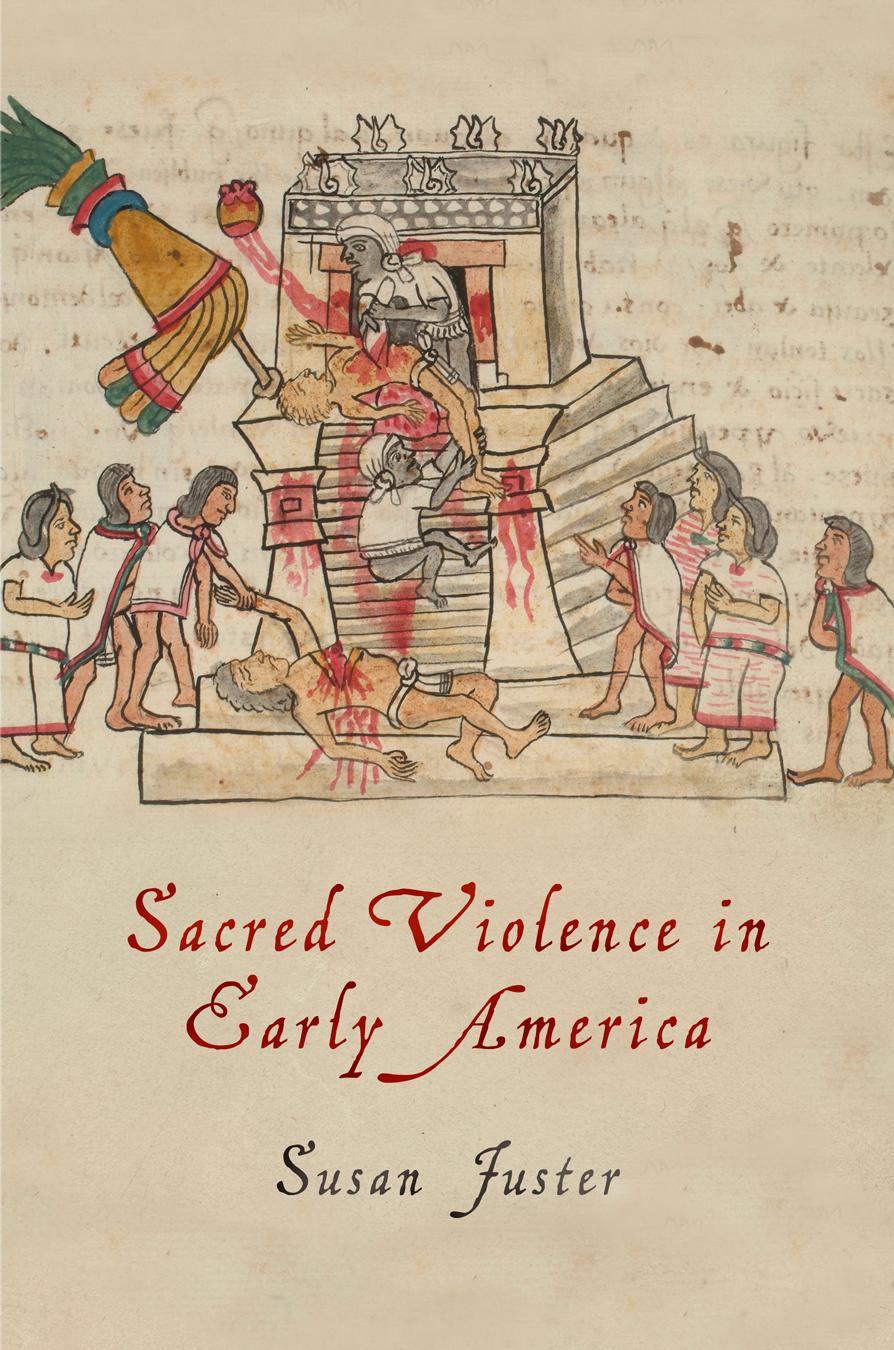
Sacred Violence in Early America offers a sweeping reinterpretation of the violence endemic to seventeenth-century English colonization by reexamining some of the key moments of cultural and religious encounter in North America. Susan Juster explores different forms of sacred violence—blood sacrifice, holy war, malediction, and iconoclasm—to uncover how European traditions of ritual violence developed during the wars of the Reformation were introduced and ultimately transformed in the New World.
Juster's central argument concerns the rethinking of the relationship between the material and the spiritual worlds that began with the Reformation and reached perhaps its fullest expression on the margins of empire. The Reformation transformed the Christian landscape from an environment rich in sounds, smells, images, and tactile encounters, both divine and human, to an austere space of scriptural contemplation and prayer. When English colonists encountered the gods and rituals of the New World, they were forced to confront the unresolved tensions between the material and spiritual within their own religious practice. Accounts of native cannibalism, for instance, prompted uneasy comparisons with the ongoing debate among Reformers about whether Christ was bodily present in the communion wafer.
Sacred Violence in Early America reveals the Old World antecedents of the burning of native bodies and texts during the seventeenth-century wars of extermination, the prosecution of heretics and blasphemers in colonial courts, and the destruction of chapels and mission towns up and down the North American seaboard. At the heart of the book is an analysis of "theologies of violence" that gave conceptual and emotional shape to English colonists' efforts to construct a New World sanctuary in the face of enemies both familiar and strange: blood sacrifice, sacramentalism, legal and philosophical notions of just and holy war, malediction, the contest between "living" and "dead" images in Christian idology, and iconoclasm.
Before Memmo my notes were scattered across PDFs. Now a workspace pulls everything into one place — I see exactly what's still left to study.
Memmo's summaries are gold before exams. I don't have to re-read 800 pages two weeks before — just the important parts.
The AI chat has saved me the night before an exam more than once. I just keep asking until I get it — no waiting on a study group to reply.
The quizzes hit exactly what I need to know. Memmo tracks what I get stuck on — so I only practice what's worth it.
Flashcards with spaced repetition are magic. Memmo knows when I'm about to forget something and brings it back.
The AI podcasts are my favorite. I listen on my way to school and get a recap without sitting at a computer.

Handbok i kvalitativa metoder
281 kr

Hållbar utveckling: en introduktion för ingenjörer och andra problemlösare
334 kr

Brymans Samhällsvetenskapliga metoder
390 kr

Projektledning
491 kr

Den orättvisa hälsan: om socioekonomiska skillnader i hälsa och livslängd
326 kr

Vetenskapsteori för nybörjare
196 kr

Organizational Leadership
429 kr

På väg mot läraryrket
172 kr

Det sociala livet i skolan: Socialpsykologiska perspektiv
253 kr

Betygsättningens didaktik
151 kr

Personality
402 kr

Studying Leadership
404 kr

Managing Innovation
477 kr

Introduktion till samhällsvetenskaplig metod
347 kr

The Psychology of Sex and Gender
698 kr

Evidens och kunskap för socialt arbete
207 kr

Introduction to Leadership
605 kr