
Before Memmo my notes were scattered across PDFs. Now a workspace pulls everything into one place — I see exactly what's still left to study.
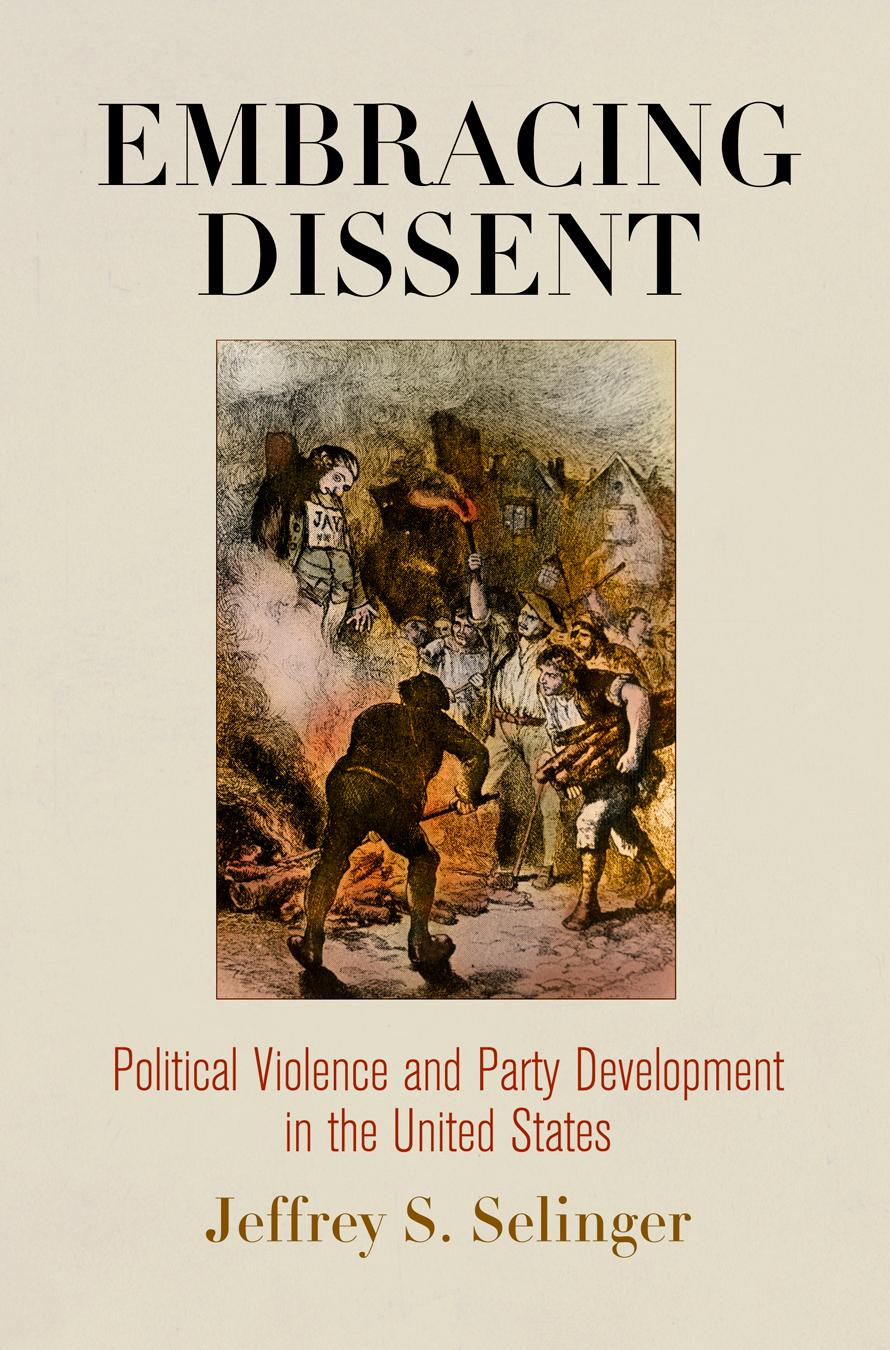
While the American founders fully expected parties to form in a free society, they were far less certain that opposing parties would peacefully transfer power from one to another. Party formation presented a confounding problem for the new republic: party rivalries could not be prevented, but they might, nonetheless, catalyze civil disorder or fracture the union of the states. The status of political parties has come a long way in American society and politics, however, and today American democracy is inconceivable without them.
How did party competition become a regular and "normal" feature of the American political landscape? Why did American political leaders, who viewed such rivalry as a harbinger of the new republic's destruction, come to terms with party opposition? Embracing Dissent tells this story of political transformation, making the case that the status of party gained ground as the notion that party competition might instigate class violence, secession, or civil war, receded. From the American founding and the appearance of the Jacksonian Democratic party, to Lincoln's management of party politics during the Civil War, Jeffrey S. Selinger presents a careful reconsideration of American political development.
Embracing Dissent also provides historical perspective on today's polarized political condition. Too often, pundits exaggerate the significance of partisan differences and minimize the depth of political consensus that permeates American politics. Political observers casually use expressions like "party conflict," forgetting, as the famed political scientist Giovanni Sartori noted, that public consensus on fundamental legal and constitutional norms makes party competition "something less than conflict, as we endlessly if often too late rediscover whenever we are confronted with the reality of a people shooting at each other." Embracing Dissent reminds readers of the long history of Americans "shooting at each other" and describes the political events that disarmed them.
Before Memmo my notes were scattered across PDFs. Now a workspace pulls everything into one place — I see exactly what's still left to study.
Memmo's summaries are gold before exams. I don't have to re-read 800 pages two weeks before — just the important parts.
The AI chat has saved me the night before an exam more than once. I just keep asking until I get it — no waiting on a study group to reply.
The quizzes hit exactly what I need to know. Memmo tracks what I get stuck on — so I only practice what's worth it.
Flashcards with spaced repetition are magic. Memmo knows when I'm about to forget something and brings it back.
The AI podcasts are my favorite. I listen on my way to school and get a recap without sitting at a computer.

Handbok i kvalitativa metoder
281 kr

Hållbar utveckling: en introduktion för ingenjörer och andra problemlösare
334 kr

Brymans Samhällsvetenskapliga metoder
390 kr

Projektledning
491 kr

Den orättvisa hälsan: om socioekonomiska skillnader i hälsa och livslängd
326 kr

Organizational Leadership
429 kr

Vetenskapsteori för nybörjare
196 kr

På väg mot läraryrket
172 kr

Det sociala livet i skolan: Socialpsykologiska perspektiv
253 kr

Betygsättningens didaktik
151 kr

Personality
402 kr

Studying Leadership
404 kr

Managing Innovation
477 kr

Introduktion till samhällsvetenskaplig metod
347 kr

The Psychology of Sex and Gender
698 kr

Evidens och kunskap för socialt arbete
207 kr

Introduction to Leadership
605 kr