
Before Memmo my notes were scattered across PDFs. Now a workspace pulls everything into one place — I see exactly what's still left to study.
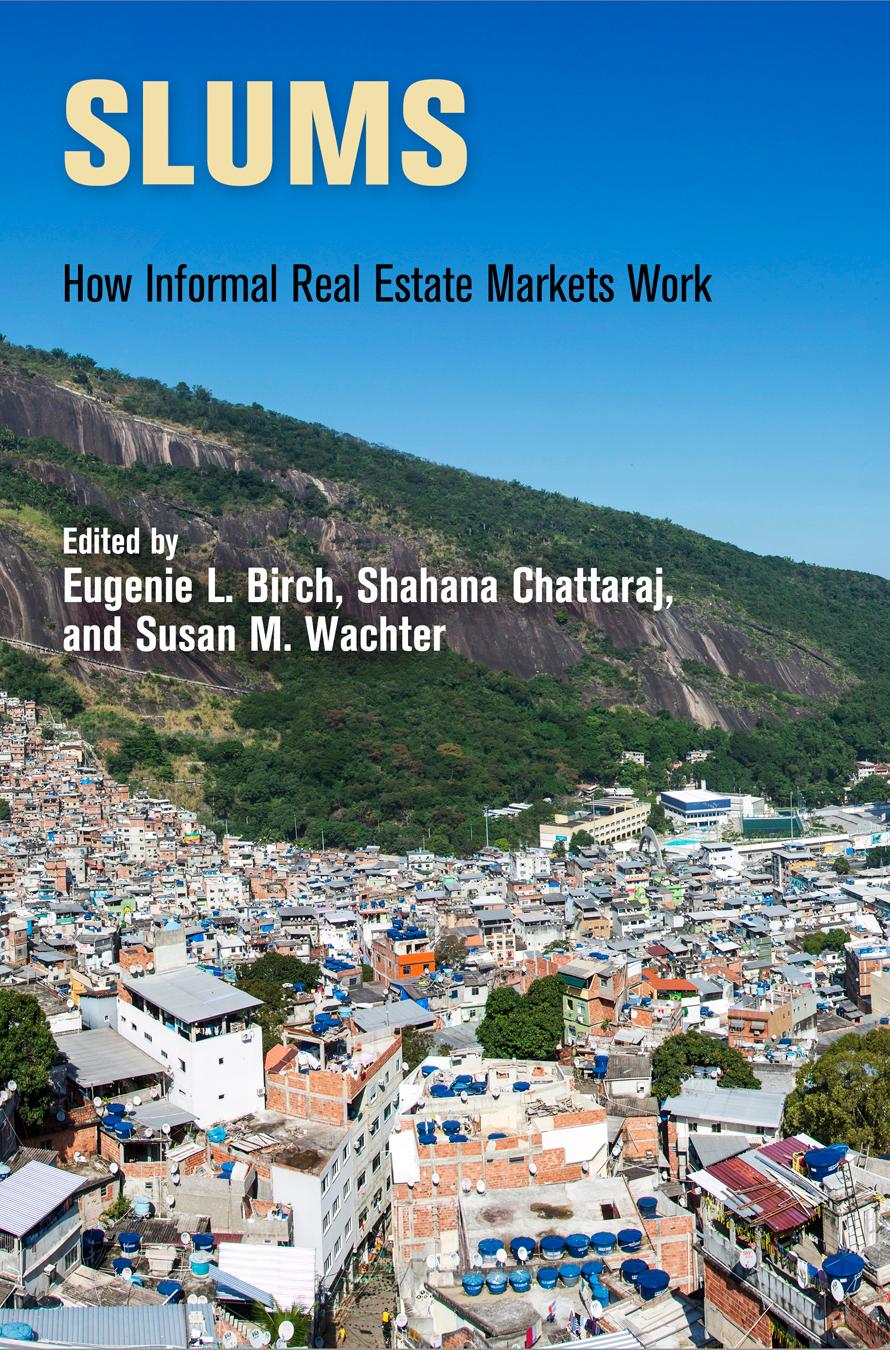
Large numbers of people in urbanizing regions in the developing world live and work in unplanned settlements that grow through incremental processes of squatting and self-building. Slums: How Informal Real Estate Markets Work shows that unauthorized settlements in rapidly growing cities are not divorced from market forces; rather, they must be understood as complex environments where state policies and market actors still do play a role. In this volume, contributors examine how the form and function of informal real estate markets are shaped by legal systems governing property rights, by national and local policy, and by historical and geographic particularities of specific neighborhoods. Their essays provide detailed portraits of individuals and community organizations, revealing in granular detail the working of informal real estate markets, and they review programs that have been implemented in unconventional settlements to provide lessons about the effectiveness and implementation challenges of different approaches.
Chapters explore the relationships between informality, state policies, and market forces from a range of disciplinary perspectives and on different scales, from an analysis of the relationship between regulations and housing in 600 developing world cities to an ethnographic account of the buying and selling of houses in Rio de Janeiro's favelas. While many of the book's contributors focus on the emerging economies of India and Brazil, the conclusions drawn illustrate dynamics relevant to developing countries throughout the Global South. The diversity of perspectives combines to create a rich understanding of an important, complex, and understudied topic.
Contributors: Arthur Acolin, Sai Balakrishnan, Eugenie L. Birch, José Brakarz, Shahana Chattaraj, Sebastian Galiani, David Gouverneur, Yvonne Mautner, Paavo Monkkonen, Vinit Mukhija, Janice E. Perlman, Lucas Ronconi, Bish Sanyal, Ernesto Schargrodsky, Patrícia Cezário Silva, Susan M. Wachter.
Before Memmo my notes were scattered across PDFs. Now a workspace pulls everything into one place — I see exactly what's still left to study.
Memmo's summaries are gold before exams. I don't have to re-read 800 pages two weeks before — just the important parts.
The AI chat has saved me the night before an exam more than once. I just keep asking until I get it — no waiting on a study group to reply.
The quizzes hit exactly what I need to know. Memmo tracks what I get stuck on — so I only practice what's worth it.
Flashcards with spaced repetition are magic. Memmo knows when I'm about to forget something and brings it back.
The AI podcasts are my favorite. I listen on my way to school and get a recap without sitting at a computer.

Handbok i kvalitativa metoder
281 kr

Hållbar utveckling: en introduktion för ingenjörer och andra problemlösare
334 kr

Brymans Samhällsvetenskapliga metoder
390 kr

Projektledning
491 kr

Den orättvisa hälsan: om socioekonomiska skillnader i hälsa och livslängd
326 kr

Organizational Leadership
429 kr

Vetenskapsteori för nybörjare
196 kr

På väg mot läraryrket
172 kr

Det sociala livet i skolan: Socialpsykologiska perspektiv
253 kr

Betygsättningens didaktik
151 kr

Personality
402 kr

Studying Leadership
404 kr

Managing Innovation
477 kr

Introduktion till samhällsvetenskaplig metod
347 kr

The Psychology of Sex and Gender
698 kr

Evidens och kunskap för socialt arbete
207 kr

Introduction to Leadership
605 kr