
Before Memmo my notes were scattered across PDFs. Now a workspace pulls everything into one place — I see exactly what's still left to study.
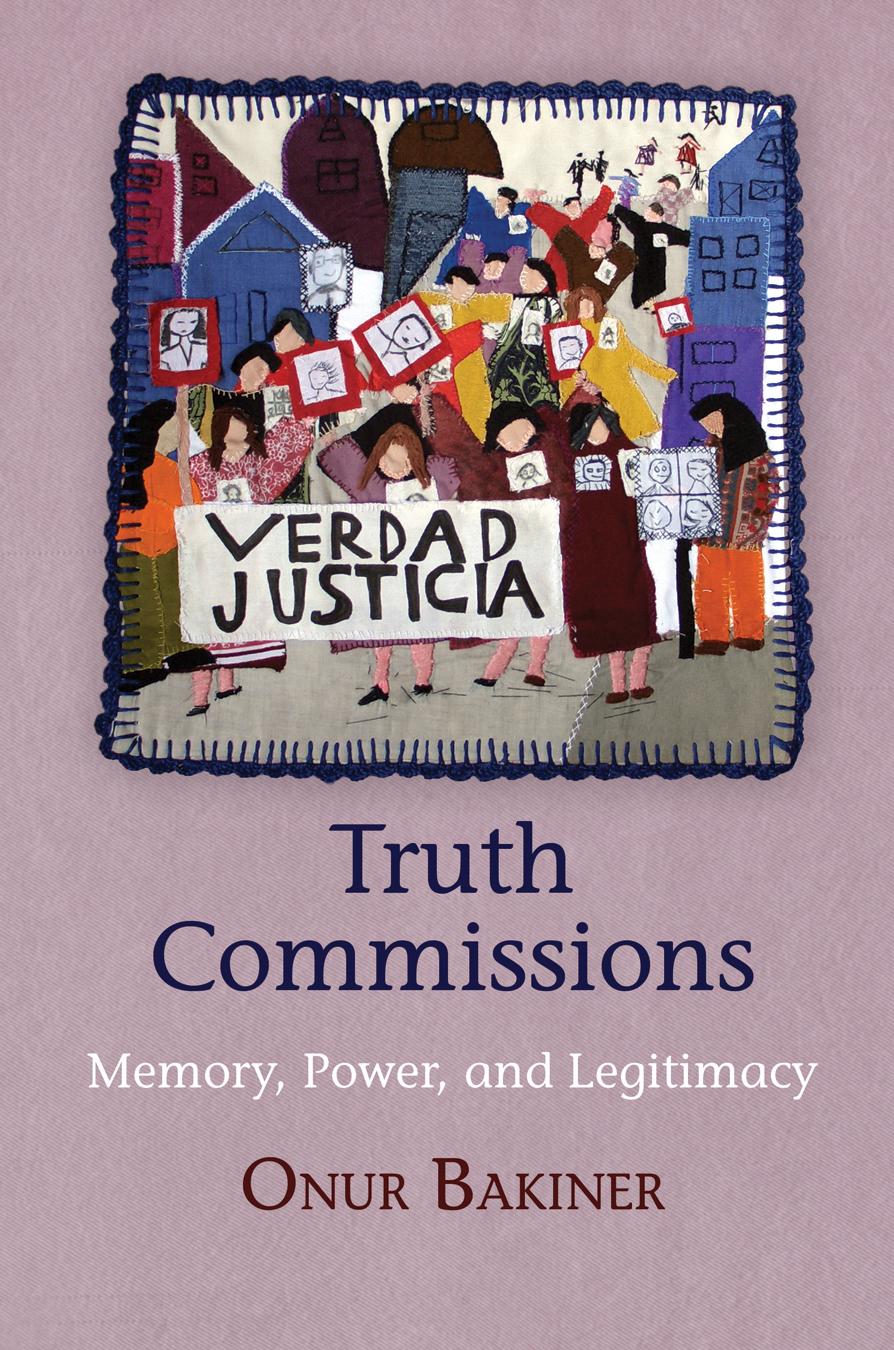
Since the 1980s a number of countries have established truth commissions to come to terms with the legacy of past human rights violations, yet little is known about the achievements and shortcomings of this popular transitional justice tool. Drawing on research on Chile's National Truth and Reconciliation Commission and Peru's Truth and Reconciliation Commission, and exploring the scholarship on thirteen other transitional contexts, Onur Bakiner evaluates the success of truth commissions in promoting policy reform, human rights accountability, and the public recognition of human rights violations. He argues that although political elites often see a truth commission as a convenient way to address past atrocities, the findings, historical narratives, and recommendations of such commissions often surprise, upset, and discredit influential political actors. Even when commissions produce only modest change as a result of political constraints, Bakiner contends, they open up new avenues for human rights activism by triggering the creation of new victims' organizations, facilitating public debates over social memory, and inducing civil society actors to monitor the country's human rights policy.
Bakiner demonstrates how truth commissions have recovered basic facts about human rights violations, forced societies to rethink the violence and exclusion of nation building, and produced a new dynamic whereby the state seeks to legitimize its central position between history and politics by accepting a high degree of societal penetration into the production and diffusion of official national history. By doing so, truth commissions have challenged and transformed public discourses on memory, truth, justice, reconciliation, recognition, nationalism, and political legitimacy in the contemporary world.
Before Memmo my notes were scattered across PDFs. Now a workspace pulls everything into one place — I see exactly what's still left to study.
Memmo's summaries are gold before exams. I don't have to re-read 800 pages two weeks before — just the important parts.
The AI chat has saved me the night before an exam more than once. I just keep asking until I get it — no waiting on a study group to reply.
The quizzes hit exactly what I need to know. Memmo tracks what I get stuck on — so I only practice what's worth it.
Flashcards with spaced repetition are magic. Memmo knows when I'm about to forget something and brings it back.
The AI podcasts are my favorite. I listen on my way to school and get a recap without sitting at a computer.

Handbok i kvalitativa metoder
281 kr

Hållbar utveckling: en introduktion för ingenjörer och andra problemlösare
334 kr

Brymans Samhällsvetenskapliga metoder
390 kr

Projektledning
491 kr

Den orättvisa hälsan: om socioekonomiska skillnader i hälsa och livslängd
326 kr

Organizational Leadership
429 kr

Vetenskapsteori för nybörjare
196 kr

På väg mot läraryrket
172 kr

Det sociala livet i skolan: Socialpsykologiska perspektiv
253 kr

Betygsättningens didaktik
151 kr

Personality
402 kr

Studying Leadership
404 kr

Managing Innovation
477 kr

Introduktion till samhällsvetenskaplig metod
347 kr

The Psychology of Sex and Gender
698 kr

Evidens och kunskap för socialt arbete
207 kr

Introduction to Leadership
605 kr