
Before Memmo my notes were scattered across PDFs. Now a workspace pulls everything into one place — I see exactly what's still left to study.
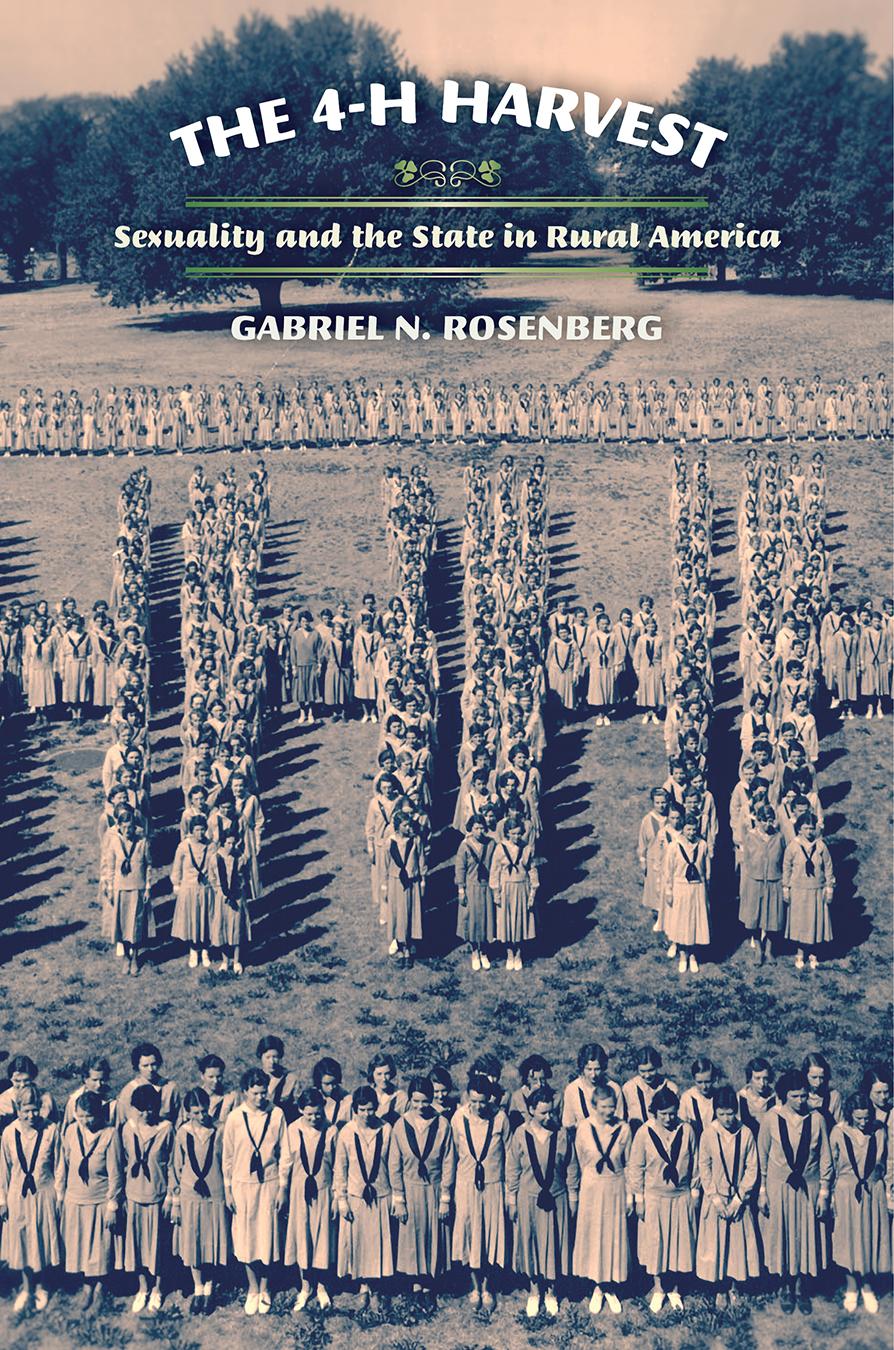
4-H, the iconic rural youth program run by the U.S. Department of Agriculture, has enrolled more than 70 million Americans over the last century. As the first comprehensive history of the organization, The 4-H Harvest tracks 4-H from its origins in turn-of-the-century agricultural modernization efforts, through its role in the administration of federal programs during the New Deal and World War II, to its status as an instrument of international development in Cold War battlegrounds like Vietnam and Latin America.
In domestic and global settings, 4-H's advocates dreamed of transforming rural economies, communities, and families. Organizers believed the clubs would bypass backward patriarchs reluctant to embrace modern farming techniques. In their place, 4-H would cultivate efficient, capital-intensive farms and convince rural people to trust federal expertise. The modern 4-H farm also featured gender-appropriate divisions of labor and produced healthy, robust children. To retain the economic potential of the "best" youth, clubs insinuated state agents at the heart of rural family life. By midcentury, the vision of healthy 4-H'ers on family farms advertised the attractiveness of the emerging agribusiness economy.
With rigorous archival research, Gabriel N. Rosenberg provocatively argues that public acceptance of the political economy of agribusiness hinged on federal efforts to establish a modern rural society through effective farming technology and techniques as well as through carefully managed gender roles, procreation, and sexuality. The 4-H Harvest shows how 4-H, like the countryside it often symbolizes, is the product of the modernist ambition to efficiently govern rural economies, landscapes, and populations.
Before Memmo my notes were scattered across PDFs. Now a workspace pulls everything into one place — I see exactly what's still left to study.
Memmo's summaries are gold before exams. I don't have to re-read 800 pages two weeks before — just the important parts.
The AI chat has saved me the night before an exam more than once. I just keep asking until I get it — no waiting on a study group to reply.
The quizzes hit exactly what I need to know. Memmo tracks what I get stuck on — so I only practice what's worth it.
Flashcards with spaced repetition are magic. Memmo knows when I'm about to forget something and brings it back.
The AI podcasts are my favorite. I listen on my way to school and get a recap without sitting at a computer.

Handbok i kvalitativa metoder
281 kr

Hållbar utveckling: en introduktion för ingenjörer och andra problemlösare
334 kr

Brymans Samhällsvetenskapliga metoder
390 kr

Projektledning
491 kr

Den orättvisa hälsan: om socioekonomiska skillnader i hälsa och livslängd
326 kr

Organizational Leadership
429 kr

Vetenskapsteori för nybörjare
196 kr

På väg mot läraryrket
172 kr

Det sociala livet i skolan: Socialpsykologiska perspektiv
253 kr

Betygsättningens didaktik
151 kr

Personality
402 kr

Studying Leadership
404 kr

Managing Innovation
477 kr

Introduktion till samhällsvetenskaplig metod
347 kr

The Psychology of Sex and Gender
698 kr

Evidens och kunskap för socialt arbete
207 kr

Introduction to Leadership
605 kr