
Before Memmo my notes were scattered across PDFs. Now a workspace pulls everything into one place — I see exactly what's still left to study.
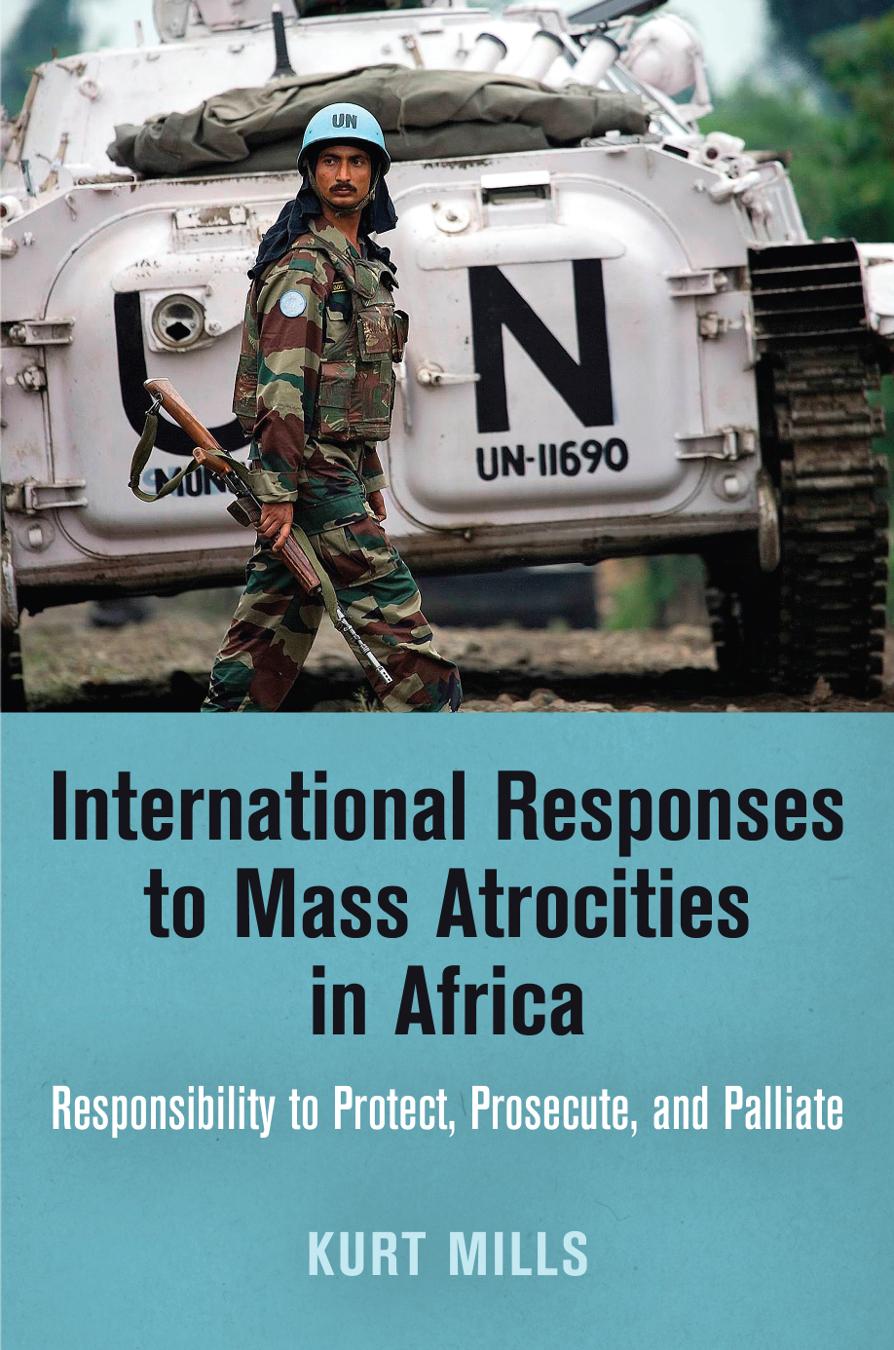
Since the end of World War II and the founding of the United Nations, genocide, crimes against humanity and other war crimes—mass atrocities—have been explicitly illegal. When such crimes are committed, the international community has an obligation to respond: the human rights of the victims outweigh the sovereignty claims of states that engage in or allow such human rights violations. This obligation has come to be known as the responsibility to protect. Yet, parallel to this responsibility, two other related responsibilities have developed: to prosecute those responsible for the crimes, and to provide humanitarian relief to the victims—what the author calls the responsibility to palliate. Even though this rhetoric of protecting those in need is well used by the international community, its application in practice has been erratic at best.
In International Responses to Mass Atrocities in Africa, Kurt Mills develops a typology of responses to mass atrocities, investigates the limitations of these responses, and calls for such responses to be implemented in a more timely and thoughtful manner. Mills considers four cases of international responses to mass atrocities—in Rwanda, the Democratic Republic of the Congo, Uganda, and Darfur—putting the cases into historical context and analyzing them according to the typology, showing how the responses interact. Although all are intended to address human suffering, they are very different types of actions and accomplish different things, over different timescales, on different orders of magnitude, and by very different types of actors. But the critical question is whether they accomplish their objectives in a mutually supportive way—and what the trade-offs in using one or more of these responses may be. By expanding the understanding of international responsibilities, Mills provides critical analysis of the possibilities for the international community to respond to humanitarian crises.
Before Memmo my notes were scattered across PDFs. Now a workspace pulls everything into one place — I see exactly what's still left to study.
Memmo's summaries are gold before exams. I don't have to re-read 800 pages two weeks before — just the important parts.
The AI chat has saved me the night before an exam more than once. I just keep asking until I get it — no waiting on a study group to reply.
The quizzes hit exactly what I need to know. Memmo tracks what I get stuck on — so I only practice what's worth it.
Flashcards with spaced repetition are magic. Memmo knows when I'm about to forget something and brings it back.
The AI podcasts are my favorite. I listen on my way to school and get a recap without sitting at a computer.

Handbok i kvalitativa metoder
281 kr

Hållbar utveckling: en introduktion för ingenjörer och andra problemlösare
334 kr

Brymans Samhällsvetenskapliga metoder
390 kr

Projektledning
491 kr

Den orättvisa hälsan: om socioekonomiska skillnader i hälsa och livslängd
326 kr

Vetenskapsteori för nybörjare
196 kr

Organizational Leadership
429 kr

På väg mot läraryrket
172 kr

Det sociala livet i skolan: Socialpsykologiska perspektiv
253 kr

Betygsättningens didaktik
151 kr

Personality
402 kr

Studying Leadership
404 kr

Managing Innovation
477 kr

Introduktion till samhällsvetenskaplig metod
347 kr

The Psychology of Sex and Gender
698 kr

Evidens och kunskap för socialt arbete
207 kr

Introduction to Leadership
605 kr