
Before Memmo my notes were scattered across PDFs. Now a workspace pulls everything into one place — I see exactly what's still left to study.
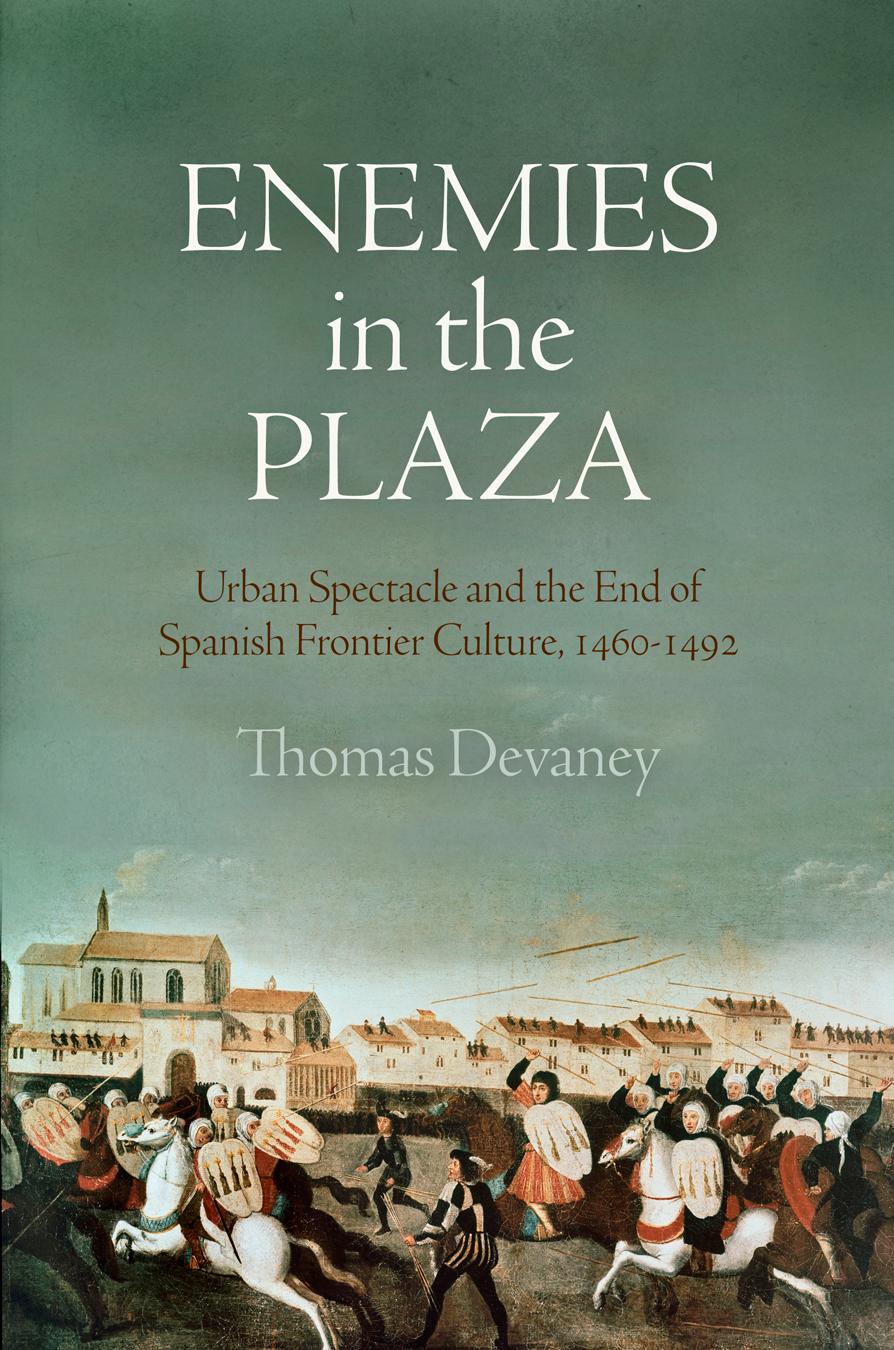
Toward the end of the fifteenth century, Spanish Christians near the border of Castile and Muslim-ruled Granada held complex views about religious tolerance. People living in frontier cities bore much of the cost of war against Granada and faced the greatest risk of retaliation, but had to reconcile an ideology of holy war with the genuine admiration many felt for individual members of other religious groups. After a century of near-continuous truces, a series of political transformations in Castile—including those brought about by the civil wars of Enrique IV's reign, the final war with Granada, and Fernando and Isabel's efforts to reestablish royal authority—incited a broad reaction against religious minorities. As Thomas Devaney shows, this active hostility was triggered by public spectacles that emphasized the foreignness of Muslims, Jews, and recent converts to Christianity.
Enemies in the Plaza traces the changing attitudes toward religious minorities as manifested in public spectacles ranging from knightly tournaments, to religious processions, to popular festivals. Drawing on contemporary chronicles and municipal records as well as literary and architectural evidence, Devaney explores how public pageantry originally served to dissipate the anxieties fostered by the give-and-take of frontier culture and how this tradition of pageantry ultimately contributed to the rejection of these compromises. Through vivid depictions of frontier personalities, cities, and performances, Enemies in the Plaza provides an account of how public spectacle served to negotiate and articulate the boundaries between communities as well as to help Castilian nobles transform the frontier's religious ambivalence into holy war.
Before Memmo my notes were scattered across PDFs. Now a workspace pulls everything into one place — I see exactly what's still left to study.
Memmo's summaries are gold before exams. I don't have to re-read 800 pages two weeks before — just the important parts.
The AI chat has saved me the night before an exam more than once. I just keep asking until I get it — no waiting on a study group to reply.
The quizzes hit exactly what I need to know. Memmo tracks what I get stuck on — so I only practice what's worth it.
Flashcards with spaced repetition are magic. Memmo knows when I'm about to forget something and brings it back.
The AI podcasts are my favorite. I listen on my way to school and get a recap without sitting at a computer.

Handbok i kvalitativa metoder
281 kr

Hållbar utveckling: en introduktion för ingenjörer och andra problemlösare
334 kr

Brymans Samhällsvetenskapliga metoder
390 kr

Projektledning
491 kr

Den orättvisa hälsan: om socioekonomiska skillnader i hälsa och livslängd
326 kr

Vetenskapsteori för nybörjare
196 kr

Organizational Leadership
429 kr

På väg mot läraryrket
172 kr

Det sociala livet i skolan: Socialpsykologiska perspektiv
253 kr

Betygsättningens didaktik
151 kr

Personality
402 kr

Studying Leadership
404 kr

Managing Innovation
477 kr

Introduktion till samhällsvetenskaplig metod
347 kr

The Psychology of Sex and Gender
698 kr

Evidens och kunskap för socialt arbete
207 kr

Introduction to Leadership
605 kr