
Before Memmo my notes were scattered across PDFs. Now a workspace pulls everything into one place — I see exactly what's still left to study.
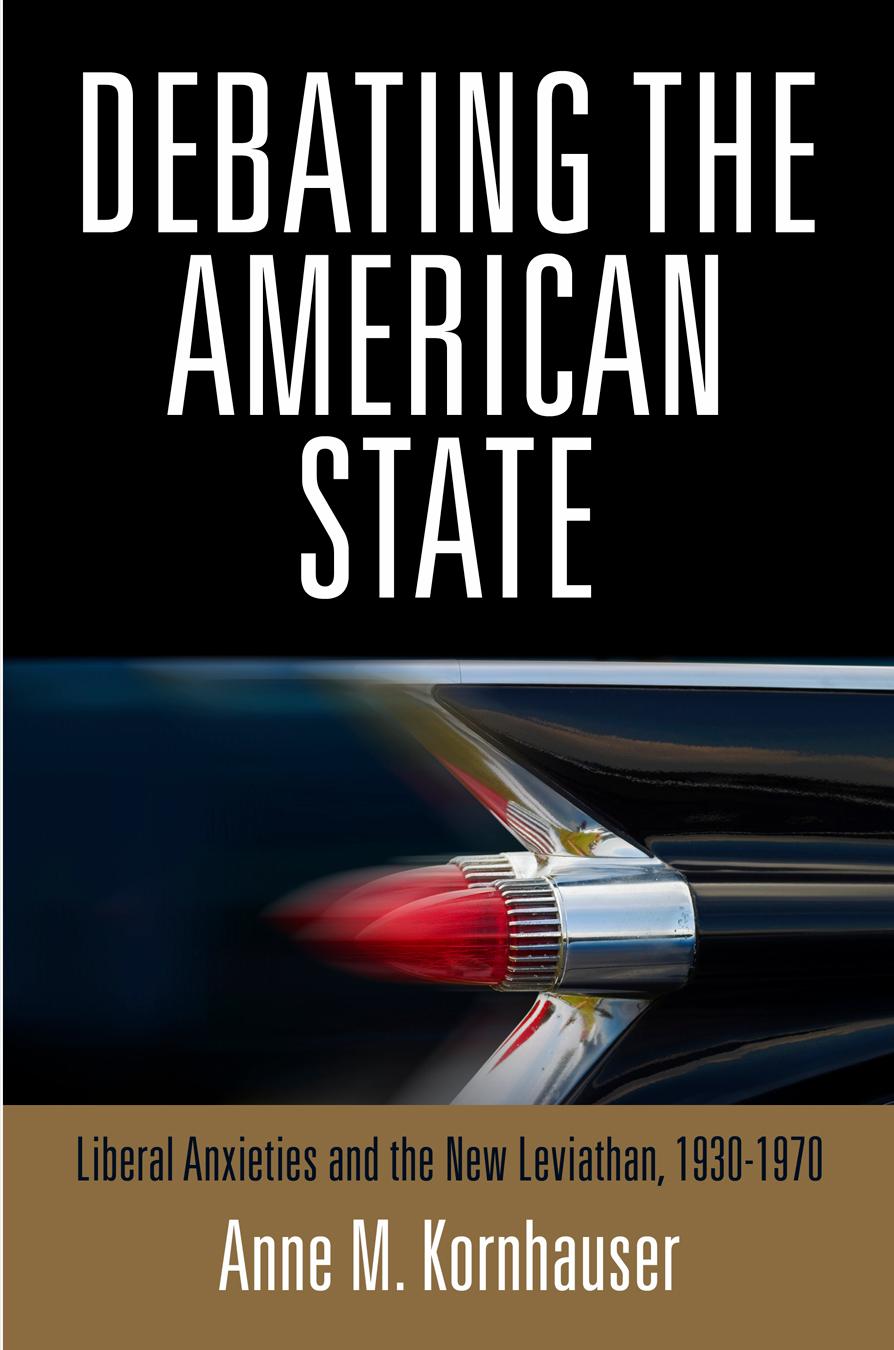
The New Deal left a host of political, institutional, and economic legacies. Among them was the restructuring of the government into an administrative state with a powerful executive leader and a large class of unelected officials. This "leviathan" state was championed by the political left, and its continued growth and dominance in American politics is seen as a product of liberal thought—to the extent that "Big Government" is now nearly synonymous with liberalism. Yet there were tensions among liberal statists even as the leviathan first arose. Born in crisis and raised by technocrats, the bureaucratic state always rested on shaky foundations, and the liberals who built and supported it disagreed about whether and how to temper the excesses of the state while retaining its basic structure and function.
Debating the American State traces the encounter between liberal thought and the rise of the administrative state and the resulting legitimacy issues that arose for democracy, the rule of law, and individual autonomy. Anne Kornhauser examines a broad and unusual cast of characters, including American social scientists and legal academics, the philosopher John Rawls, and German refugee intellectuals who had witnessed the destruction of democracy in the face of a totalitarian administrative state. In particular, she uncovers the sympathetic but concerned voices—commonly drowned out in the increasingly partisan political discourse—of critics who struggled to reconcile the positive aspects of the administrative state with the negative pressure such a contrivance brought on other liberal values such as individual autonomy, popular sovereignty, and social justice. By showing that the leviathan state was never given a principled and scrupulous justification by its proponents, Debating the American State reveals why the liberal state today remains haunted by programmatic dysfunctions and relentless political attacks.
Before Memmo my notes were scattered across PDFs. Now a workspace pulls everything into one place — I see exactly what's still left to study.
Memmo's summaries are gold before exams. I don't have to re-read 800 pages two weeks before — just the important parts.
The AI chat has saved me the night before an exam more than once. I just keep asking until I get it — no waiting on a study group to reply.
The quizzes hit exactly what I need to know. Memmo tracks what I get stuck on — so I only practice what's worth it.
Flashcards with spaced repetition are magic. Memmo knows when I'm about to forget something and brings it back.
The AI podcasts are my favorite. I listen on my way to school and get a recap without sitting at a computer.

Handbok i kvalitativa metoder
281 kr

Hållbar utveckling: en introduktion för ingenjörer och andra problemlösare
334 kr

Brymans Samhällsvetenskapliga metoder
390 kr

Projektledning
491 kr

Den orättvisa hälsan: om socioekonomiska skillnader i hälsa och livslängd
326 kr

Vetenskapsteori för nybörjare
196 kr

Organizational Leadership
429 kr

På väg mot läraryrket
172 kr

Det sociala livet i skolan: Socialpsykologiska perspektiv
253 kr

Betygsättningens didaktik
151 kr

Personality
402 kr

Studying Leadership
404 kr

Managing Innovation
477 kr

Introduktion till samhällsvetenskaplig metod
347 kr

The Psychology of Sex and Gender
698 kr

Evidens och kunskap för socialt arbete
207 kr

Introduction to Leadership
605 kr