
Before Memmo my notes were scattered across PDFs. Now a workspace pulls everything into one place — I see exactly what's still left to study.
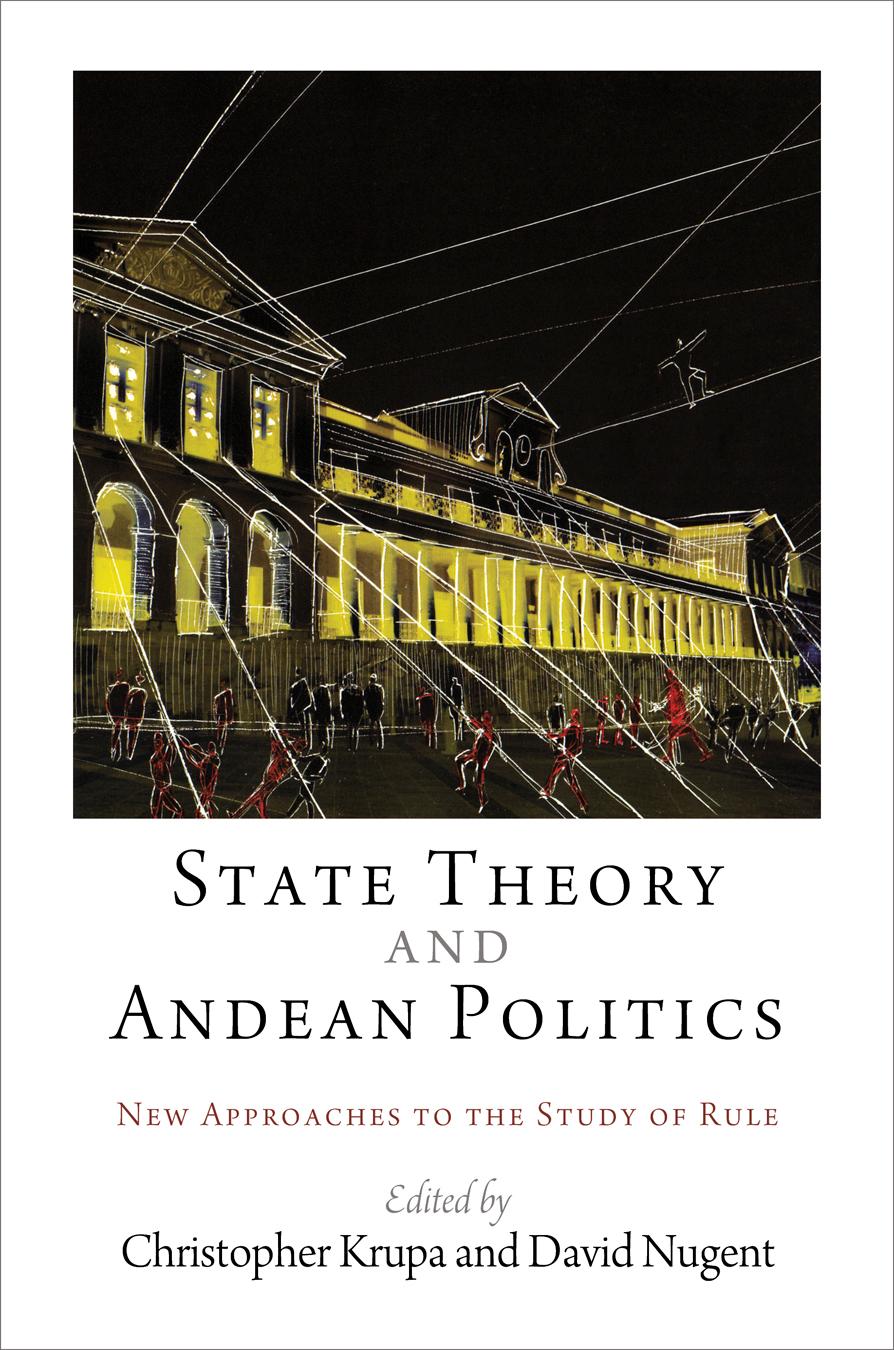
In the last few decades, Andean states have seen major restructuring of the organization, leadership, and reach of their governments. With these political tremors come major aftershocks, regarding both definitions and expectations: What is a state? Who or what makes it up, and where does it reside? In what capacity can the state be expected to right wrongs, raise people up, protect them from harm, maintain order, or provide public services? What are its powers and responsibilities?
State Theory and Andean Politics attempts to answer these questions and more through an examination of the ongoing process of state creation in Andean nations. Focusing on the everyday, extraofficial, and frequently invisible or partially concealed permutations of rule in the lives of Andean people, the essays explore the material and cultural processes by which states come to appear as real and tangible parts of everyday life. In particular, they focus on the critical role of emotion, imagination, and fantasy in generating belief in the state, among the governed and the governing alike. This approach pushes beyond the limits of the state as conventionally understood to consider how "nonstate" acts of governance intersect with official institutions of government, while never being entirely determined by them or bound to their authorizing agendas. State Theory and Andean Politics asserts that the state is not simply an institutional-bureaucratic apparatus but one of many forces vying for a claim to legitimate political dominion.
Featuring an impressive array of Andeanist scholars as well as eminent state theorists Akhil Gupta and Gyanendra Pandey, State Theory and Andean Politics makes a bold and novel claim about the nature of states and state-making that deepens understanding not only of the Andes and the Global South but of the world at large.
Contributors: Kim Clark, Nicole Fabricant, Lesley Gill, Akhil Gupta, Christopher Krupa, David Nugent, Gyanendra Pandey, Mercedes Prieto, Maria Clemencia Ramírez, Irene Silverblatt, Karen Spalding, Winifred Tate.
Before Memmo my notes were scattered across PDFs. Now a workspace pulls everything into one place — I see exactly what's still left to study.
Memmo's summaries are gold before exams. I don't have to re-read 800 pages two weeks before — just the important parts.
The AI chat has saved me the night before an exam more than once. I just keep asking until I get it — no waiting on a study group to reply.
The quizzes hit exactly what I need to know. Memmo tracks what I get stuck on — so I only practice what's worth it.
Flashcards with spaced repetition are magic. Memmo knows when I'm about to forget something and brings it back.
The AI podcasts are my favorite. I listen on my way to school and get a recap without sitting at a computer.

Handbok i kvalitativa metoder
281 kr

Hållbar utveckling: en introduktion för ingenjörer och andra problemlösare
334 kr

Brymans Samhällsvetenskapliga metoder
390 kr

Projektledning
491 kr

Den orättvisa hälsan: om socioekonomiska skillnader i hälsa och livslängd
326 kr

Vetenskapsteori för nybörjare
196 kr

Organizational Leadership
429 kr

På väg mot läraryrket
172 kr

Det sociala livet i skolan: Socialpsykologiska perspektiv
253 kr

Betygsättningens didaktik
151 kr

Personality
402 kr

Studying Leadership
404 kr

Managing Innovation
477 kr

Introduktion till samhällsvetenskaplig metod
347 kr

The Psychology of Sex and Gender
698 kr

Evidens och kunskap för socialt arbete
207 kr

Introduction to Leadership
605 kr