
Before Memmo my notes were scattered across PDFs. Now a workspace pulls everything into one place — I see exactly what's still left to study.
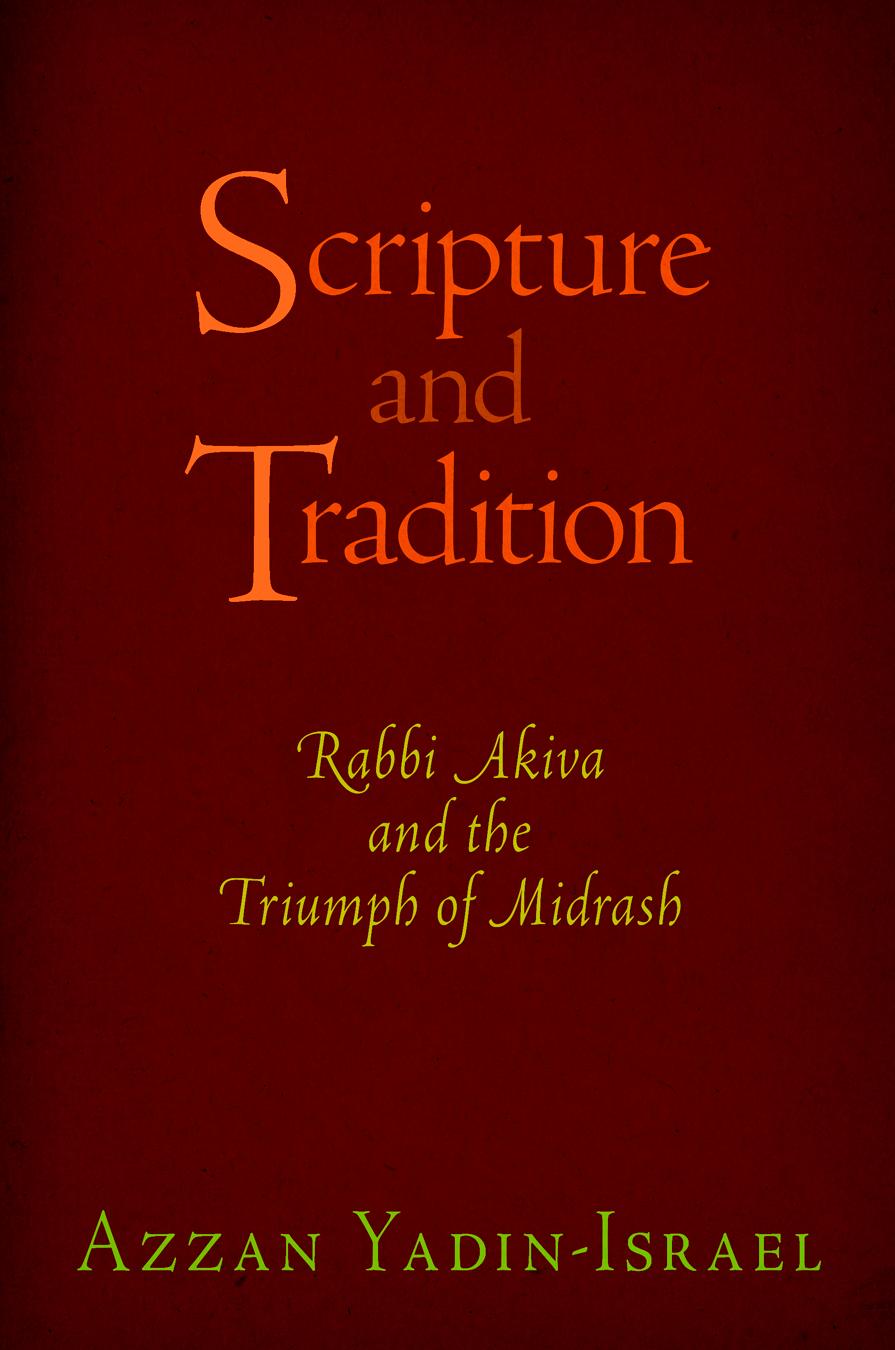
The earliest rabbinic commentary to the Book of Leviticus, the Sifra, is generally considered an exemplum of Rabbi Akiva's intensely scriptural school of interpretation. But, Azzan Yadin-Israel contends, the Sifra commentary exhibits two distinct layers of interpretation that bring dramatically different assumptions to bear on the biblical text: earlier interpretations accord with the hermeneutic principles associated with Rabbi Ishmael, the other major school of early rabbinic midrash, while later additions subtly alter hermeneutic terminology and formulas, resulting in an engagement with Scripture that is not interpretive at all. Rather, the midrashic terminology in the Sifra's anonymous passages is part of what Yadin-Israel calls "a hermeneutic of camouflage," aimed at presenting oral traditions as though they were Scripture-based injunctions.
Scripture and Tradition offers a radical rereading of the Sifra and its authorship, with far-reaching ramifications for our understanding of rabbinic literature as a whole. Using this new understanding of the Sifra as his starting point, Yadin-Israel demonstrates a two fold break in the portrayal of Rabbi Akiva: hermeneutically, the sober midrashist who appeared in earlier rabbinic sources is transformed into an inspired, oracular interpreter of Scripture in the Babylonian Talmud; while the biographically unremarkable sage is recast as a youthful ignoramus who came to Torah study late in life. The dual transformations of Rabbi Akiva—like the Sifra's hermeneutic of camouflage—are motivated by an ideological shift toward a greater emphasis on scriptural authority and away from received traditions, an insight that sheds new light on the vexing question of midrash and oral tradition in rabbinic sources. Through this close examination of a notoriously difficult text, Scripture and Tradition recovers a vital piece of the history of Jewish thought.
Before Memmo my notes were scattered across PDFs. Now a workspace pulls everything into one place — I see exactly what's still left to study.
Memmo's summaries are gold before exams. I don't have to re-read 800 pages two weeks before — just the important parts.
The AI chat has saved me the night before an exam more than once. I just keep asking until I get it — no waiting on a study group to reply.
The quizzes hit exactly what I need to know. Memmo tracks what I get stuck on — so I only practice what's worth it.
Flashcards with spaced repetition are magic. Memmo knows when I'm about to forget something and brings it back.
The AI podcasts are my favorite. I listen on my way to school and get a recap without sitting at a computer.

Handbok i kvalitativa metoder
281 kr

Hållbar utveckling: en introduktion för ingenjörer och andra problemlösare
334 kr

Brymans Samhällsvetenskapliga metoder
390 kr

Projektledning
491 kr

Den orättvisa hälsan: om socioekonomiska skillnader i hälsa och livslängd
326 kr

Organizational Leadership
429 kr

Vetenskapsteori för nybörjare
196 kr

På väg mot läraryrket
172 kr

Det sociala livet i skolan: Socialpsykologiska perspektiv
253 kr

Betygsättningens didaktik
151 kr

Personality
402 kr

Studying Leadership
404 kr

Managing Innovation
477 kr

Introduktion till samhällsvetenskaplig metod
347 kr

The Psychology of Sex and Gender
698 kr

Evidens och kunskap för socialt arbete
207 kr

Introduction to Leadership
605 kr