
Before Memmo my notes were scattered across PDFs. Now a workspace pulls everything into one place — I see exactly what's still left to study.
Selected by Choice magazine as an Outstanding Academic Title
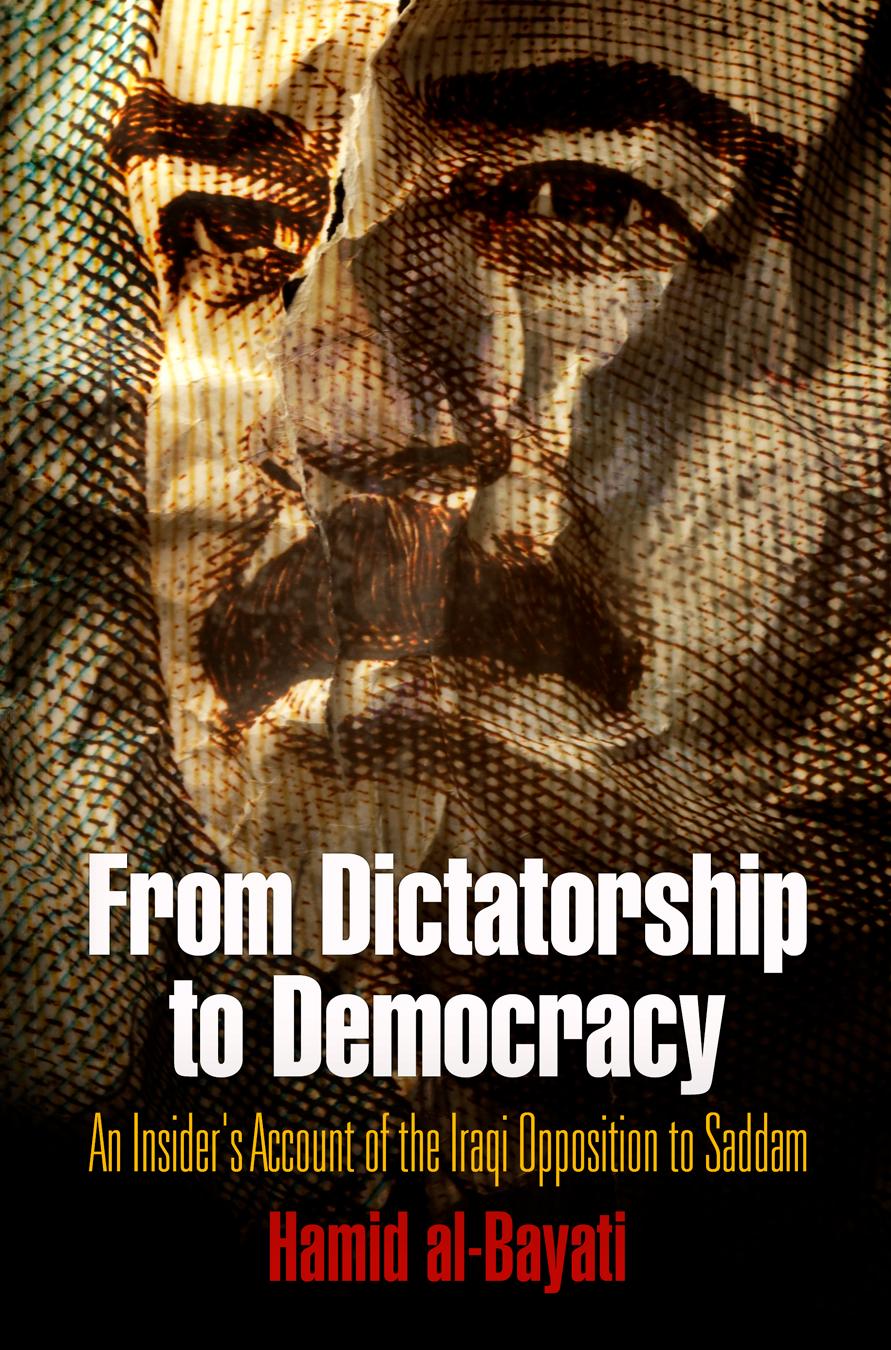
Today, Hamid al-Bayati serves as Iraqi ambassador to the United Nations. But for many years he lived in exile in London, where he worked with other opponents of Saddam Hussein's regime to make a democratic and pluralistic Iraq a reality. As former Western spokesman for the Supreme Council for the Islamic Revolution in Iraq (SCIRI), and as a member of the executive council of the Iraqi National Congress, two of the main groups opposing Saddam's regime, he led campaigns to alert the world to human rights violations in Iraq and win support from the international community for the removal of Saddam.
An important Iraqi diplomat and member of Iraq's majority Shia community, he offers firsthand accounts of the meetings and discussions he and other Iraqi opponents to Saddam held with American and British diplomats from 1991 to 2004. Drawn from al-Bayati's personal archives of meeting minutes and correspondence, From Dictatorship to Democracy takes readers through the history of the opposition.
We learn the views and actions of principal figures, such as SCIRI head Sayyid Mohammed Baqir Al-Hakeem and the other leaders of the Iraqi National Congress, Ahmed Chalabi and his Kurdish counterparts, Masound Barzani and Jalal Talabani. Al-Bayati vividly captures their struggle to unify in the face of not only Saddam's harsh and bloody repression but also an unresponsive and unmotivated international community. Al-Bayati's efforts in the months before and after the U.S. invasion also put him in direct contact with key U.S. figures such as Zalmay Khalilzad and L. Paul Bremer and at the center of the debates over returning Iraq to self-government quickly and creating the foundation for a secure and stable state.
Al-Bayati was both eyewitness to and actor in the dramatic struggle to remove Saddam from power. In this unique historical document, he provides detailed recollections of his work on behalf of a democratic Iraq that reflect the hopes and frustrations of the Iraqi people.
Before Memmo my notes were scattered across PDFs. Now a workspace pulls everything into one place — I see exactly what's still left to study.
Memmo's summaries are gold before exams. I don't have to re-read 800 pages two weeks before — just the important parts.
The AI chat has saved me the night before an exam more than once. I just keep asking until I get it — no waiting on a study group to reply.
The quizzes hit exactly what I need to know. Memmo tracks what I get stuck on — so I only practice what's worth it.
Flashcards with spaced repetition are magic. Memmo knows when I'm about to forget something and brings it back.
The AI podcasts are my favorite. I listen on my way to school and get a recap without sitting at a computer.

Handbok i kvalitativa metoder
281 kr

Hållbar utveckling: en introduktion för ingenjörer och andra problemlösare
334 kr

Brymans Samhällsvetenskapliga metoder
390 kr

Projektledning
491 kr

Den orättvisa hälsan: om socioekonomiska skillnader i hälsa och livslängd
326 kr

Vetenskapsteori för nybörjare
196 kr

Organizational Leadership
429 kr

På väg mot läraryrket
172 kr

Det sociala livet i skolan: Socialpsykologiska perspektiv
253 kr

Betygsättningens didaktik
151 kr

Personality
402 kr

Studying Leadership
404 kr

Managing Innovation
477 kr

Introduktion till samhällsvetenskaplig metod
347 kr

The Psychology of Sex and Gender
698 kr

Evidens och kunskap för socialt arbete
207 kr

Introduction to Leadership
605 kr