
Before Memmo my notes were scattered across PDFs. Now a workspace pulls everything into one place — I see exactly what's still left to study.
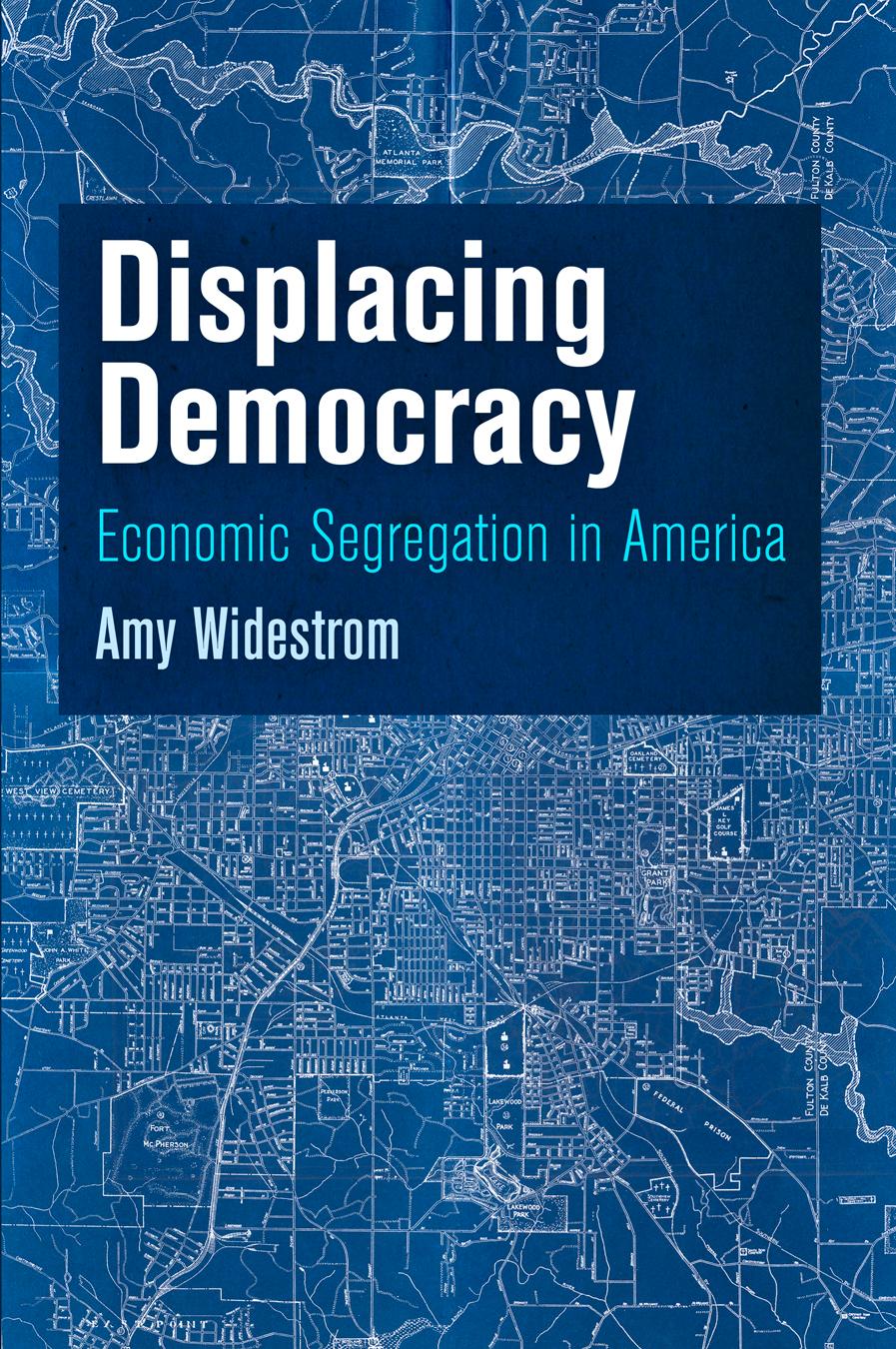
In recent decades, economically disadvantaged Americans have become more residentially segregated from other communities: they are increasingly likely to live in high-poverty neighborhoods that are spatially isolated with few civic resources. Low-income citizens are also less likely to be politically engaged, a trend that is most glaring in terms of voter turnout. Examining neighborhoods in Atlanta, Kansas City, Milwaukee, and Rochester, Amy Widestrom challenges the assumption that the "class gap" in political participation is largely the result of individual choices and dispositions. Displacing Democracy demonstrates that neighborhoods segregated along economic lines create conditions that encourage high levels of political activity, including political and civic mobilization and voting, among wealthier citizens while discouraging and impeding the poor from similar forms of civic engagement.
Drawing on quantitative research, case studies, and interviews, Widestrom shows that neighborhood-level resources and characteristics affect political engagement in distinct ways that are not sufficiently appreciated in the current understanding of American politics and political behavior. In addition to the roles played by individual traits and assets, increasing economic segregation in the United States denies low-income citizens the civic and social resources vital for political mobilization and participation. People living in poverty lack the time, money, and skills for active civic engagement, and this is compounded by the fact that residential segregation creates a barren civic environment incapable of supporting a vibrant civic community. Over time, this creates a balance of political power that is dramatically skewed not only toward individuals with greater incomes but toward entire neighborhoods with more economic resources.
Before Memmo my notes were scattered across PDFs. Now a workspace pulls everything into one place — I see exactly what's still left to study.
Memmo's summaries are gold before exams. I don't have to re-read 800 pages two weeks before — just the important parts.
The AI chat has saved me the night before an exam more than once. I just keep asking until I get it — no waiting on a study group to reply.
The quizzes hit exactly what I need to know. Memmo tracks what I get stuck on — so I only practice what's worth it.
Flashcards with spaced repetition are magic. Memmo knows when I'm about to forget something and brings it back.
The AI podcasts are my favorite. I listen on my way to school and get a recap without sitting at a computer.

Handbok i kvalitativa metoder
281 kr

Hållbar utveckling: en introduktion för ingenjörer och andra problemlösare
334 kr

Brymans Samhällsvetenskapliga metoder
390 kr

Projektledning
491 kr

Den orättvisa hälsan: om socioekonomiska skillnader i hälsa och livslängd
326 kr

Organizational Leadership
429 kr

Vetenskapsteori för nybörjare
196 kr

På väg mot läraryrket
172 kr

Det sociala livet i skolan: Socialpsykologiska perspektiv
253 kr

Betygsättningens didaktik
151 kr

Personality
402 kr

Studying Leadership
404 kr

Managing Innovation
477 kr

Introduktion till samhällsvetenskaplig metod
347 kr

The Psychology of Sex and Gender
698 kr

Evidens och kunskap för socialt arbete
207 kr

Introduction to Leadership
605 kr