
Before Memmo my notes were scattered across PDFs. Now a workspace pulls everything into one place — I see exactly what's still left to study.
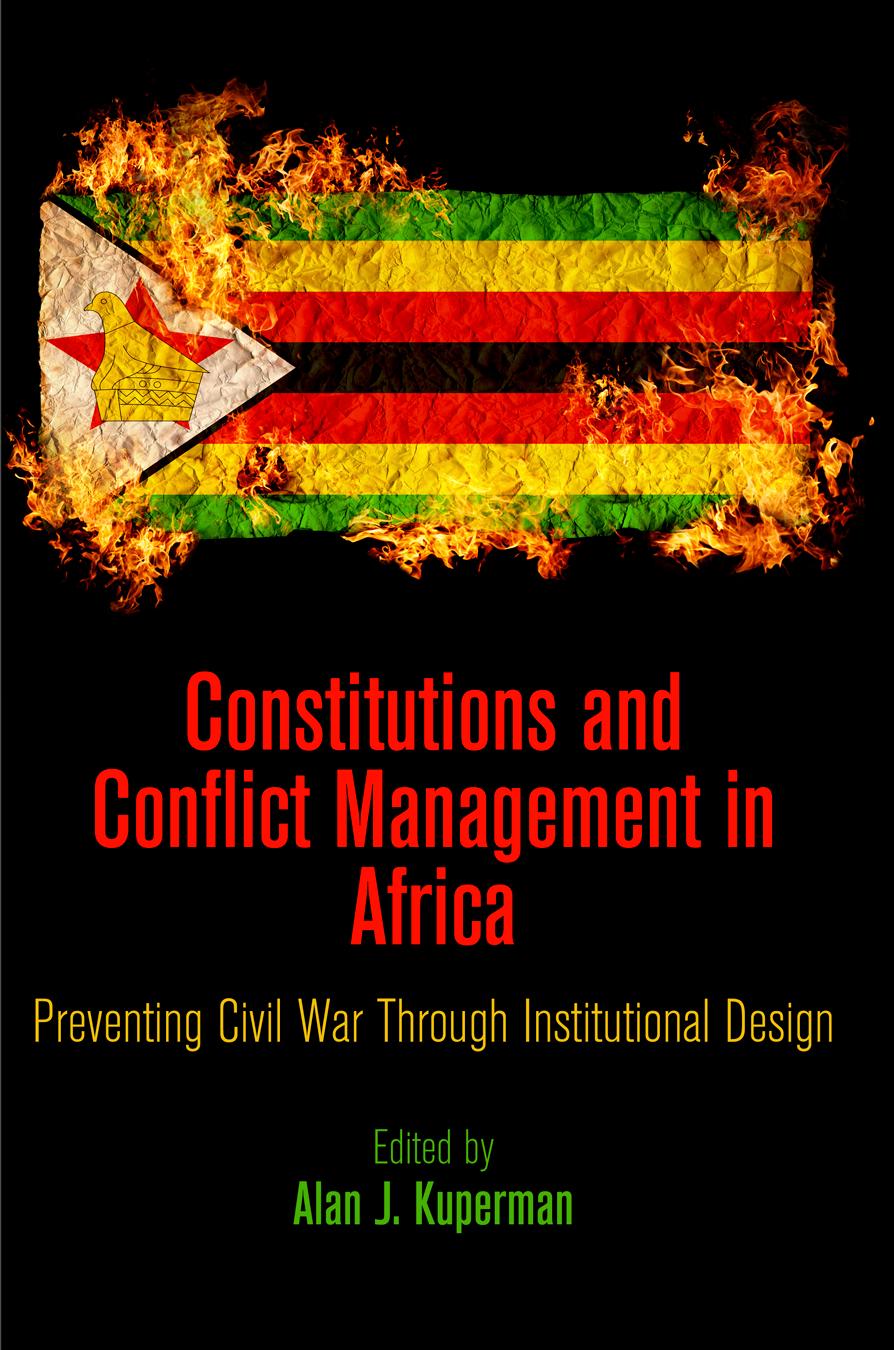
Each of Africa's countries has a different constitutional design, is characterized by a unique culture and history, and faces different stresses that threaten to undermine political stability. Presenting the first database of constitutional design in all African countries, along with seven original case studies, Constitutions and Conflict Management in Africa explores the types of domestic political institutions that can buffer societies from destabilizing changes that otherwise increase the risk of violence.
With detailed comparative studies of Burundi, Ghana, Kenya, Nigeria, Senegal, Sudan, and Zimbabwe, contributing scholars identify key turning points at which a state's political institutions either mitigated or escalated the effects of economic, environmental, demographic, and political shocks. They find that stability can be promoted by various constitutional designs—not only by accommodative institutions that encourage decentralization and multiculturalism, but also by the integrative, centralized designs that characterize the constitutions of most African countries. The greatest danger may arise from partial or inequitable accommodation that can exacerbate societal tensions, culminating in violence up to and including civil war and genocide. Accordingly, Constitutions and Conflict Management in Africa cautions against the typical international prescription for radical reform to replace Africa's existing constitutions with accommodative designs, instead prescribing more gradual constitutional reform to strengthen liberal institutions, such as strong judiciaries and independent electoral commissions. This detailed and methodical volume provides vital lessons for fostering democracy and reducing civil conflict via constitutional reform in Africa and beyond.
Contributors: Justin Orlando Frosini, Gilbert M. Khadiagala, Alan J. Kuperman, Karly Kupferberg, Eli Poupko, Eghosa E. Osaghae, Andrew Reynolds, Filip Reyntjens, Arame Tall, Hillary Thomas-Lake, Stefan Wolff, I. William Zartman.
Before Memmo my notes were scattered across PDFs. Now a workspace pulls everything into one place — I see exactly what's still left to study.
Memmo's summaries are gold before exams. I don't have to re-read 800 pages two weeks before — just the important parts.
The AI chat has saved me the night before an exam more than once. I just keep asking until I get it — no waiting on a study group to reply.
The quizzes hit exactly what I need to know. Memmo tracks what I get stuck on — so I only practice what's worth it.
Flashcards with spaced repetition are magic. Memmo knows when I'm about to forget something and brings it back.
The AI podcasts are my favorite. I listen on my way to school and get a recap without sitting at a computer.

Handbok i kvalitativa metoder
281 kr

Hållbar utveckling: en introduktion för ingenjörer och andra problemlösare
334 kr

Brymans Samhällsvetenskapliga metoder
390 kr

Projektledning
491 kr

Den orättvisa hälsan: om socioekonomiska skillnader i hälsa och livslängd
326 kr

Organizational Leadership
429 kr

Vetenskapsteori för nybörjare
196 kr

På väg mot läraryrket
172 kr

Det sociala livet i skolan: Socialpsykologiska perspektiv
253 kr

Betygsättningens didaktik
151 kr

Personality
402 kr

Studying Leadership
404 kr

Managing Innovation
477 kr

Introduktion till samhällsvetenskaplig metod
347 kr

The Psychology of Sex and Gender
698 kr

Evidens och kunskap för socialt arbete
207 kr

Introduction to Leadership
605 kr