
Before Memmo my notes were scattered across PDFs. Now a workspace pulls everything into one place — I see exactly what's still left to study.
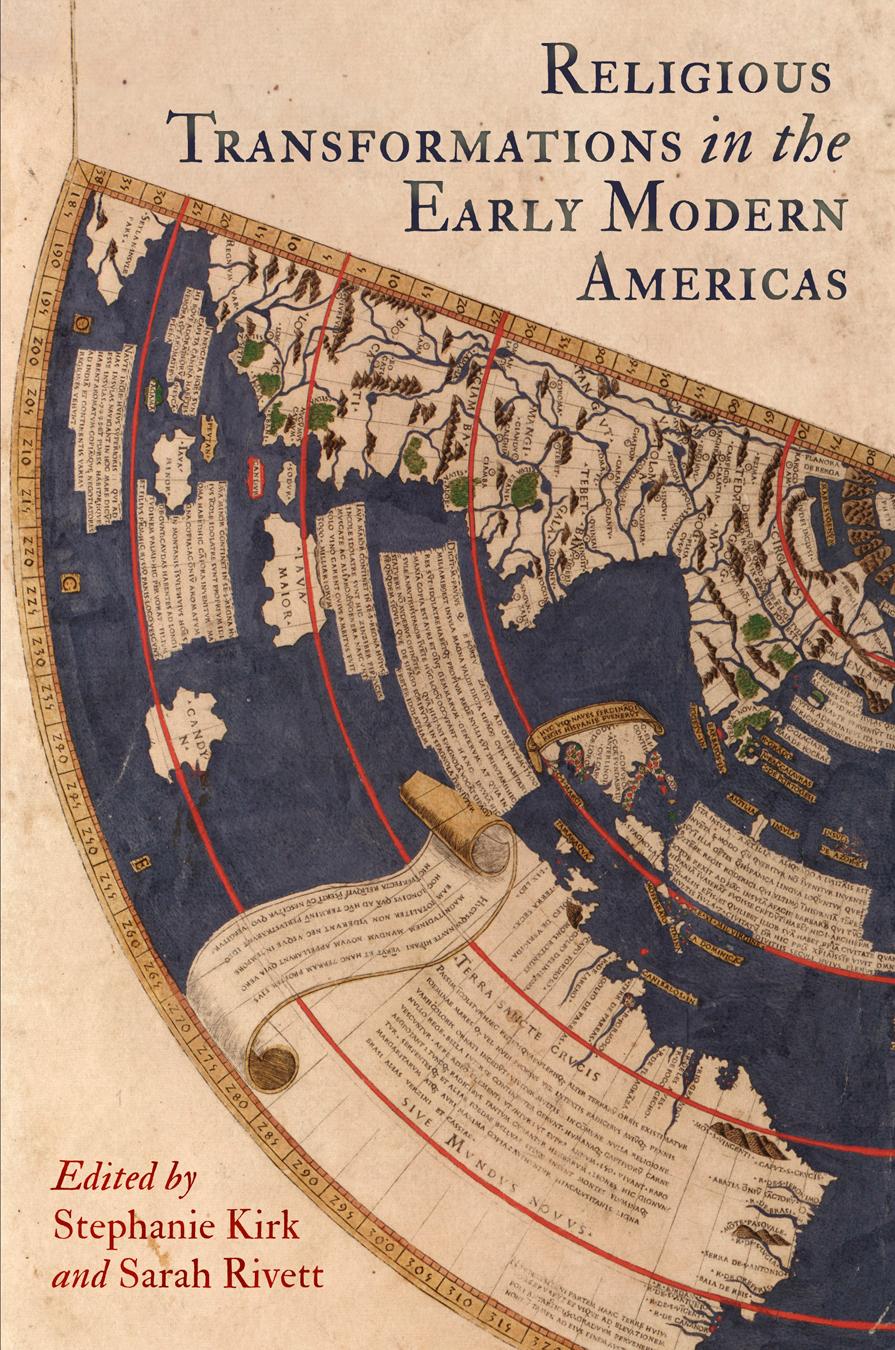
Christianity took root in the Americas during the early modern period when a historically unprecedented migration brought European clergy, religious seekers, and explorers to the New World. Protestant and Catholic settlers undertook the arduous journey for a variety of motivations. Some fled corrupt theocracies and sought to reclaim ancient principles and Christian ideals in a remote unsettled territory. Others intended to glorify their home nations and churches by bringing new lands and subjects under the rule of their kings. Many imagined the indigenous peoples they encountered as "savages" awaiting the salvific force of Christ. Whether by overtly challenging European religious authority and traditions or by adapting to unforeseen hardship and resistance, these envoys reshaped faith, liturgy, and ecclesiology and fundamentally transformed the practice and theology of Christianity.
Religious Transformations in the Early Modern Americas explores the impact of colonial encounters in the Atlantic world on the history of Christianity. Essays from across disciplines examine religious history from a spatial perspective, tracing geographical movements and population dispersals as they were shaped by the millennial designs and evangelizing impulses of European empires. At the same time, religion provides a provocative lens through which to view patterns of social restriction, exclusion, and tension, as well as those of acculturation, accommodation, and resistance in a comparative colonial context. Through nuanced attention to the particularities of faith, especially Anglo-Protestant settlements in North America and the Ibero-Catholic missions in Latin America, Religious Transformations in the Early Modern Americas illuminates the complexity and variety of the colonial world as it transformed a range of Christian beliefs.
Contributors: Ralph Bauer, David A. Boruchoff, Matt Cohen, Sir John Elliot, Carmen Fernández-Salvador, Júnia Ferreira Furtado, Sandra M. Gustafson, David D. Hall, Stephanie Kirk, Asunción Lavrin, Sarah Rivett, Teresa Toulouse.
Before Memmo my notes were scattered across PDFs. Now a workspace pulls everything into one place — I see exactly what's still left to study.
Memmo's summaries are gold before exams. I don't have to re-read 800 pages two weeks before — just the important parts.
The AI chat has saved me the night before an exam more than once. I just keep asking until I get it — no waiting on a study group to reply.
The quizzes hit exactly what I need to know. Memmo tracks what I get stuck on — so I only practice what's worth it.
Flashcards with spaced repetition are magic. Memmo knows when I'm about to forget something and brings it back.
The AI podcasts are my favorite. I listen on my way to school and get a recap without sitting at a computer.

Handbok i kvalitativa metoder
281 kr

Hållbar utveckling: en introduktion för ingenjörer och andra problemlösare
334 kr

Brymans Samhällsvetenskapliga metoder
390 kr

Projektledning
491 kr

Den orättvisa hälsan: om socioekonomiska skillnader i hälsa och livslängd
326 kr

Vetenskapsteori för nybörjare
196 kr

Organizational Leadership
429 kr

På väg mot läraryrket
172 kr

Det sociala livet i skolan: Socialpsykologiska perspektiv
253 kr

Betygsättningens didaktik
151 kr

Personality
402 kr

Studying Leadership
404 kr

Managing Innovation
477 kr

Introduktion till samhällsvetenskaplig metod
347 kr

The Psychology of Sex and Gender
698 kr

Evidens och kunskap för socialt arbete
207 kr

Introduction to Leadership
605 kr