
Before Memmo my notes were scattered across PDFs. Now a workspace pulls everything into one place — I see exactly what's still left to study.
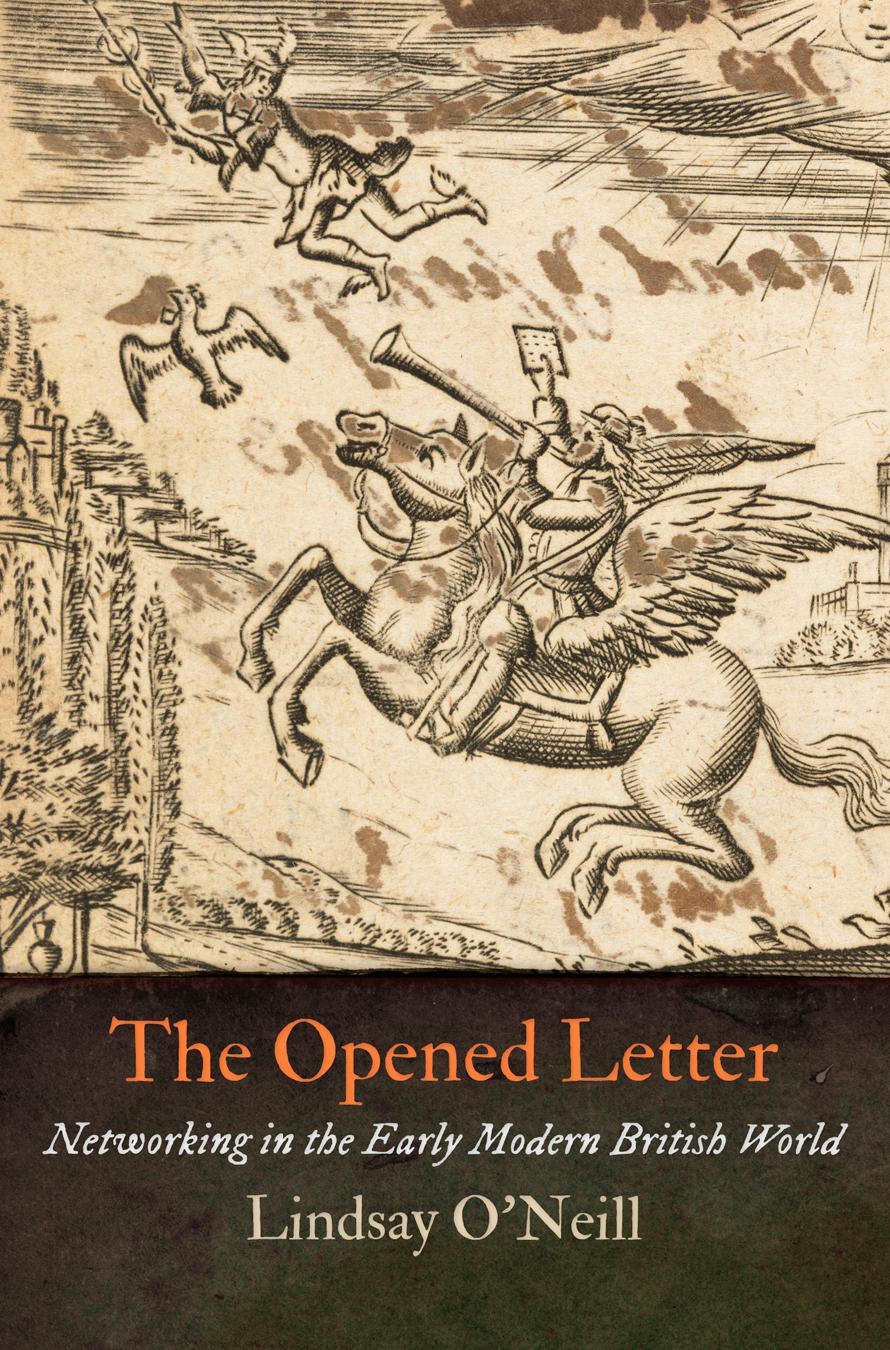
By the early eighteenth century, the rapid expansion of the British empire had created a technological problem: communication and networking became increasingly vital yet harder to maintain. As colonial possessions and populations grew and more individuals moved around the globe, Britons both at home and abroad required a constant and reliable means of communication to conduct business, plumb intellectual concerns, discuss family matters, run distant estates, and exchange news. As face-to-face communication became more intermittent, men and women across the early modern British world relied on letters.
In The Opened Letter, historian Lindsay O'Neill explores the importance and impact of networking via letter-writing among the members of the elite from England, Ireland, and the colonies. Combining extensive archival research with social network digital technology, The Opened Letter captures the dynamic associations that created a vibrant, expansive, and elaborate web of communication. The author examined more than 10,000 letters produced by such figures as Virginia planters William Byrd I and his son William Byrd II; the Anglo-Irish nobleman John Perceval; the newly minted Duke of Chandos, James Brydges, and his wife Cassandra Brydges; and Sir Hans Sloane, the president of the Royal Society, and his colleague Peter Collinson. She also mined letters from the likes of Nicholas Blundell, a Catholic member of the Lancashire gentry, and James Eliot, a London merchant and ardent Quaker. The Opened Letter reassembles and presents the vital individual and interlocking epistolary webs constructed by disparate groups of letter writers. These early social networks illuminate the structural, social, and geographic workings of the British world as the nation was becoming a dominant global power.
Before Memmo my notes were scattered across PDFs. Now a workspace pulls everything into one place — I see exactly what's still left to study.
Memmo's summaries are gold before exams. I don't have to re-read 800 pages two weeks before — just the important parts.
The AI chat has saved me the night before an exam more than once. I just keep asking until I get it — no waiting on a study group to reply.
The quizzes hit exactly what I need to know. Memmo tracks what I get stuck on — so I only practice what's worth it.
Flashcards with spaced repetition are magic. Memmo knows when I'm about to forget something and brings it back.
The AI podcasts are my favorite. I listen on my way to school and get a recap without sitting at a computer.

Handbok i kvalitativa metoder
281 kr

Hållbar utveckling: en introduktion för ingenjörer och andra problemlösare
334 kr

Brymans Samhällsvetenskapliga metoder
390 kr

Projektledning
491 kr

Den orättvisa hälsan: om socioekonomiska skillnader i hälsa och livslängd
326 kr

Organizational Leadership
429 kr

Vetenskapsteori för nybörjare
196 kr

På väg mot läraryrket
172 kr

Det sociala livet i skolan: Socialpsykologiska perspektiv
253 kr

Betygsättningens didaktik
151 kr

Personality
402 kr

Studying Leadership
404 kr

Managing Innovation
477 kr

Introduktion till samhällsvetenskaplig metod
347 kr

The Psychology of Sex and Gender
698 kr

Evidens och kunskap för socialt arbete
207 kr

Introduction to Leadership
605 kr