
Before Memmo my notes were scattered across PDFs. Now a workspace pulls everything into one place — I see exactly what's still left to study.
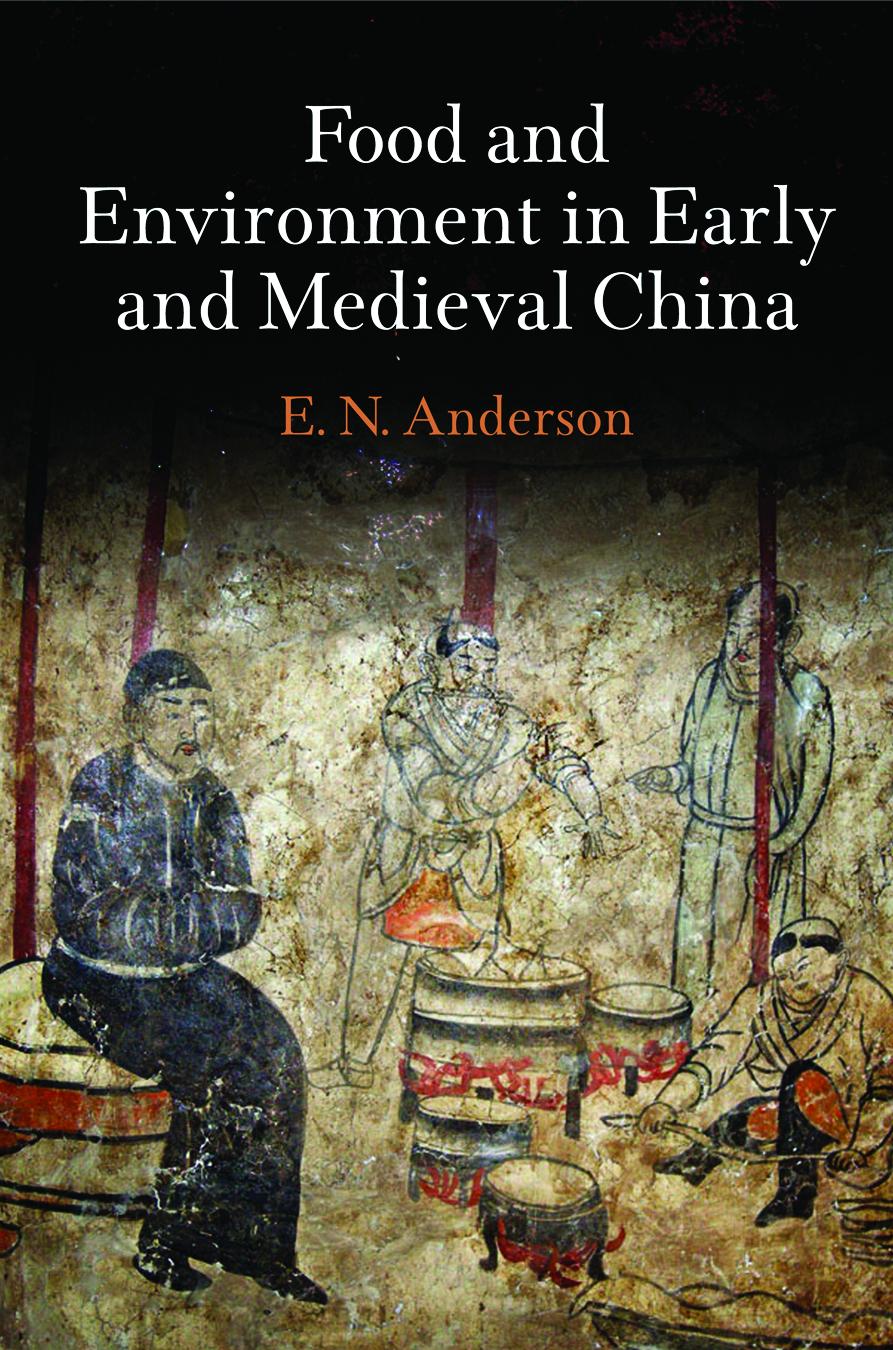
Chinese food is one of the most recognizable and widely consumed cuisines in the world. Almost no town on earth is without a Chinese restaurant of some kind, and Chinese canned, frozen, and preserved foods are available in shops from Nairobi to Quito. But the particulars of Chinese cuisine vary widely from place to place as its major ingredients and techniques have been adapted to local agriculture and taste profiles. To trace the roots of Chinese foodways, one must look back to traditional food systems before the early days of globalization.
Food and Environment in Early and Medieval China traces the development of the food systems that coincided with China's emergence as an empire. Before extensive trade and cultural exchange with Europe was established, Chinese farmers and agriculturalists developed systems that used resources in sustainable and efficient ways, permitting intensive and productive techniques to survive over millennia. Fields, gardens, semiwild lands, managed forests, and specialized agricultural landscapes all became part of an integrated network that produced maximum nutrients with minimal input—though not without some environmental cost. E. N. Anderson examines premodern China's vast, active network of trade and contact, such as the routes from Central Asia to Eurasia and the slow introduction of Western foods and medicines under the Mongol Empire. Bringing together a number of new findings from archaeology, history, and field studies of environmental management, Food and Environment in Early and Medieval China provides an updated picture of language relationships, cultural innovations, and intercultural exchanges.
Before Memmo my notes were scattered across PDFs. Now a workspace pulls everything into one place — I see exactly what's still left to study.
Memmo's summaries are gold before exams. I don't have to re-read 800 pages two weeks before — just the important parts.
The AI chat has saved me the night before an exam more than once. I just keep asking until I get it — no waiting on a study group to reply.
The quizzes hit exactly what I need to know. Memmo tracks what I get stuck on — so I only practice what's worth it.
Flashcards with spaced repetition are magic. Memmo knows when I'm about to forget something and brings it back.
The AI podcasts are my favorite. I listen on my way to school and get a recap without sitting at a computer.

Handbok i kvalitativa metoder
281 kr

Hållbar utveckling: en introduktion för ingenjörer och andra problemlösare
334 kr

Brymans Samhällsvetenskapliga metoder
390 kr

Projektledning
491 kr

Den orättvisa hälsan: om socioekonomiska skillnader i hälsa och livslängd
326 kr

Vetenskapsteori för nybörjare
196 kr

Organizational Leadership
429 kr

På väg mot läraryrket
172 kr

Det sociala livet i skolan: Socialpsykologiska perspektiv
253 kr

Betygsättningens didaktik
151 kr

Personality
402 kr

Studying Leadership
404 kr

Managing Innovation
477 kr

Introduktion till samhällsvetenskaplig metod
347 kr

The Psychology of Sex and Gender
698 kr

Evidens och kunskap för socialt arbete
207 kr

Introduction to Leadership
605 kr