
Before Memmo my notes were scattered across PDFs. Now a workspace pulls everything into one place — I see exactly what's still left to study.
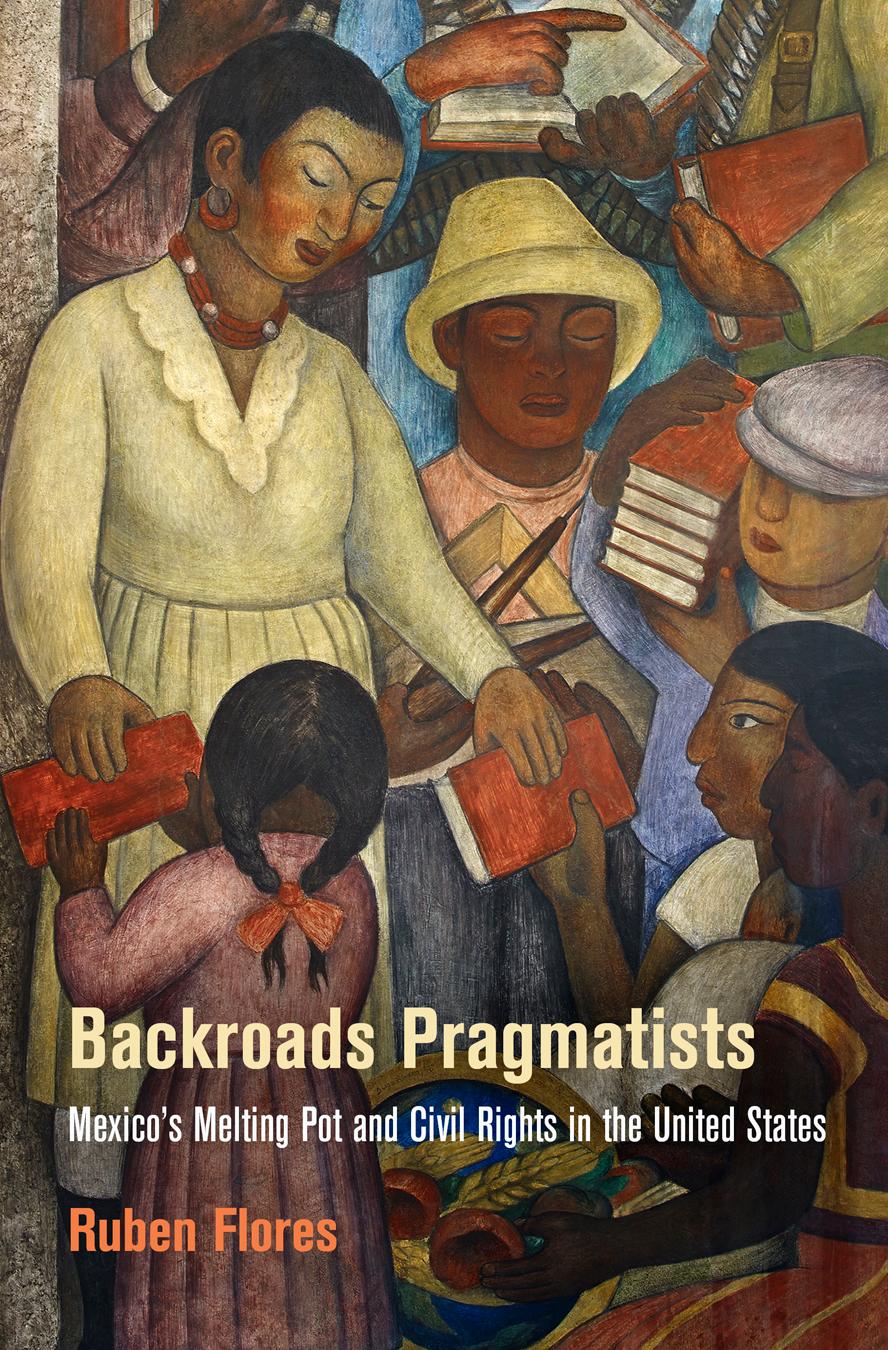
Like the United States, Mexico is a country of profound cultural differences. In the aftermath of the Mexican Revolution (1910-20), these differences became the subject of intense government attention as the Republic of Mexico developed ambitious social and educational policies designed to integrate its multitude of ethnic cultures into a national community of democratic citizens. To the north, Americans were beginning to confront their own legacy of racial injustice, embarking on the path that, three decades later, led to the destruction of Jim Crow. Backroads Pragmatists is the first book to show the transnational cross-fertilization between these two movements.
In molding Mexico's ambitious social experiment, postrevolutionary reformers adopted pragmatism from John Dewey and cultural relativism from Franz Boas, which, in turn, profoundly shaped some of the critical intellectual figures in the Mexican American civil rights movement. The Americans Ruben Flores follows studied Mexico's integration theories and applied them to America's own problem, holding Mexico up as a model of cultural fusion. These American reformers made the American West their laboratory in endeavors that included educator George I. Sanchez's attempts to transform New Mexico's government agencies, the rural education campaigns that psychologist Loyd Tireman adapted from the Mexican ministry of education, and anthropologist Ralph L. Beals's use of applied Mexican anthropology in the U.S. federal courts to transform segregation policy in southern California.
Through deep archival research and ambitious synthesis, Backroads Pragmatists illuminates how nation-building in postrevolutionary Mexico unmistakably influenced the civil rights movement and democratic politics in the United States.
Published in cooperation with the William P. Clements Center for Southwest Studies at Southern Methodist University.
Before Memmo my notes were scattered across PDFs. Now a workspace pulls everything into one place — I see exactly what's still left to study.
Memmo's summaries are gold before exams. I don't have to re-read 800 pages two weeks before — just the important parts.
The AI chat has saved me the night before an exam more than once. I just keep asking until I get it — no waiting on a study group to reply.
The quizzes hit exactly what I need to know. Memmo tracks what I get stuck on — so I only practice what's worth it.
Flashcards with spaced repetition are magic. Memmo knows when I'm about to forget something and brings it back.
The AI podcasts are my favorite. I listen on my way to school and get a recap without sitting at a computer.

Handbok i kvalitativa metoder
281 kr

Hållbar utveckling: en introduktion för ingenjörer och andra problemlösare
334 kr

Brymans Samhällsvetenskapliga metoder
390 kr

Projektledning
491 kr

Den orättvisa hälsan: om socioekonomiska skillnader i hälsa och livslängd
326 kr

Vetenskapsteori för nybörjare
196 kr

Organizational Leadership
429 kr

På väg mot läraryrket
172 kr

Det sociala livet i skolan: Socialpsykologiska perspektiv
253 kr

Betygsättningens didaktik
151 kr

Personality
402 kr

Studying Leadership
404 kr

Managing Innovation
477 kr

Introduktion till samhällsvetenskaplig metod
347 kr

The Psychology of Sex and Gender
698 kr

Evidens och kunskap för socialt arbete
207 kr

Introduction to Leadership
605 kr