
Before Memmo my notes were scattered across PDFs. Now a workspace pulls everything into one place — I see exactly what's still left to study.
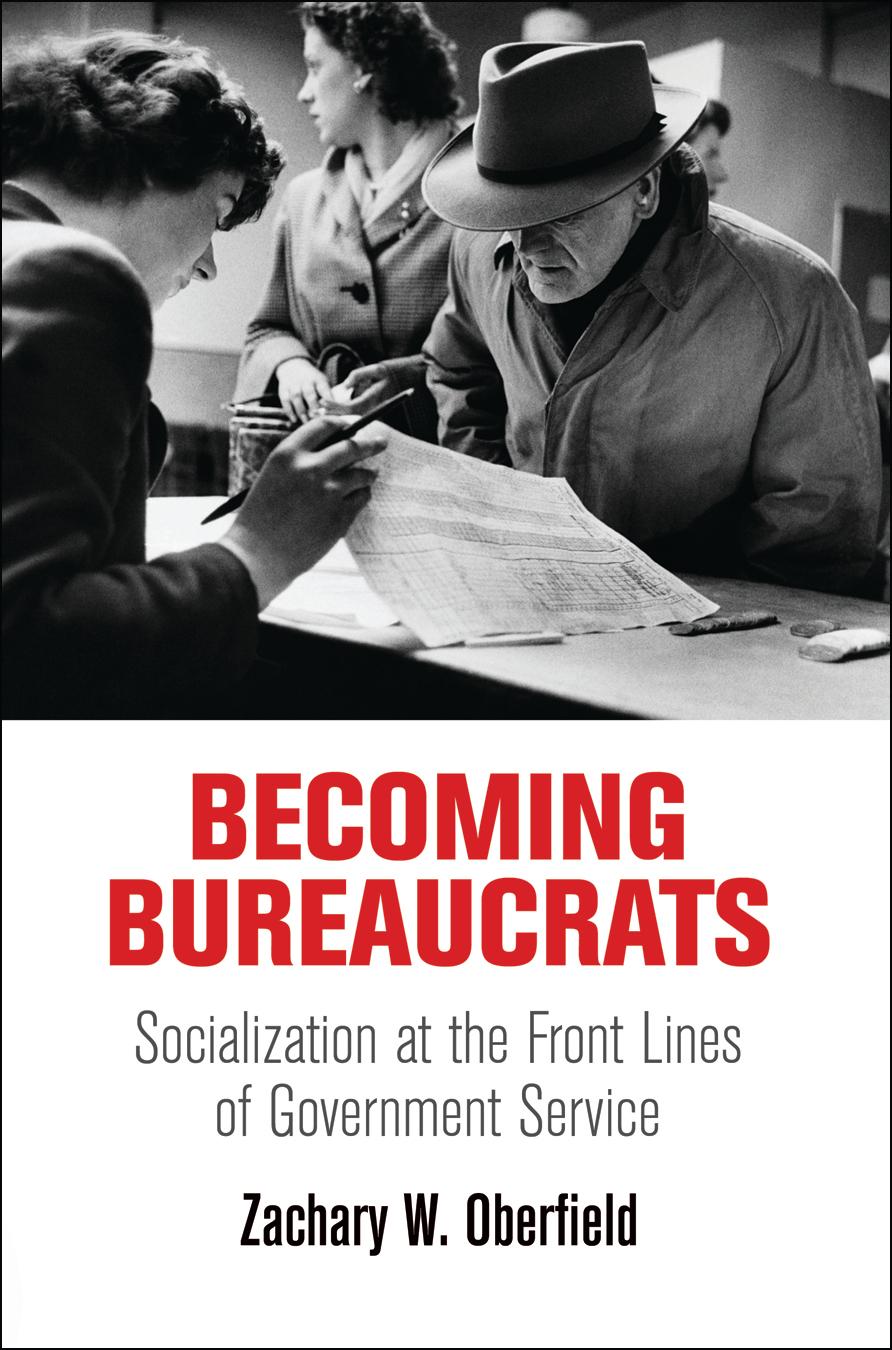
Bureaucrats are important symbols of the governments that employ them. Contrary to popular stereotypes, they determine much about the way policy is ultimately enacted and experienced by citizens. While we know a great deal about bureaucrats and their actions, we know little about their development. Are particular types of people drawn to government work, or are government workers forged by the agencies they work in? Put simply, are bureaucrats born, or are they made?
In Becoming Bureaucrats, Zachary W. Oberfield traces the paths of two sets of public servants—police officers and welfare caseworkers—from their first day on the job through the end of their second year. Examining original data derived from surveys and in-depth interviews, along with ethnographic observations from the author's year of training and work as a welfare caseworker, Becoming Bureaucrats charts how public-sector entrants develop their bureaucratic identities, motivations, and attitudes. Ranging from individual stories to population-wide statistical analysis, Oberfield's study complicates the long-standing cliché that bureaucracies churn out bureaucrats with mechanical efficiency. He demonstrates that entrants' bureaucratic personalities evolved but remained strongly tied to the views, identities, and motives that they articulated at the outset of their service. As such, he argues that who bureaucrats become and, as a result, how bureaucracies function, depends strongly on patterns of self-selection and recruitment.
Becoming Bureaucrats not only enriches our theoretical understanding of bureaucratic behavior but also provides practical advice to elected officials and public managers on building responsive, accountable workforces.
Before Memmo my notes were scattered across PDFs. Now a workspace pulls everything into one place — I see exactly what's still left to study.
Memmo's summaries are gold before exams. I don't have to re-read 800 pages two weeks before — just the important parts.
The AI chat has saved me the night before an exam more than once. I just keep asking until I get it — no waiting on a study group to reply.
The quizzes hit exactly what I need to know. Memmo tracks what I get stuck on — so I only practice what's worth it.
Flashcards with spaced repetition are magic. Memmo knows when I'm about to forget something and brings it back.
The AI podcasts are my favorite. I listen on my way to school and get a recap without sitting at a computer.

Handbok i kvalitativa metoder
281 kr

Hållbar utveckling: en introduktion för ingenjörer och andra problemlösare
334 kr

Brymans Samhällsvetenskapliga metoder
390 kr

Projektledning
491 kr

Den orättvisa hälsan: om socioekonomiska skillnader i hälsa och livslängd
326 kr

Organizational Leadership
429 kr

Vetenskapsteori för nybörjare
196 kr

På väg mot läraryrket
172 kr

Det sociala livet i skolan: Socialpsykologiska perspektiv
253 kr

Betygsättningens didaktik
151 kr

Personality
402 kr

Studying Leadership
404 kr

Managing Innovation
477 kr

Introduktion till samhällsvetenskaplig metod
347 kr

The Psychology of Sex and Gender
698 kr

Evidens och kunskap för socialt arbete
207 kr

Introduction to Leadership
605 kr