
Before Memmo my notes were scattered across PDFs. Now a workspace pulls everything into one place — I see exactly what's still left to study.
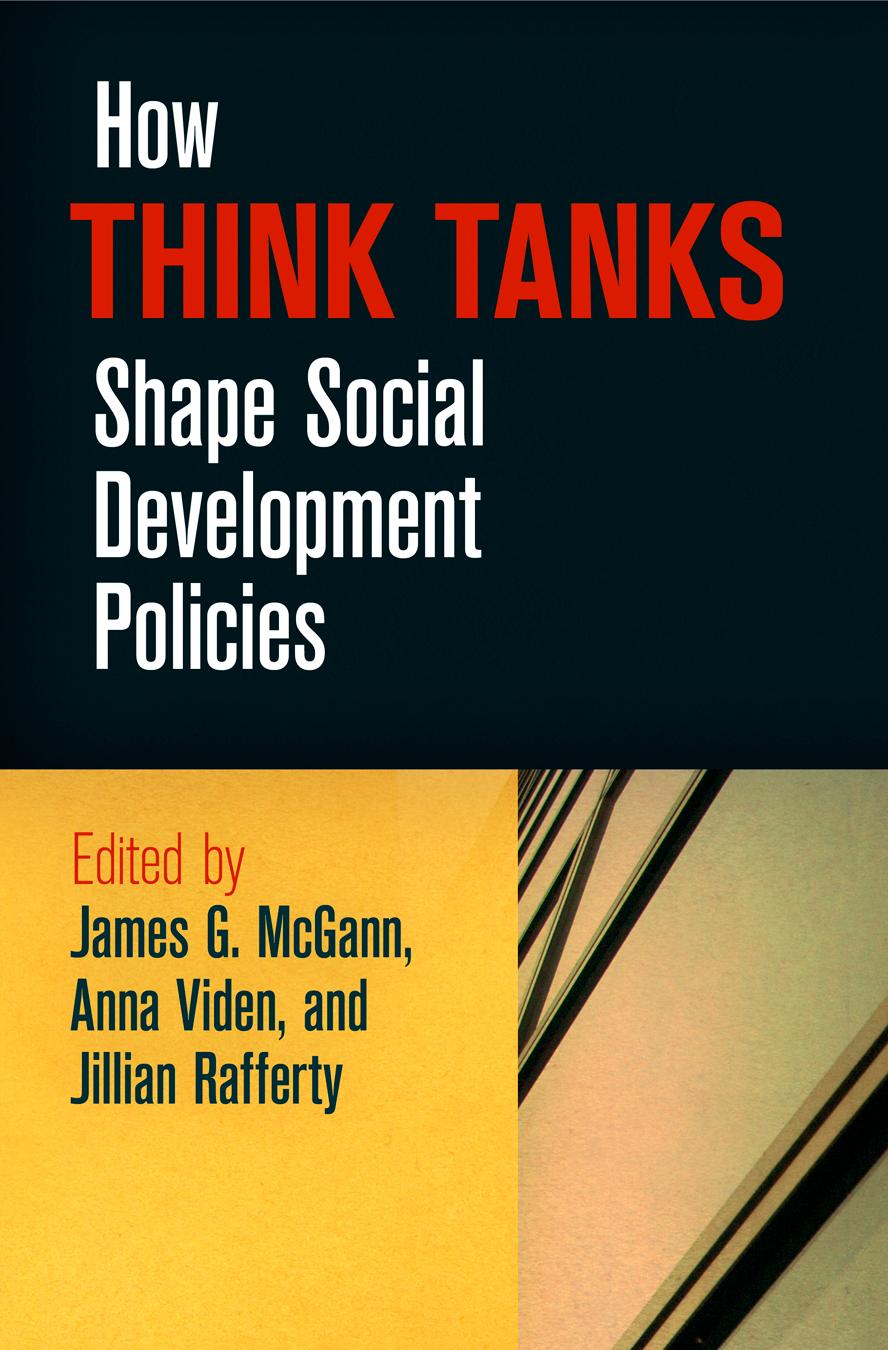
Across the globe, there are more than four thousand policy institutes, or think tanks, that research or advocate for economic and social development. Yet the relationship between these organizations and the policies they influence is not well understood. How Think Tanks Shape Social Development Policies examines case studies drawn from a range of political and economic systems worldwide to provide a detailed understanding of how think tanks can have an impact on issues such as education policy, infrastructure, environment and sustainable development, economic reform, poverty alleviation, agricultural and land development, and social policy.
Each chapter provides an overview of the approaches and organizational structures of specific think tanks, as well as the political, economic, and social opportunities and the challenges of the environments in which they operate. The contributors study the stages of innovative think-tank-aided strategies implemented in highly industrialized world powers like the United States and Russia, emerging countries such as China, India, Brazil, and South Korea, and developing nations that include Ethiopia, Kenya, and Tanzania. Accompanied by an extensive introduction to contextualize the history and theory of policy institutes, this comprehensive comparison of policy success stories will be instructive and transferable to other think tanks around the globe.
Contributors: Assefa Admassie, Celso Castro, Kristina Costa, Francisco Cravioto, Marek Dabrowski, Matt Dann, He Fan, Rajeev Gowda, Oh-Seok Hyun, Christian Koch, Jitinder Kohli, R. Andreas Kraemer, Elena Lazarou, William Lyakurwa, Ashwin Mahesh, Florencia Mezzadra, Partha Mukhopadhyay, Mcebisi Ndletyana, Sridhar Pabbisetty, Miguel Pulido, Marco Aurelio Ruediger, María Belén Sánchez, Dmitri Trenin, Samuel Wangwe, Vanesa Weyrauch, Maria Monica Wihardja, Rebecca Winthrop, Wang Xiaoyi.
Before Memmo my notes were scattered across PDFs. Now a workspace pulls everything into one place — I see exactly what's still left to study.
Memmo's summaries are gold before exams. I don't have to re-read 800 pages two weeks before — just the important parts.
The AI chat has saved me the night before an exam more than once. I just keep asking until I get it — no waiting on a study group to reply.
The quizzes hit exactly what I need to know. Memmo tracks what I get stuck on — so I only practice what's worth it.
Flashcards with spaced repetition are magic. Memmo knows when I'm about to forget something and brings it back.
The AI podcasts are my favorite. I listen on my way to school and get a recap without sitting at a computer.

Handbok i kvalitativa metoder
281 kr

Hållbar utveckling: en introduktion för ingenjörer och andra problemlösare
334 kr

Brymans Samhällsvetenskapliga metoder
390 kr

Projektledning
491 kr

Den orättvisa hälsan: om socioekonomiska skillnader i hälsa och livslängd
326 kr

Organizational Leadership
429 kr

Vetenskapsteori för nybörjare
196 kr

På väg mot läraryrket
172 kr

Det sociala livet i skolan: Socialpsykologiska perspektiv
253 kr

Betygsättningens didaktik
151 kr

Personality
402 kr

Studying Leadership
404 kr

Managing Innovation
477 kr

Introduktion till samhällsvetenskaplig metod
347 kr

The Psychology of Sex and Gender
698 kr

Evidens och kunskap för socialt arbete
207 kr

Introduction to Leadership
605 kr