
Before Memmo my notes were scattered across PDFs. Now a workspace pulls everything into one place — I see exactly what's still left to study.
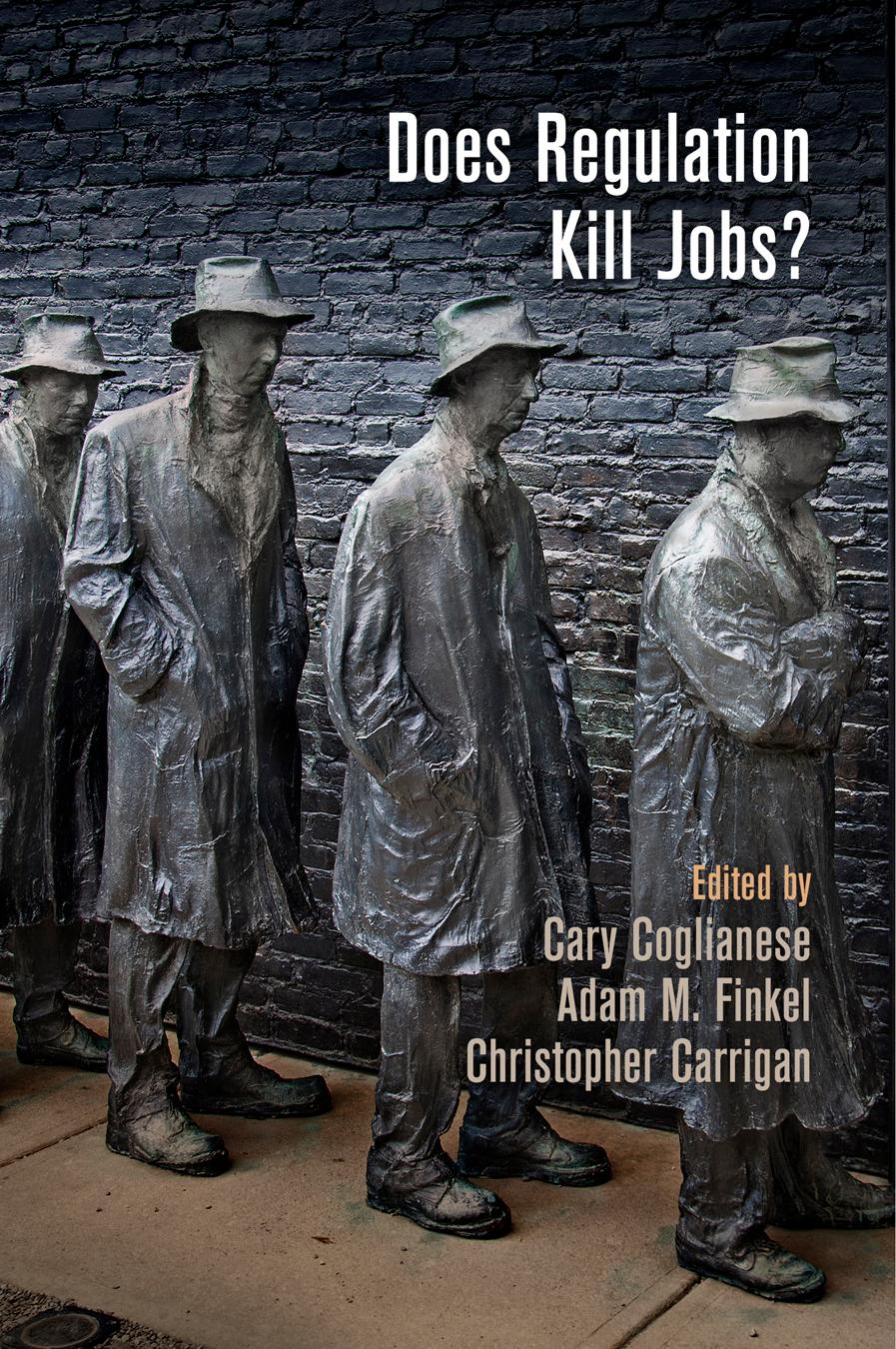
As millions of Americans struggle to find work in the wake of the Great Recession, politicians from both parties look to regulation in search of an economic cure. Some claim that burdensome regulations undermine private sector competitiveness and job growth, while others argue that tough new regulations actually create jobs at the same time that they provide other benefits. Does Regulation Kill Jobs? reveals the complex reality of regulation that supports neither partisan view. Leading legal scholars, economists, political scientists, and policy analysts show that individual regulations can at times induce employment shifts across firms, sectors, and regions—but regulation overall is neither a prime job killer nor a key job creator. The challenge for policymakers is to look carefully at individual regulatory proposals to discern any job shifting they may cause and then to make regulatory decisions sensitive to anticipated employment effects. Drawing on their analyses, contributors recommend methods for obtaining better estimates of job impacts when evaluating regulatory costs and benefits. They also assess possible ways of reforming regulatory institutions and processes to take better account of employment effects in policy decision-making.
Does Regulation Kills Jobs? tackles what has become a heated partisan issue with exactly the kind of careful analysis policymakers need in order to make better policy decisions, providing insights that will benefit both politicians and citizens who seek economic growth as well as the protection of public health and safety, financial security, environmental sustainability, and other civic goals.
Contributors: Matthew D. Adler, Joseph E. Aldy, Christopher Carrigan, Cary Coglianese, E. Donald Elliott, Rolf Färe, Ann Ferris, Adam M. Finkel, Wayne B. Gray, Shawna Grosskopf, Michael A. Livermore, Brian F. Mannix, Jonathan S. Masur, Al McGartland, Richard Morgenstern, Carl A. Pasurka, Jr., William A. Pizer, Eric A. Posner, Lisa A. Robinson, Jason A. Schwartz, Ronald J. Shadbegian, Stuart Shapiro.
Before Memmo my notes were scattered across PDFs. Now a workspace pulls everything into one place — I see exactly what's still left to study.
Memmo's summaries are gold before exams. I don't have to re-read 800 pages two weeks before — just the important parts.
The AI chat has saved me the night before an exam more than once. I just keep asking until I get it — no waiting on a study group to reply.
The quizzes hit exactly what I need to know. Memmo tracks what I get stuck on — so I only practice what's worth it.
Flashcards with spaced repetition are magic. Memmo knows when I'm about to forget something and brings it back.
The AI podcasts are my favorite. I listen on my way to school and get a recap without sitting at a computer.

Handbok i kvalitativa metoder
281 kr

Hållbar utveckling: en introduktion för ingenjörer och andra problemlösare
334 kr

Brymans Samhällsvetenskapliga metoder
390 kr

Projektledning
491 kr

Den orättvisa hälsan: om socioekonomiska skillnader i hälsa och livslängd
326 kr

Organizational Leadership
429 kr

Vetenskapsteori för nybörjare
196 kr

På väg mot läraryrket
172 kr

Det sociala livet i skolan: Socialpsykologiska perspektiv
253 kr

Betygsättningens didaktik
151 kr

Personality
402 kr

Studying Leadership
404 kr

Managing Innovation
477 kr

Introduktion till samhällsvetenskaplig metod
347 kr

The Psychology of Sex and Gender
698 kr

Evidens och kunskap för socialt arbete
207 kr

Introduction to Leadership
605 kr