
Before Memmo my notes were scattered across PDFs. Now a workspace pulls everything into one place — I see exactly what's still left to study.
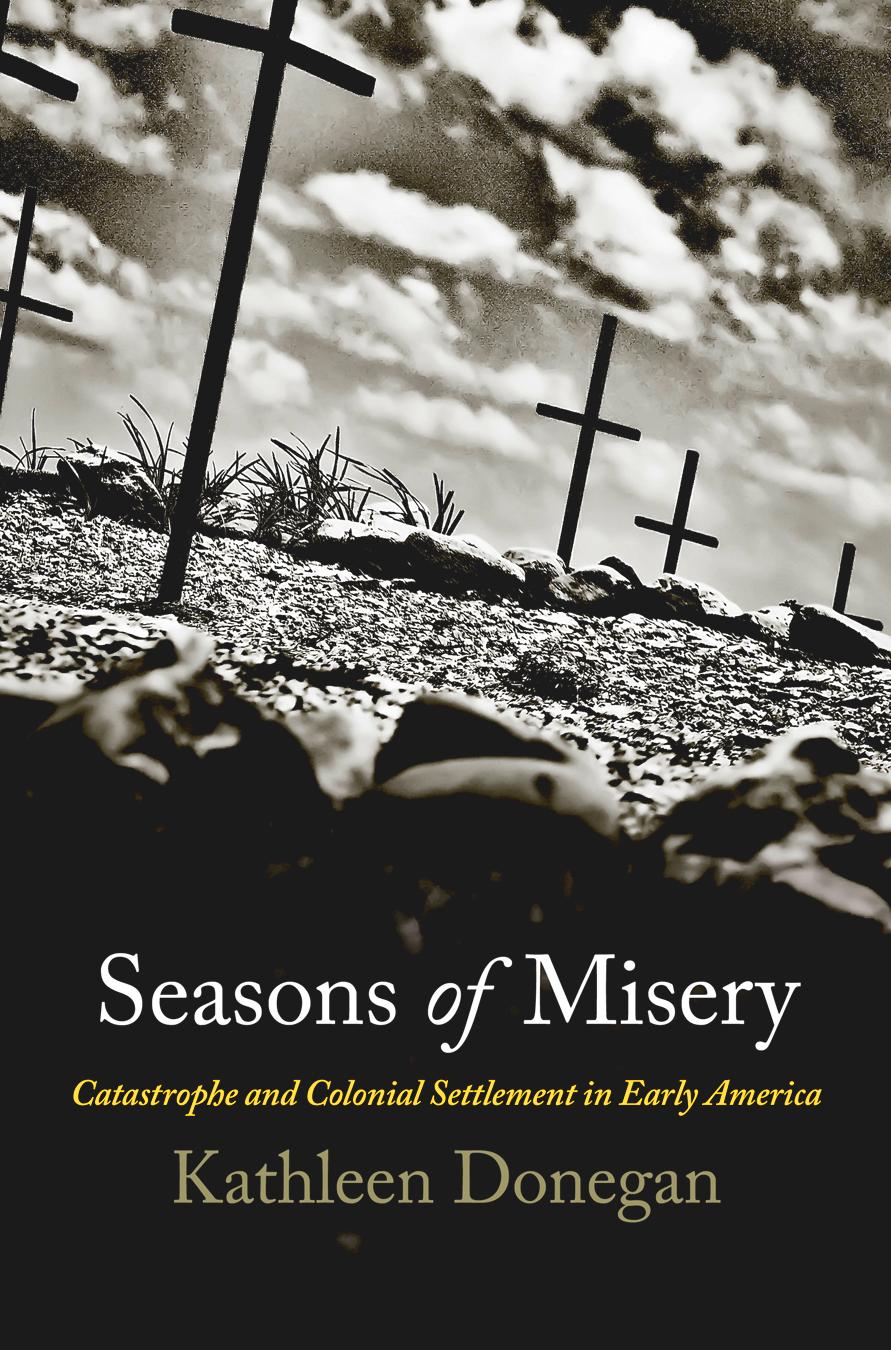
The stories we tell of American beginnings typically emphasize colonial triumph in the face of adversity. But the early years of English settlement in America were characterized by catastrophe: starvation, disease, extreme violence, ruinous ignorance, and serial abandonment. Seasons of Misery offers a provocative reexamination of the British colonies' chaotic and profoundly unstable beginnings, placing crisis—both experiential and existential—at the center of the story. At the outposts of a fledgling empire and disconnected from the social order of their home society, English settlers were both physically and psychologically estranged from their European identities. They could not control, or often even survive, the world they had intended to possess. According to Kathleen Donegan, it was in this cauldron of uncertainty that colonial identity was formed.
Studying the English settlements at Roanoke, Jamestown, Plymouth, and Barbados, Donegan argues that catastrophe marked the threshold between an old European identity and a new colonial identity, a state of instability in which only fragments of Englishness could survive amid the upheavals of the New World. This constant state of crisis also produced the first distinctively colonial literature as settlers attempted to process events that they could neither fully absorb nor understand. Bringing a critical eye to settlers' first-person accounts, Donegan applies a unique combination of narrative history and literary analysis to trace how settlers used a language of catastrophe to describe unprecedented circumstances, witness unrecognizable selves, and report unaccountable events. Seasons of Misery addresses both the stories that colonists told about themselves and the stories that we have constructed in hindsight about them. In doing so, it offers a new account of the meaning of settlement history and the creation of colonial identity.
Before Memmo my notes were scattered across PDFs. Now a workspace pulls everything into one place — I see exactly what's still left to study.
Memmo's summaries are gold before exams. I don't have to re-read 800 pages two weeks before — just the important parts.
The AI chat has saved me the night before an exam more than once. I just keep asking until I get it — no waiting on a study group to reply.
The quizzes hit exactly what I need to know. Memmo tracks what I get stuck on — so I only practice what's worth it.
Flashcards with spaced repetition are magic. Memmo knows when I'm about to forget something and brings it back.
The AI podcasts are my favorite. I listen on my way to school and get a recap without sitting at a computer.

Handbok i kvalitativa metoder
281 kr

Hållbar utveckling: en introduktion för ingenjörer och andra problemlösare
334 kr

Brymans Samhällsvetenskapliga metoder
390 kr

Projektledning
491 kr

Den orättvisa hälsan: om socioekonomiska skillnader i hälsa och livslängd
326 kr

Vetenskapsteori för nybörjare
196 kr

Organizational Leadership
429 kr

På väg mot läraryrket
172 kr

Det sociala livet i skolan: Socialpsykologiska perspektiv
253 kr

Betygsättningens didaktik
151 kr

Personality
402 kr

Studying Leadership
404 kr

Managing Innovation
477 kr

Introduktion till samhällsvetenskaplig metod
347 kr

The Psychology of Sex and Gender
698 kr

Evidens och kunskap för socialt arbete
207 kr

Introduction to Leadership
605 kr