
Before Memmo my notes were scattered across PDFs. Now a workspace pulls everything into one place — I see exactly what's still left to study.
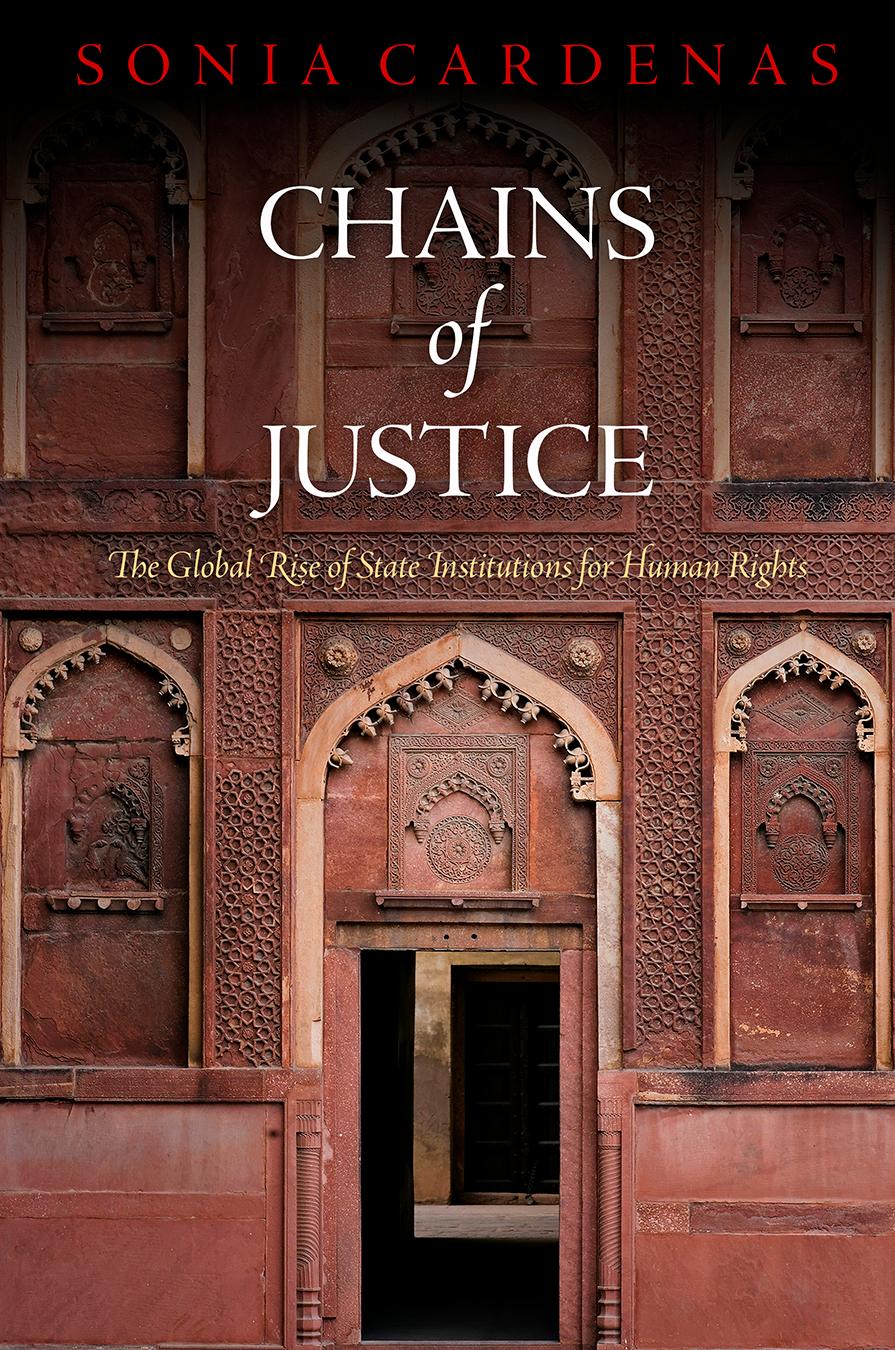
National human rights institutions—state agencies charged with protecting and promoting human rights domestically—have proliferated dramatically since the 1990s; today more than a hundred countries have NHRIs, with dozens more seeking to join the global trend. These institutions are found in states of all sizes—from the Maldives and Barbados to South Africa, Mexico, and India; they exist in conflict zones and comparatively stable democracies alike. In Chains of Justice, Sonia Cardenas offers a sweeping historical and global account of the emergence of NHRIs, linking their growing prominence to the contradictions and possibilities of the modern state.
As human rights norms gained visibility at the end of the twentieth century, states began creating NHRIs based on the idea that if international human rights standards were ever to take root, they had to be firmly implanted within countries—impacting domestic laws and administrative practices and even systems of education. However, this very position within a complex state makes it particularly challenging to assess the design and influence of NHRIs: some observers are inclined to associate NHRIs with ideals of restraint and accountability, whereas others are suspicious of these institutions as "pretenders" in democratic disguise. In her theoretically and politically grounded examination, Cardenas tackles the role of NHRIs, asking how we can understand the global diffusion of these institutions, including why individual states decide to create an NHRI at a particular time while others resist the trend. She explores the influence of these institutions in states seeking mostly to appease international audiences as well as their value in places where respect for human rights is already strong.
The most comprehensive account of the NHRI phenomenon to date, Chains of Justice analyzes many institutions never studied before and draws from new data released from the Universal Periodic Review Mechanism of the United Nations Human Rights Council. With its global scope and fresh insights into the origins and influence of NHRIs, Chains of Justice promises to become a standard reference that will appeal to scholars immersed in the workings of these understudied institutions as well as nonspecialists curious about the role of the state in human rights.
Before Memmo my notes were scattered across PDFs. Now a workspace pulls everything into one place — I see exactly what's still left to study.
Memmo's summaries are gold before exams. I don't have to re-read 800 pages two weeks before — just the important parts.
The AI chat has saved me the night before an exam more than once. I just keep asking until I get it — no waiting on a study group to reply.
The quizzes hit exactly what I need to know. Memmo tracks what I get stuck on — so I only practice what's worth it.
Flashcards with spaced repetition are magic. Memmo knows when I'm about to forget something and brings it back.
The AI podcasts are my favorite. I listen on my way to school and get a recap without sitting at a computer.

Handbok i kvalitativa metoder
281 kr

Hållbar utveckling: en introduktion för ingenjörer och andra problemlösare
334 kr

Brymans Samhällsvetenskapliga metoder
390 kr

Projektledning
491 kr

Den orättvisa hälsan: om socioekonomiska skillnader i hälsa och livslängd
326 kr

Vetenskapsteori för nybörjare
196 kr

Organizational Leadership
429 kr

På väg mot läraryrket
172 kr

Det sociala livet i skolan: Socialpsykologiska perspektiv
253 kr

Betygsättningens didaktik
151 kr

Personality
402 kr

Studying Leadership
404 kr

Managing Innovation
477 kr

Introduktion till samhällsvetenskaplig metod
347 kr

The Psychology of Sex and Gender
698 kr

Evidens och kunskap för socialt arbete
207 kr

Introduction to Leadership
605 kr