
Before Memmo my notes were scattered across PDFs. Now a workspace pulls everything into one place — I see exactly what's still left to study.
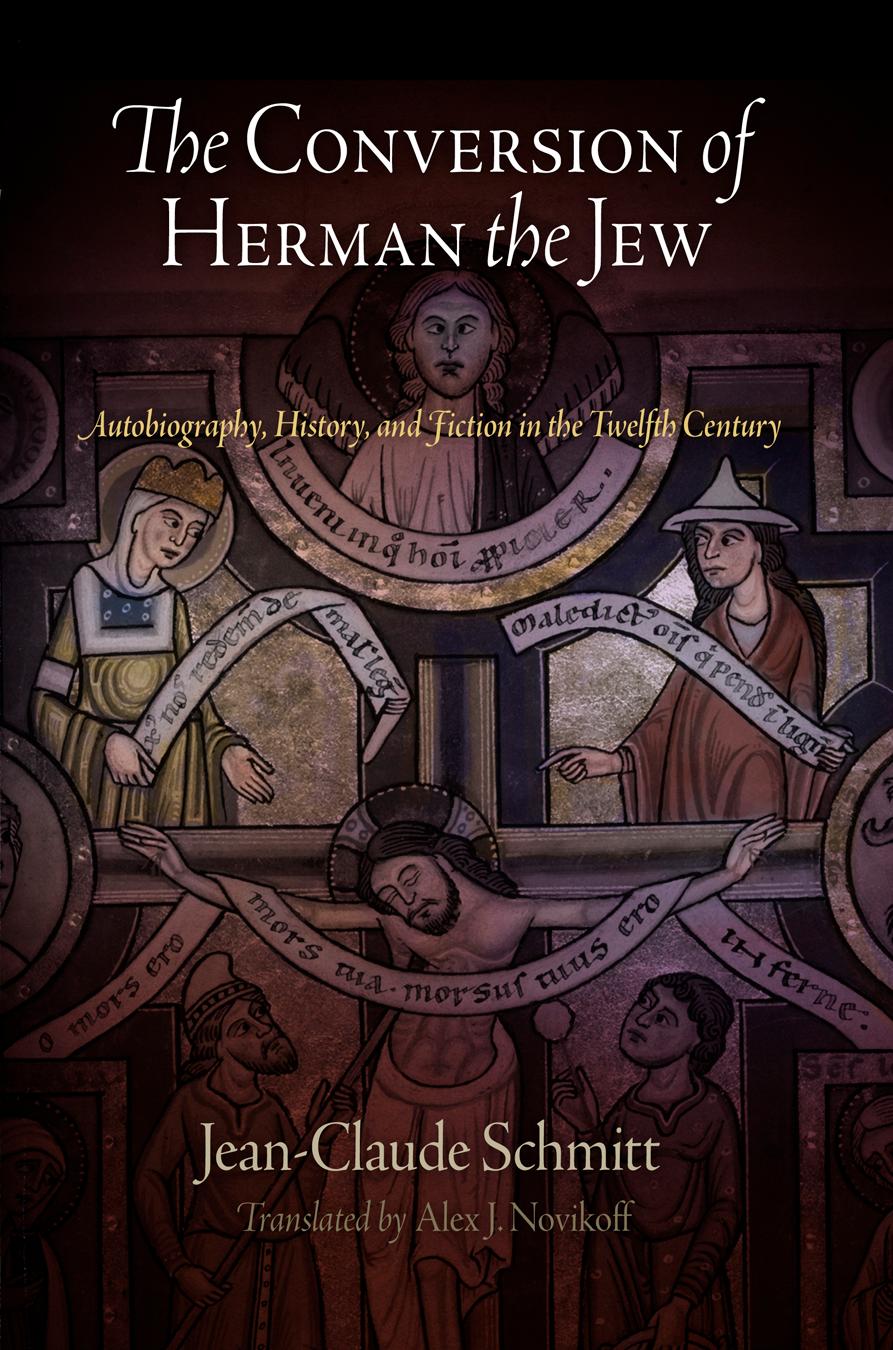
Sometime toward the middle of the twelfth century, it is supposed, an otherwise obscure figure, born a Jew in Cologne and later ordained as a priest in Cappenberg in Westphalia, wrote a Latin account of his conversion to Christianity. Known as the Opusculum, this book purportedly by "Herman, the former Jew" may well be the first autobiography to be written in the West after the Confessions of Saint Augustine. It may also be something else entirely.
In The Conversion of Herman the Jew the eminent French historian Jean-Claude Schmitt examines this singular text and the ways in which it has divided its readers. Where some have seen it as an authentic conversion narrative, others have asked whether it is not a complete fabrication forged by Christian clerics. For Schmitt the question is poorly posed. The work is at once true and fictional, and the search for its lone author—whether converted Jew or not—fruitless. Herman may well have existed and contributed to the writing of his life, but the Opusculum is a collective work, perhaps framed to meet a specific institutional agenda.
With agility and erudition, Schmitt examines the text to explore its meaning within the society and culture of its period and its participation in both a Christian and Jewish imaginary. What can it tell us about autobiography and subjectivity, about the function of dreams and the legitimacy of religious images, about individual and collective conversion, and about names and identities? In The Conversion of Herman the Jew Schmitt masterfully seizes upon the debates surrounding the Opusculum (the text of which is newly translated for this volume) to ponder more fundamentally the ways in which historians think and write.
Before Memmo my notes were scattered across PDFs. Now a workspace pulls everything into one place — I see exactly what's still left to study.
Memmo's summaries are gold before exams. I don't have to re-read 800 pages two weeks before — just the important parts.
The AI chat has saved me the night before an exam more than once. I just keep asking until I get it — no waiting on a study group to reply.
The quizzes hit exactly what I need to know. Memmo tracks what I get stuck on — so I only practice what's worth it.
Flashcards with spaced repetition are magic. Memmo knows when I'm about to forget something and brings it back.
The AI podcasts are my favorite. I listen on my way to school and get a recap without sitting at a computer.

Handbok i kvalitativa metoder
281 kr

Hållbar utveckling: en introduktion för ingenjörer och andra problemlösare
334 kr

Brymans Samhällsvetenskapliga metoder
390 kr

Projektledning
491 kr

Den orättvisa hälsan: om socioekonomiska skillnader i hälsa och livslängd
326 kr

Vetenskapsteori för nybörjare
196 kr

Organizational Leadership
429 kr

På väg mot läraryrket
172 kr

Det sociala livet i skolan: Socialpsykologiska perspektiv
253 kr

Betygsättningens didaktik
151 kr

Personality
402 kr

Studying Leadership
404 kr

Managing Innovation
477 kr

Introduktion till samhällsvetenskaplig metod
347 kr

The Psychology of Sex and Gender
698 kr

Evidens och kunskap för socialt arbete
207 kr

Introduction to Leadership
605 kr