
Before Memmo my notes were scattered across PDFs. Now a workspace pulls everything into one place — I see exactly what's still left to study.
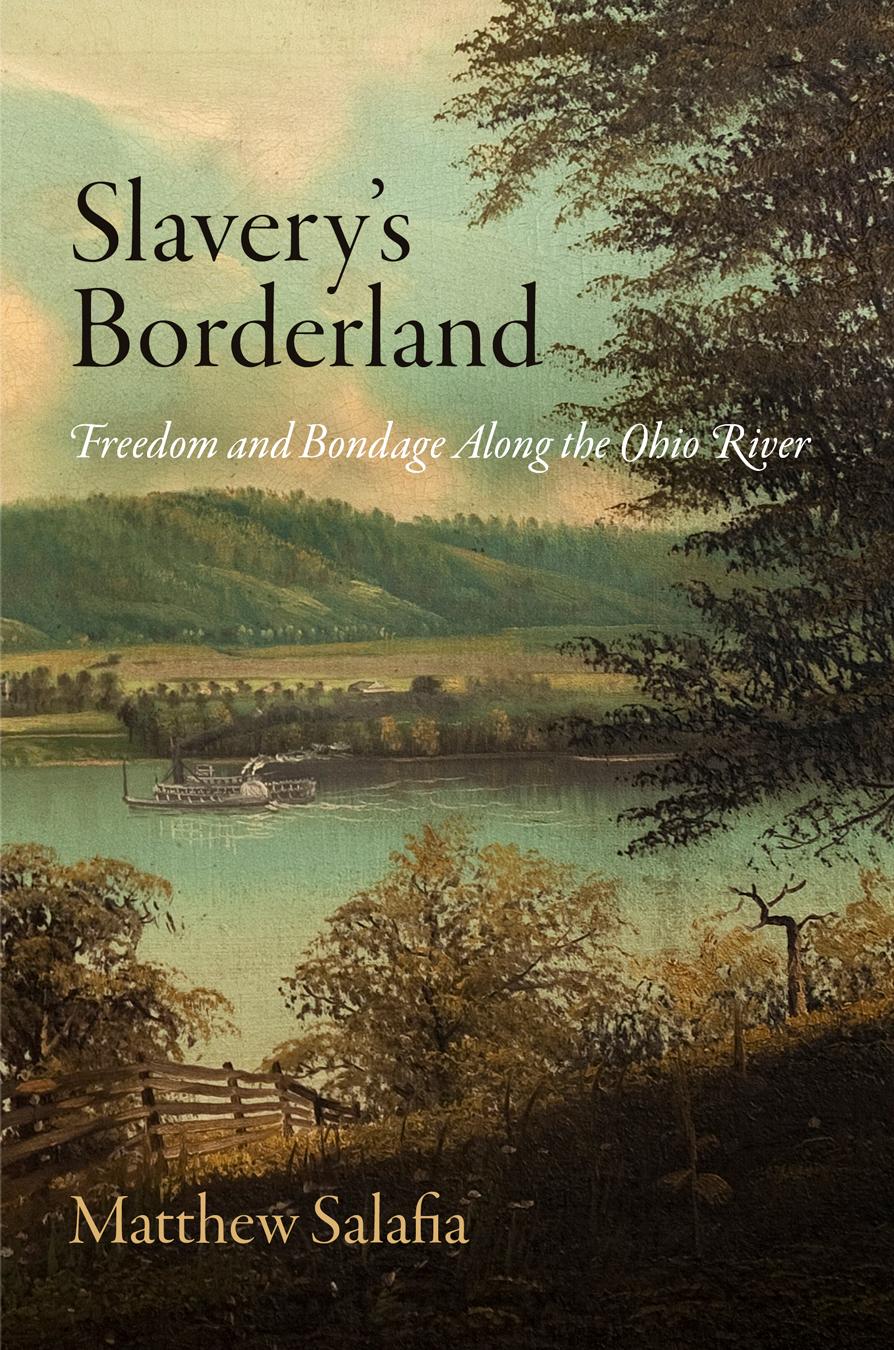
In 1787, the Northwest Ordinance made the Ohio River the dividing line between slavery and freedom in the West, yet in 1861, when the Civil War tore the nation apart, the region failed to split at this seam. In Slavery's Borderland, historian Matthew Salafia shows how the river was both a physical boundary and a unifying economic and cultural force that muddied the distinction between southern and northern forms of labor and politics.
Countering the tendency to emphasize differences between slave and free states, Salafia argues that these systems of labor were not so much separated by a river as much as they evolved along a continuum shaped by life along a river. In this borderland region, where both free and enslaved residents regularly crossed the physical divide between Ohio, Indiana, and Kentucky, slavery and free labor shared as many similarities as differences. As the conflict between North and South intensified, regional commonality transcended political differences. Enslaved and free African Americans came to reject the legitimacy of the river border even as they were unable to escape its influence. In contrast, the majority of white residents on both sides remained firmly committed to maintaining the river border because they believed it best protected their freedom. Thus, when war broke out, Kentucky did not secede with the Confederacy; rather, the river became the seam that held the region together.
By focusing on the Ohio River as an artery of commerce and movement, Salafia draws the northern and southern banks of the river into the same narrative and sheds light on constructions of labor, economy, and race on the eve of the Civil War.
Before Memmo my notes were scattered across PDFs. Now a workspace pulls everything into one place — I see exactly what's still left to study.
Memmo's summaries are gold before exams. I don't have to re-read 800 pages two weeks before — just the important parts.
The AI chat has saved me the night before an exam more than once. I just keep asking until I get it — no waiting on a study group to reply.
The quizzes hit exactly what I need to know. Memmo tracks what I get stuck on — so I only practice what's worth it.
Flashcards with spaced repetition are magic. Memmo knows when I'm about to forget something and brings it back.
The AI podcasts are my favorite. I listen on my way to school and get a recap without sitting at a computer.

Handbok i kvalitativa metoder
281 kr

Hållbar utveckling: en introduktion för ingenjörer och andra problemlösare
334 kr

Brymans Samhällsvetenskapliga metoder
390 kr

Projektledning
491 kr

Den orättvisa hälsan: om socioekonomiska skillnader i hälsa och livslängd
326 kr

Organizational Leadership
429 kr

Vetenskapsteori för nybörjare
196 kr

På väg mot läraryrket
172 kr

Det sociala livet i skolan: Socialpsykologiska perspektiv
253 kr

Betygsättningens didaktik
151 kr

Personality
402 kr

Studying Leadership
404 kr

Managing Innovation
477 kr

Introduktion till samhällsvetenskaplig metod
347 kr

The Psychology of Sex and Gender
698 kr

Evidens och kunskap för socialt arbete
207 kr

Introduction to Leadership
605 kr