
Before Memmo my notes were scattered across PDFs. Now a workspace pulls everything into one place — I see exactly what's still left to study.
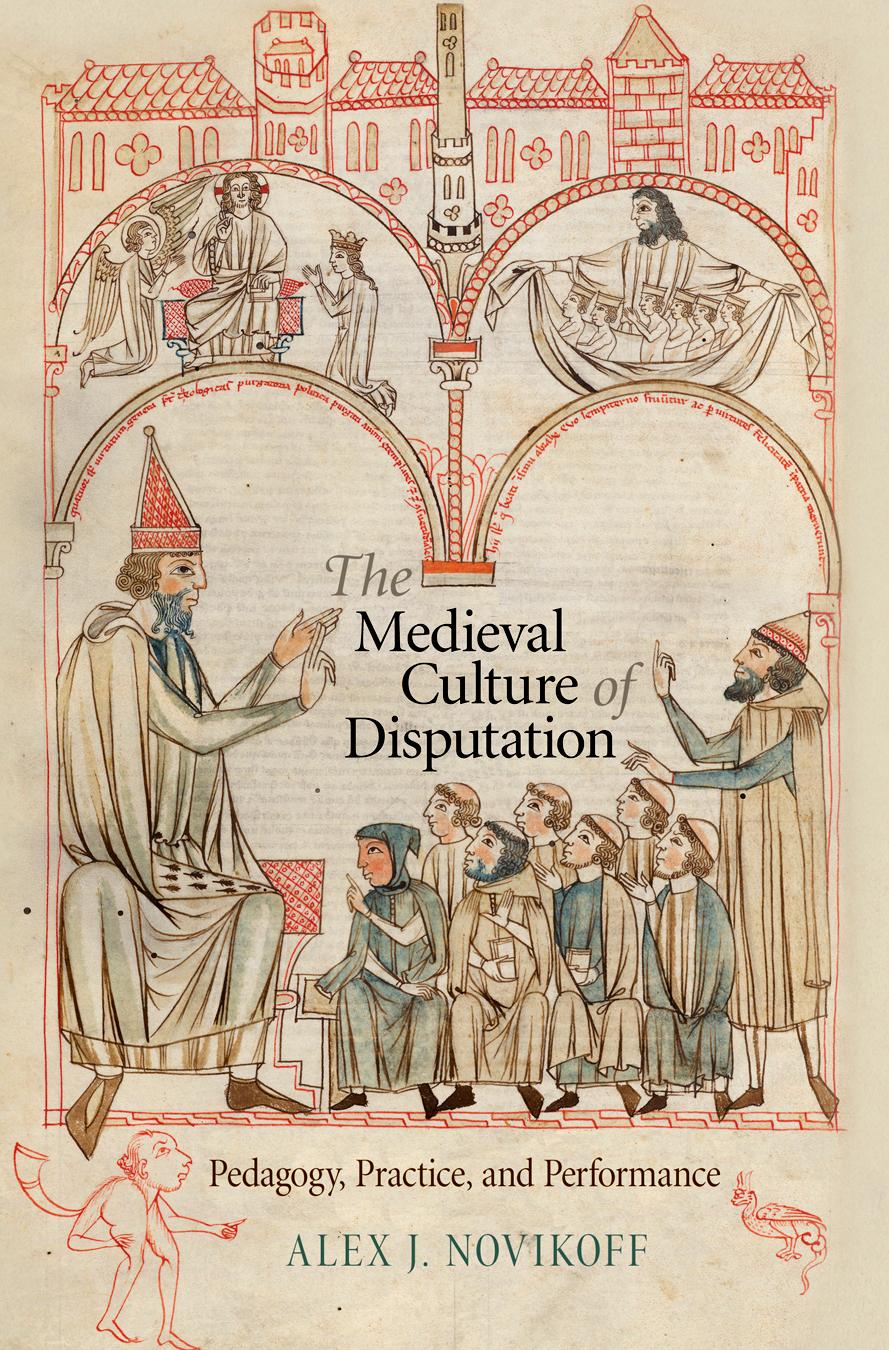
Scholastic disputation, the formalized procedure of debate in the medieval university, is one of the hallmarks of intellectual life in premodern Europe. Modeled on Socratic and Aristotelian methods of argumentation, this rhetorical style was refined in the monasteries of the early Middle Ages and rose to prominence during the twelfth-century Renaissance. Strict rules governed disputation, and it became the preferred method of teaching within the university curriculum and beyond. In The Medieval Culture of Disputation, Alex J. Novikoff has written the first sustained and comprehensive study of the practice of scholastic disputation and of its formative influence in multiple spheres of cultural life.
Using hundreds of published and unpublished sources as his guide, Novikoff traces the evolution of disputation from its ancient origins to its broader impact on the scholastic culture and public sphere of the High Middle Ages. Many examples of medieval disputation are rooted in religious discourse and monastic pedagogy: Augustine's inner spiritual dialogues and Anselm of Bec's use of rational investigation in speculative theology laid the foundations for the medieval contemplative world. The polemical value of disputation was especially exploited in the context of competing Jewish and Christian interpretations of the Bible. Disputation became the hallmark of Christian intellectual attacks against Jews and Judaism, first as a literary genre and then in public debates such as the Talmud Trial of 1240 and the Barcelona Disputation of 1263. As disputation filtered into the public sphere, it also became a key element in iconography, liturgical drama, epistolary writing, debate poetry, musical counterpoint, and polemic. The Medieval Culture of Disputation places the practice and performance of disputation at the nexus of this broader literary and cultural context.
Before Memmo my notes were scattered across PDFs. Now a workspace pulls everything into one place — I see exactly what's still left to study.
Memmo's summaries are gold before exams. I don't have to re-read 800 pages two weeks before — just the important parts.
The AI chat has saved me the night before an exam more than once. I just keep asking until I get it — no waiting on a study group to reply.
The quizzes hit exactly what I need to know. Memmo tracks what I get stuck on — so I only practice what's worth it.
Flashcards with spaced repetition are magic. Memmo knows when I'm about to forget something and brings it back.
The AI podcasts are my favorite. I listen on my way to school and get a recap without sitting at a computer.

Handbok i kvalitativa metoder
281 kr

Hållbar utveckling: en introduktion för ingenjörer och andra problemlösare
334 kr

Brymans Samhällsvetenskapliga metoder
390 kr

Projektledning
491 kr

Den orättvisa hälsan: om socioekonomiska skillnader i hälsa och livslängd
326 kr

Vetenskapsteori för nybörjare
196 kr

Organizational Leadership
429 kr

På väg mot läraryrket
172 kr

Det sociala livet i skolan: Socialpsykologiska perspektiv
253 kr

Betygsättningens didaktik
151 kr

Personality
402 kr

Studying Leadership
404 kr

Managing Innovation
477 kr

Introduktion till samhällsvetenskaplig metod
347 kr

The Psychology of Sex and Gender
698 kr

Evidens och kunskap för socialt arbete
207 kr

Introduction to Leadership
605 kr