
Before Memmo my notes were scattered across PDFs. Now a workspace pulls everything into one place — I see exactly what's still left to study.
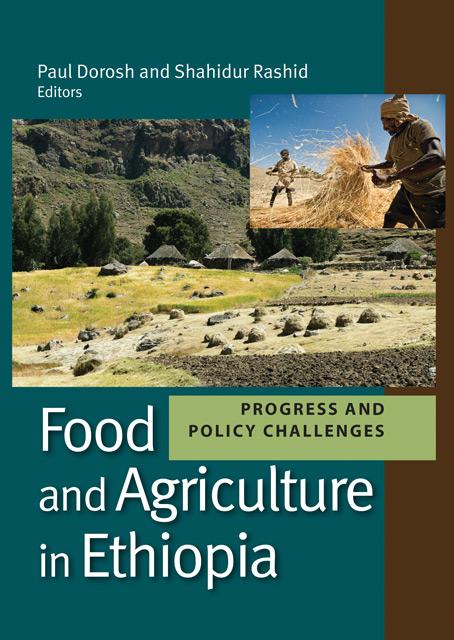
The perception of Ethiopia projected in the media is often one of chronic poverty and hunger, but this bleak assessment does not accurately reflect most of the country today. Ethiopia encompasses a wide variety of agroecologies and peoples. Its agriculture sector, economy, and food security status are equally complex. In fact, since 2001 the per capita income in certain rural areas has risen by more than 50 percent, and crop yields and availability have also increased. Higher investments in roads and mobile phone technology have led to improved infrastructure and thereby greater access to markets, commodities, services, and information.
In Food and Agriculture in Ethiopia: Progress and Policy Challenges, Paul Dorosh and Shahidur Rashid, along with other experts, tell the story of Ethiopia's political, economic, and agricultural transformation. The book is designed to provide empirical evidence to shed light on the complexities of agricultural and food policy in today's Ethiopia, highlight major policies and interventions of the past decade, and provide insights into building resilience to natural disasters and food crises. It examines the key issues, constraints, and opportunities that are likely to shape a food-secure future in Ethiopia, focusing on land quality, crop production, adoption of high-quality seed and fertilizer, and household income.
Students, researchers, policy analysts, and decisionmakers will find this book a useful overview of Ethiopia's political, economic, and agricultural transformation as well as a resource for major food policy issues in Ethiopia.
Contributors: Dawit Alemu, Guush Berhane, Jordan Chamberlin, Sarah Coll-Black, Paul Dorosh, Berhanu Gebremedhin, Sinafikeh Asrat Gemessa, Daniel O. Gilligan, John Graham, Kibrom Tafere Hirfrfot, John Hoddinott, Adam Kennedy, Neha Kumar, Mehrab Malek, Linden McBride, Dawit Kelemework Mekonnen, Asfaw Negassa, Shahidur Rashid, Emily Schmidt, David Spielman, Alemayehu Seyoum Taffesse, Seneshaw Tamiru, James Thurlow, William Wiseman.
Before Memmo my notes were scattered across PDFs. Now a workspace pulls everything into one place — I see exactly what's still left to study.
Memmo's summaries are gold before exams. I don't have to re-read 800 pages two weeks before — just the important parts.
The AI chat has saved me the night before an exam more than once. I just keep asking until I get it — no waiting on a study group to reply.
The quizzes hit exactly what I need to know. Memmo tracks what I get stuck on — so I only practice what's worth it.
Flashcards with spaced repetition are magic. Memmo knows when I'm about to forget something and brings it back.
The AI podcasts are my favorite. I listen on my way to school and get a recap without sitting at a computer.

Handbok i kvalitativa metoder
281 kr

Hållbar utveckling: en introduktion för ingenjörer och andra problemlösare
334 kr

Brymans Samhällsvetenskapliga metoder
390 kr

Projektledning
491 kr

Den orättvisa hälsan: om socioekonomiska skillnader i hälsa och livslängd
326 kr

Vetenskapsteori för nybörjare
196 kr

Organizational Leadership
429 kr

På väg mot läraryrket
172 kr

Det sociala livet i skolan: Socialpsykologiska perspektiv
253 kr

Betygsättningens didaktik
151 kr

Personality
402 kr

Studying Leadership
404 kr

Managing Innovation
477 kr

Introduktion till samhällsvetenskaplig metod
347 kr

The Psychology of Sex and Gender
698 kr

Evidens och kunskap för socialt arbete
207 kr

Introduction to Leadership
605 kr