
Before Memmo my notes were scattered across PDFs. Now a workspace pulls everything into one place — I see exactly what's still left to study.
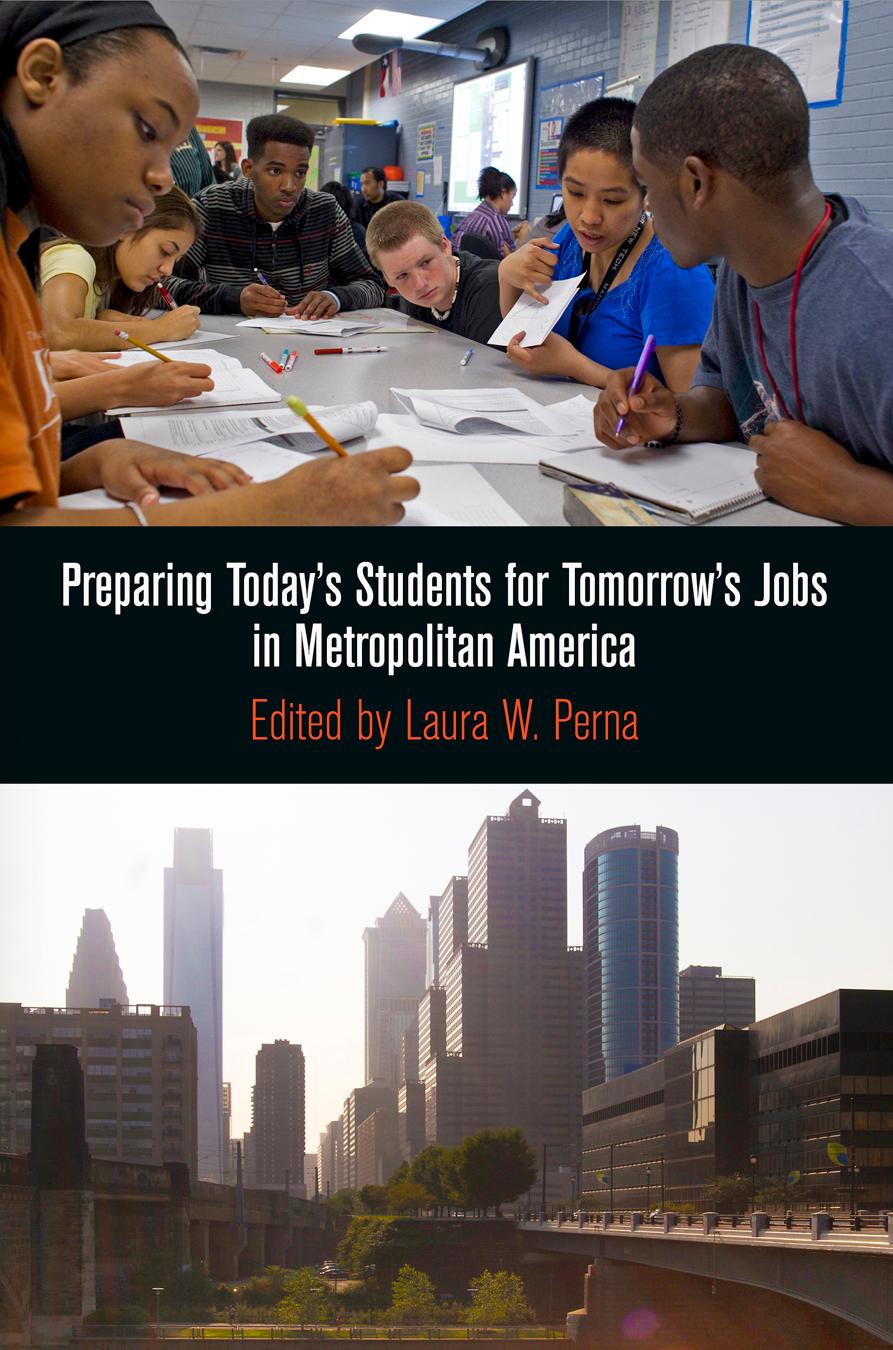
Education, long the key to opportunity in the United States, has become simply essential to earning a decent living. By 2018, 63 percent of all jobs will require at least some postsecondary education or training. Teachers and civic leaders stress the value of study through high school and beyond, but to an alarmingly large segment of America's population—including a disproportionate number of ethnic and racial minorities—higher education seems neither obtainable nor relevant. Preparing Today's Students for Tomorrow's Jobs in Metropolitan America, edited by Laura W. Perna, offers useful insights into how to bridge these gaps and provide urban workers with the educational qualifications and skills they need for real-world jobs.
Preparing Today's Students for Tomorrow's Jobs in Metropolitan America probes more deeply than recent reports on the misalignment between workers' training and employers' requirements. Written by researchers in education and urban policy, this volume takes a comprehensive approach. It informs our understanding of the measurement and definition of the learning required by employers. It examines the roles that different educational sectors and providers play in workforce readiness. It analyzes the institutional practices and public policies that promote the educational preparation of today's students for tomorrow's jobs. The volume also sheds light on several recurring questions, such as what is the "right" amount of education, and what should be the relative emphasis on "general" versus "specific" or "occupational" education and training?
Ensuring that today's students have the education and training to meet future career demands is critical to the economic and social well-being of individuals, cities, and the nation as a whole. With recommendations for institutional leaders and public policymakers, as well as future research, this volume takes important steps toward realizing this goal.
Before Memmo my notes were scattered across PDFs. Now a workspace pulls everything into one place — I see exactly what's still left to study.
Memmo's summaries are gold before exams. I don't have to re-read 800 pages two weeks before — just the important parts.
The AI chat has saved me the night before an exam more than once. I just keep asking until I get it — no waiting on a study group to reply.
The quizzes hit exactly what I need to know. Memmo tracks what I get stuck on — so I only practice what's worth it.
Flashcards with spaced repetition are magic. Memmo knows when I'm about to forget something and brings it back.
The AI podcasts are my favorite. I listen on my way to school and get a recap without sitting at a computer.

Handbok i kvalitativa metoder
281 kr

Hållbar utveckling: en introduktion för ingenjörer och andra problemlösare
334 kr

Brymans Samhällsvetenskapliga metoder
390 kr

Projektledning
491 kr

Den orättvisa hälsan: om socioekonomiska skillnader i hälsa och livslängd
326 kr

Vetenskapsteori för nybörjare
196 kr

Organizational Leadership
429 kr

På väg mot läraryrket
172 kr

Det sociala livet i skolan: Socialpsykologiska perspektiv
253 kr

Betygsättningens didaktik
151 kr

Personality
402 kr

Studying Leadership
404 kr

Managing Innovation
477 kr

Introduktion till samhällsvetenskaplig metod
347 kr

The Psychology of Sex and Gender
698 kr

Evidens och kunskap för socialt arbete
207 kr

Introduction to Leadership
605 kr