
Before Memmo my notes were scattered across PDFs. Now a workspace pulls everything into one place — I see exactly what's still left to study.
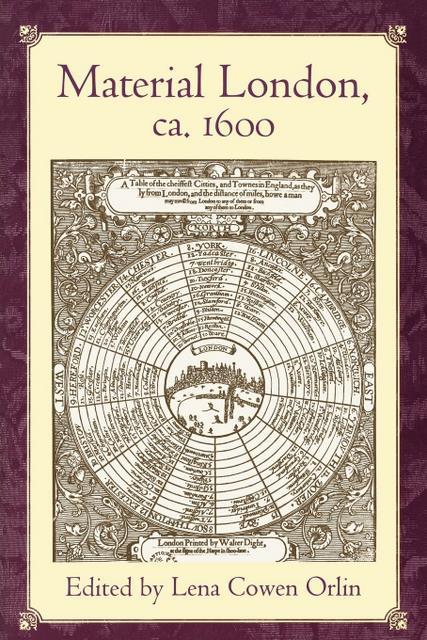
Between 1500 and 1700, London grew from a minor national capital to the largest city in Europe. The defining period of growth was the period from 1550 to 1650, the midpoint of which coincided with the end of Elizabeth I's reign and the height of Shakespeare's theatrical career.
In Material London, ca. 1600, Lena Cowen Orlin and a distinguished group of social, intellectual, urban, architectural, and agrarian historians, archaeologists, cultural anthropologists, and literary critics explore the ideas, structures, and practices that distinguished London before the Great Fire, basing their investigations on the material traces in artifacts, playtexts, documents, graphic arts, and archaeological remains.
In order to evoke "material London, ca. 1600," each scholar examines a different aspect of one of the great world cities at a critical moment in Western history. Several chapters give broad panoramic and authoritative views: what architectural forms characterized the built city around 1600; how the public theatre established its claim on the city; how London's citizens incorporated the new commercialism of their culture into their moral views. Other essays offer sharply focused studies: how Irish mantles were adopted as elite fashions in the hybrid culture of the court; how the city authorities clashed with the church hierarchy over the building of a small bookshop; how London figured in Ben Jonson's exploration of the role of the poet.
Although all the authors situate the material world of early modern London—its objects, products, literatures, built environment, and economic practices—in its broader political and cultural contexts, provocative debates and exchanges remain both within and between the essays as to what constitutes "material London, ca. 1600."
Before Memmo my notes were scattered across PDFs. Now a workspace pulls everything into one place — I see exactly what's still left to study.
Memmo's summaries are gold before exams. I don't have to re-read 800 pages two weeks before — just the important parts.
The AI chat has saved me the night before an exam more than once. I just keep asking until I get it — no waiting on a study group to reply.
The quizzes hit exactly what I need to know. Memmo tracks what I get stuck on — so I only practice what's worth it.
Flashcards with spaced repetition are magic. Memmo knows when I'm about to forget something and brings it back.
The AI podcasts are my favorite. I listen on my way to school and get a recap without sitting at a computer.

Handbok i kvalitativa metoder
281 kr

Hållbar utveckling: en introduktion för ingenjörer och andra problemlösare
334 kr

Brymans Samhällsvetenskapliga metoder
390 kr

Projektledning
491 kr

Den orättvisa hälsan: om socioekonomiska skillnader i hälsa och livslängd
326 kr

Organizational Leadership
429 kr

Vetenskapsteori för nybörjare
196 kr

På väg mot läraryrket
172 kr

Det sociala livet i skolan: Socialpsykologiska perspektiv
253 kr

Betygsättningens didaktik
151 kr

Personality
402 kr

Studying Leadership
404 kr

Managing Innovation
477 kr

Introduktion till samhällsvetenskaplig metod
347 kr

The Psychology of Sex and Gender
698 kr

Evidens och kunskap för socialt arbete
207 kr

Introduction to Leadership
605 kr