
Before Memmo my notes were scattered across PDFs. Now a workspace pulls everything into one place — I see exactly what's still left to study.
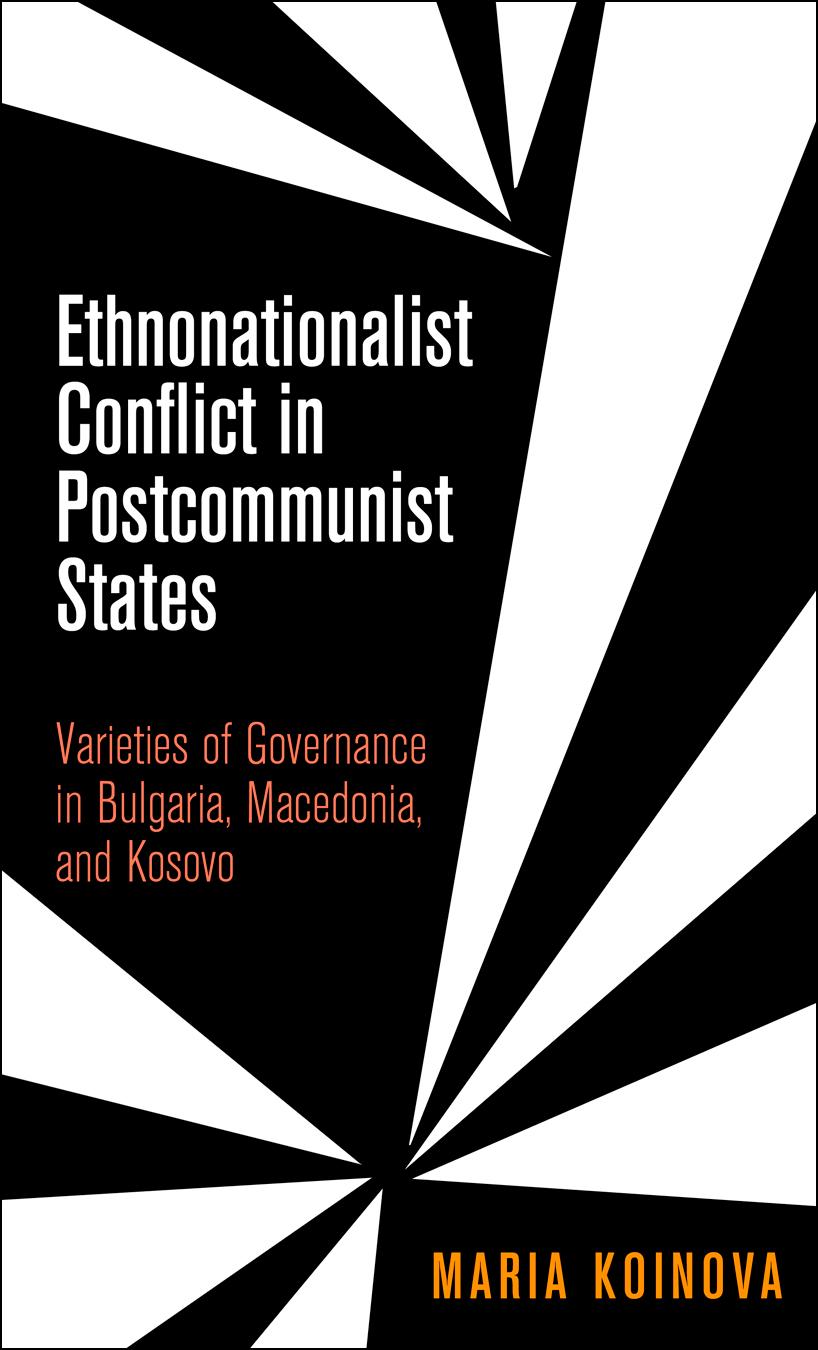
Ethnonationalist Conflict in Postcommunist States investigates why some Eastern European states transitioned to new forms of governance with minimal violence while others broke into civil war. In Bulgaria, the Turkish minority was subjected to coerced assimilation and forced expulsion, but the nation ultimately negotiated peace through institutional channels. In Macedonia, periodic outbreaks of insurgent violence escalated to armed conflict. Kosovo's internal warfare culminated in NATO's controversial bombing campaign. In the twenty-first century, these conflicts were subdued, but violence continued to flare occasionally and impede durable conflict resolution.
In this comparative study, Maria Koinova applies historical institutionalism to conflict analysis, tracing ethnonationalist violence in postcommunist states to a volatile, formative period between 1987 and 1992. In this era of instability, the incidents that brought majorities and minorities into dispute had a profound impact and a cumulative effect, as did the interventions of international agents and kin states. Whether the conflicts initially evolved in peaceful or violent ways, the dynamics of their disputes became self-perpetuating and informally institutionalized. Thus, external policies or interventions could affect only minimal change, and the impact of international agents subsided over time. Regardless of the constitutions, laws, and injunctions, majorities, minorities, international agents, and kin states continue to act in accord with the logic of informally institutionalized conflict dynamics.
Koinova analyzes the development of those dynamics in Bulgaria, Macedonia, and Kosovo, drawing on theories of democratization, international intervention, and path-dependence as well as interviews and extensive fieldwork. The result is a compelling account of the underlying causal mechanisms of conflict perpetuation and change that will shed light on broader patterns of ethnic violence.
Before Memmo my notes were scattered across PDFs. Now a workspace pulls everything into one place — I see exactly what's still left to study.
Memmo's summaries are gold before exams. I don't have to re-read 800 pages two weeks before — just the important parts.
The AI chat has saved me the night before an exam more than once. I just keep asking until I get it — no waiting on a study group to reply.
The quizzes hit exactly what I need to know. Memmo tracks what I get stuck on — so I only practice what's worth it.
Flashcards with spaced repetition are magic. Memmo knows when I'm about to forget something and brings it back.
The AI podcasts are my favorite. I listen on my way to school and get a recap without sitting at a computer.

Handbok i kvalitativa metoder
281 kr

Hållbar utveckling: en introduktion för ingenjörer och andra problemlösare
334 kr

Brymans Samhällsvetenskapliga metoder
390 kr

Projektledning
491 kr

Den orättvisa hälsan: om socioekonomiska skillnader i hälsa och livslängd
326 kr

Vetenskapsteori för nybörjare
196 kr

Organizational Leadership
429 kr

På väg mot läraryrket
172 kr

Det sociala livet i skolan: Socialpsykologiska perspektiv
253 kr

Betygsättningens didaktik
151 kr

Personality
402 kr

Studying Leadership
404 kr

Managing Innovation
477 kr

Introduktion till samhällsvetenskaplig metod
347 kr

The Psychology of Sex and Gender
698 kr

Evidens och kunskap för socialt arbete
207 kr

Introduction to Leadership
605 kr