
Before Memmo my notes were scattered across PDFs. Now a workspace pulls everything into one place — I see exactly what's still left to study.
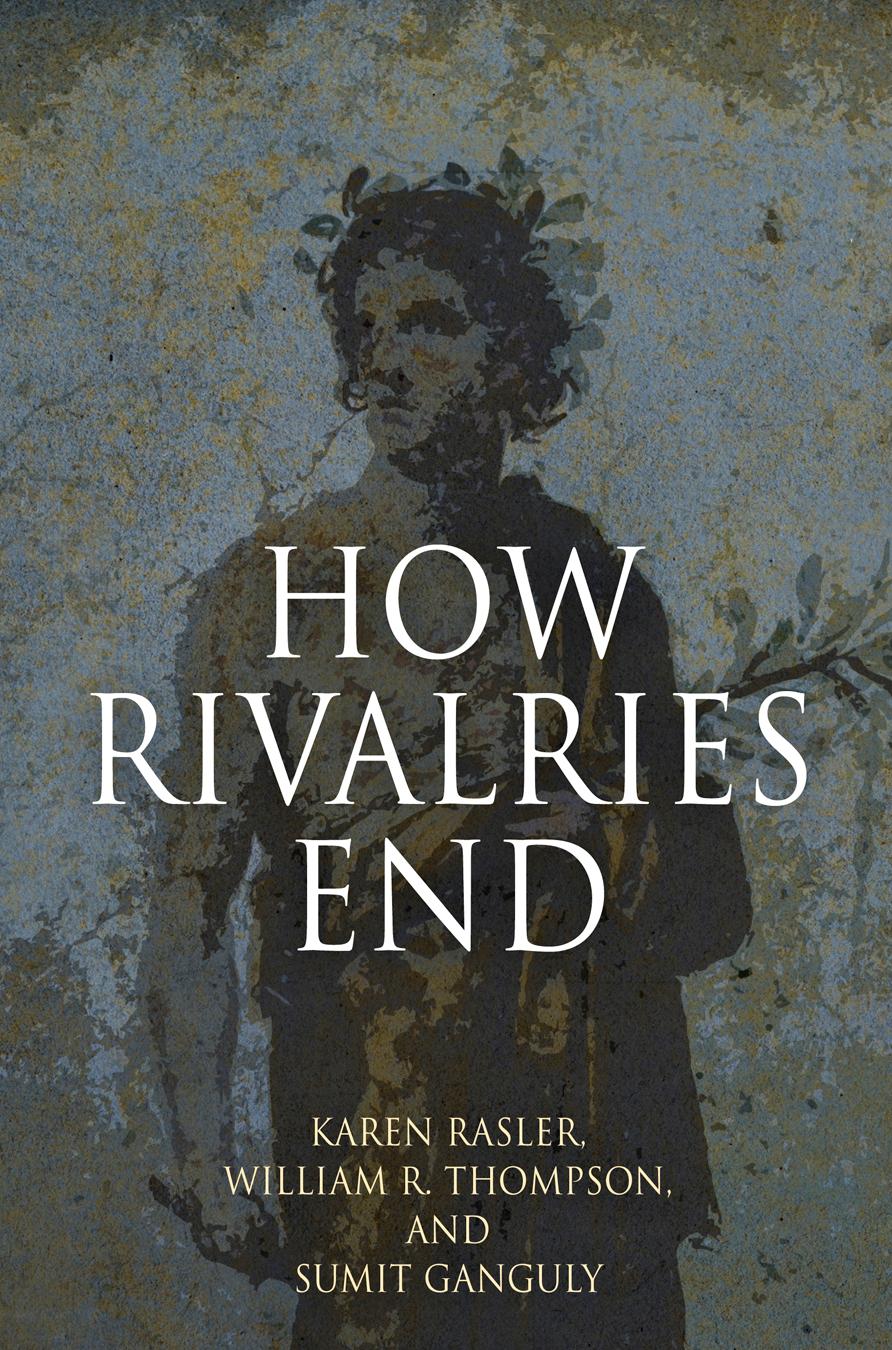
Rivalry between nations has a long and sometimes bloody history. Not all political opposition culminates in war—the rivalry between the United States and the Soviet Union is one example—but in most cases competition between nations and peoples for resources and strategic advantage does lead to violence: nearly 80 percent of the wars fought since 1816 were sparked by contention between rival nations. Long-term discord is a global concern, since competing states may drag allies into their conflict or threaten to use weapons of mass destruction. How Rivalries End is a study of how such rivalries take root and flourish and particularly how some dissipate over time without recourse to war.
Political scientists Karen Rasler, William R. Thompson, and Sumit Ganguly examine ten political hot spots, stretching from Egypt and Israel to the two Koreas, where crises and military confrontations have occurred over the last seven decades. Through exacting analysis of thirty-two attempts to deescalate strategic rivalries, they reveal a pattern in successful conflict resolutions: shocks that overcome foreign policy inertia; changes in perceptions of the adversary's competitiveness or threat; positive responses to conciliatory signals; and continuing effort to avoid conflict after hostilities cease. How Rivalries End significantly contributes to our understanding why protracted conflicts sometimes deescalate and even terminate without resort to war.
Before Memmo my notes were scattered across PDFs. Now a workspace pulls everything into one place — I see exactly what's still left to study.
Memmo's summaries are gold before exams. I don't have to re-read 800 pages two weeks before — just the important parts.
The AI chat has saved me the night before an exam more than once. I just keep asking until I get it — no waiting on a study group to reply.
The quizzes hit exactly what I need to know. Memmo tracks what I get stuck on — so I only practice what's worth it.
Flashcards with spaced repetition are magic. Memmo knows when I'm about to forget something and brings it back.
The AI podcasts are my favorite. I listen on my way to school and get a recap without sitting at a computer.

Handbok i kvalitativa metoder
281 kr

Hållbar utveckling: en introduktion för ingenjörer och andra problemlösare
334 kr

Brymans Samhällsvetenskapliga metoder
390 kr

Projektledning
491 kr

Den orättvisa hälsan: om socioekonomiska skillnader i hälsa och livslängd
326 kr

Vetenskapsteori för nybörjare
196 kr

Organizational Leadership
429 kr

På väg mot läraryrket
172 kr

Det sociala livet i skolan: Socialpsykologiska perspektiv
253 kr

Betygsättningens didaktik
151 kr

Personality
402 kr

Studying Leadership
404 kr

Managing Innovation
477 kr

Introduktion till samhällsvetenskaplig metod
347 kr

The Psychology of Sex and Gender
698 kr

Evidens och kunskap för socialt arbete
207 kr

Introduction to Leadership
605 kr