
Before Memmo my notes were scattered across PDFs. Now a workspace pulls everything into one place — I see exactly what's still left to study.
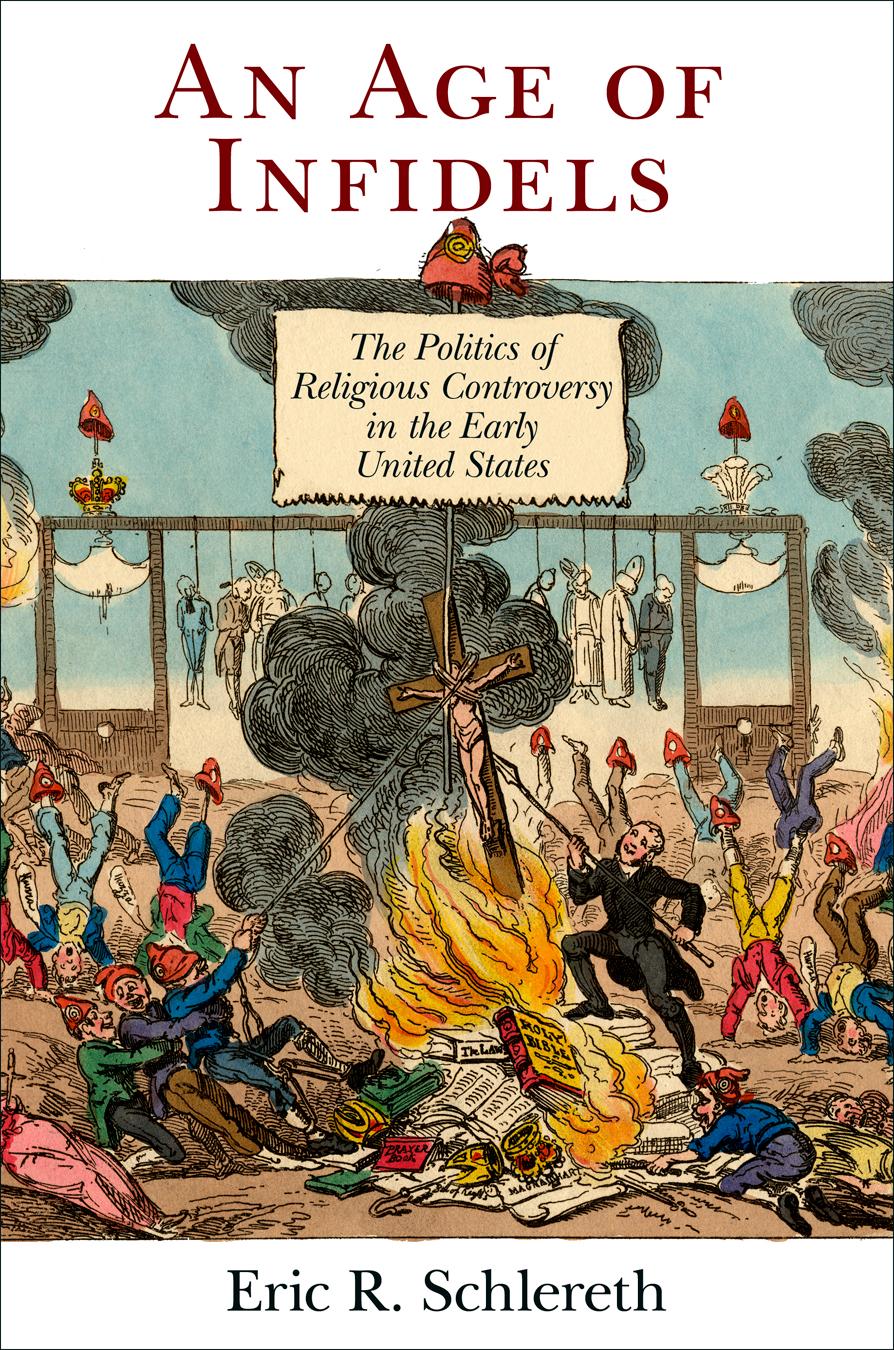
Historian Eric R. Schlereth places religious conflict at the center of early American political culture. He shows ordinary Americans—both faithful believers and Christianity's staunchest critics—struggling with questions about the meaning of tolerance and the limits of religious freedom. In doing so, he casts new light on the ways Americans reconciled their varied religious beliefs with political change at a formative moment in the nation's cultural life.
After the American Revolution, citizens of the new nation felt no guarantee that they would avoid the mire of religious and political conflict that had gripped much of Europe for three centuries. Debates thus erupted in the new United States about how or even if long-standing religious beliefs, institutions, and traditions could be accommodated within a new republican political order that encouraged suspicion of inherited traditions. Public life in the period included contentious arguments over the best way to ensure a compatible relationship between diverse religious beliefs and the nation's recent political developments.
In the process, religion and politics in the early United States were remade to fit each other. From the 1770s onward, Americans created a political rather than legal boundary between acceptable and unacceptable religious expression, one defined in reference to infidelity. Conflicts occurred most commonly between deists and their opponents who perceived deists' anti-Christian opinions as increasingly influential in American culture and politics. Exploring these controversies, Schlereth explains how Americans navigated questions of religious truth and difference in an age of emerging religious liberty.
Before Memmo my notes were scattered across PDFs. Now a workspace pulls everything into one place — I see exactly what's still left to study.
Memmo's summaries are gold before exams. I don't have to re-read 800 pages two weeks before — just the important parts.
The AI chat has saved me the night before an exam more than once. I just keep asking until I get it — no waiting on a study group to reply.
The quizzes hit exactly what I need to know. Memmo tracks what I get stuck on — so I only practice what's worth it.
Flashcards with spaced repetition are magic. Memmo knows when I'm about to forget something and brings it back.
The AI podcasts are my favorite. I listen on my way to school and get a recap without sitting at a computer.

Handbok i kvalitativa metoder
281 kr

Hållbar utveckling: en introduktion för ingenjörer och andra problemlösare
334 kr

Brymans Samhällsvetenskapliga metoder
390 kr

Projektledning
491 kr

Den orättvisa hälsan: om socioekonomiska skillnader i hälsa och livslängd
326 kr

Organizational Leadership
429 kr

Vetenskapsteori för nybörjare
196 kr

På väg mot läraryrket
172 kr

Det sociala livet i skolan: Socialpsykologiska perspektiv
253 kr

Betygsättningens didaktik
151 kr

Personality
402 kr

Studying Leadership
404 kr

Managing Innovation
477 kr

Introduktion till samhällsvetenskaplig metod
347 kr

The Psychology of Sex and Gender
698 kr

Evidens och kunskap för socialt arbete
207 kr

Introduction to Leadership
605 kr