
Before Memmo my notes were scattered across PDFs. Now a workspace pulls everything into one place — I see exactly what's still left to study.
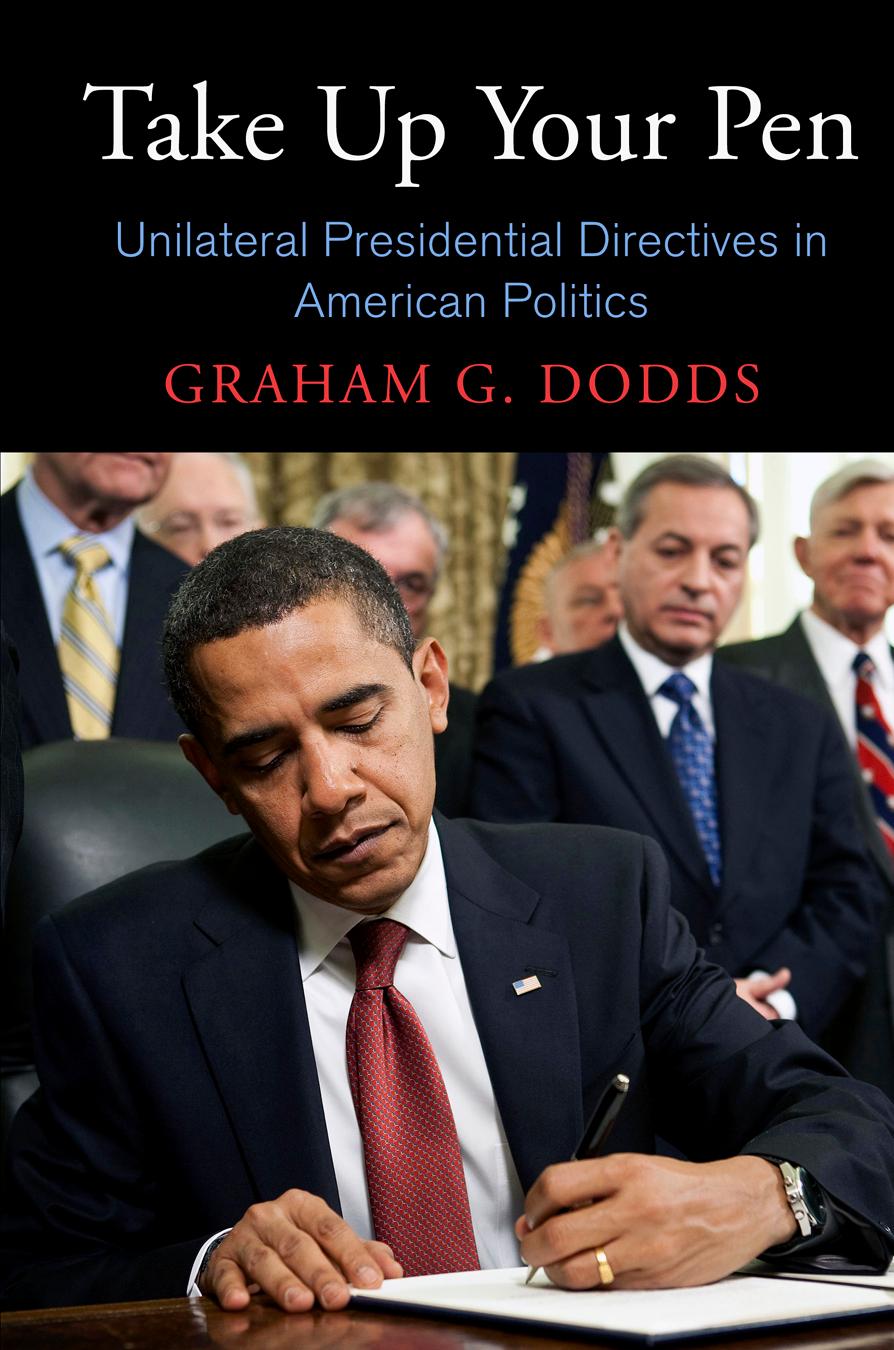
Executive orders and proclamations afford presidents an independent means of controlling a wide range of activities in the federal government—yet they are not mentioned in the U.S. Constitution. In fact, the controversial edicts known as universal presidential directives seem to violate the separation of powers by enabling the commander-in-chief to bypass Congress and enact his own policy preferences. As Clinton White House counsel Paul Begala remarked on the numerous executive orders signed by the president during his second term: "Stroke of the pen. Law of the land. Kinda cool."
Although public awareness of unilateral presidential directives has been growing over the last decade—sparked in part by Barack Obama's use of executive orders and presidential memoranda to reverse many of his predecessor's policies as well as by the number of unilateral directives George W. Bush promulgated for the "War on Terror"—Graham G. Dodds reminds us that not only has every single president issued executive orders, such orders have figured in many of the most significant episodes in American political history. In Take Up Your Pen, Dodds offers one of the first historical treatments of this executive prerogative and explores the source of this authority; how executive orders were legitimized, accepted, and routinized; and what impact presidential directives have had on our understanding of the presidency, American politics, and political development. By tracing the rise of a more activist central government—first advanced in the Progressive Era by Theodore Roosevelt—Dodds illustrates the growing use of these directives throughout a succession of presidencies. More important, Take Up Your Pen questions how unilateral presidential directives fit the conception of democracy and the needs of American citizens.
Before Memmo my notes were scattered across PDFs. Now a workspace pulls everything into one place — I see exactly what's still left to study.
Memmo's summaries are gold before exams. I don't have to re-read 800 pages two weeks before — just the important parts.
The AI chat has saved me the night before an exam more than once. I just keep asking until I get it — no waiting on a study group to reply.
The quizzes hit exactly what I need to know. Memmo tracks what I get stuck on — so I only practice what's worth it.
Flashcards with spaced repetition are magic. Memmo knows when I'm about to forget something and brings it back.
The AI podcasts are my favorite. I listen on my way to school and get a recap without sitting at a computer.

Handbok i kvalitativa metoder
281 kr

Hållbar utveckling: en introduktion för ingenjörer och andra problemlösare
334 kr

Brymans Samhällsvetenskapliga metoder
390 kr

Projektledning
491 kr

Den orättvisa hälsan: om socioekonomiska skillnader i hälsa och livslängd
326 kr

Vetenskapsteori för nybörjare
196 kr

Organizational Leadership
429 kr

På väg mot läraryrket
172 kr

Det sociala livet i skolan: Socialpsykologiska perspektiv
253 kr

Betygsättningens didaktik
151 kr

Personality
402 kr

Studying Leadership
404 kr

Managing Innovation
477 kr

Introduktion till samhällsvetenskaplig metod
347 kr

The Psychology of Sex and Gender
698 kr

Evidens och kunskap för socialt arbete
207 kr

Introduction to Leadership
605 kr