
Before Memmo my notes were scattered across PDFs. Now a workspace pulls everything into one place — I see exactly what's still left to study.
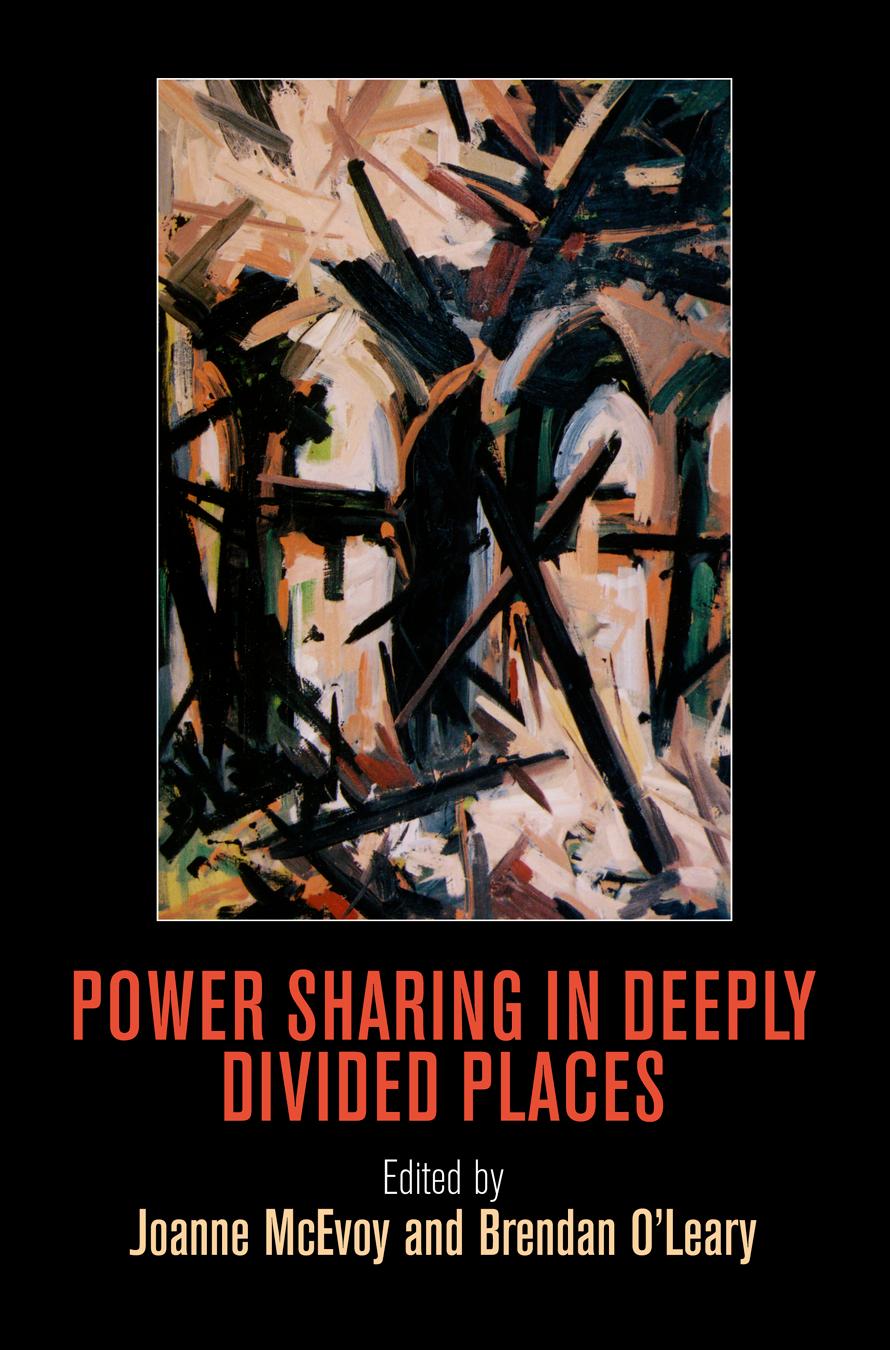
Power sharing may be broadly defined as any set of arrangements that prevents one political agency or collective from monopolizing power, whether temporarily or permanently. Ideally, such measures promote inclusiveness or at least the coexistence of divergent cultures within a state. In places deeply divided by national, ethnic, linguistic, or religious conflict, power sharing is the standard prescription for reconciling antagonistic groups, particularly where genocide, expulsion, or coerced assimilation threaten the lives and rights of minority peoples. In recent history, the success record of this measure is mixed.
Power Sharing in Deeply Divided Places features fifteen analytical studies of power-sharing systems, past and present, as well as critical evaluations of the role of electoral systems and courts in their implementation. Interdisciplinary and international in formation and execution, the chapters encompass divided cities such as Belfast, Jerusalem, Kirkuk, and Sarajevo and divided places such as Belgium, Israel/Palestine, Northern Ireland, and South Africa, as well as the Holy Roman Empire, the Saffavid Empire, Aceh in Indonesia, and the European Union.
Equally suitable for specialists, teachers, and students, Power Sharing in Deeply Divided Places considers the merits and defects of an array of variant systems and provides explanations of their emergence, maintenance, and failings; some essays offer lucid proposals targeted at particular places. While this volume does not presume that power sharing is a panacea for social reconciliation, it does suggest how it can help foster peace and democracy in conflict-torn countries.
Contributors: Liam Anderson, Florian Bieber, Scott A. Bollens, Benjamin Braude, Ed Cairns, Randall Collins, Kris Deschouwer, Bernard Grofman, Colin Irwin, Samuel Issacharoff, Allison McCulloch, Joanne McEvoy, Brendan O'Leary, Philippe van Parijs, Alfred Stepan, Ronald Wintrobe.
Before Memmo my notes were scattered across PDFs. Now a workspace pulls everything into one place — I see exactly what's still left to study.
Memmo's summaries are gold before exams. I don't have to re-read 800 pages two weeks before — just the important parts.
The AI chat has saved me the night before an exam more than once. I just keep asking until I get it — no waiting on a study group to reply.
The quizzes hit exactly what I need to know. Memmo tracks what I get stuck on — so I only practice what's worth it.
Flashcards with spaced repetition are magic. Memmo knows when I'm about to forget something and brings it back.
The AI podcasts are my favorite. I listen on my way to school and get a recap without sitting at a computer.

Handbok i kvalitativa metoder
281 kr

Hållbar utveckling: en introduktion för ingenjörer och andra problemlösare
334 kr

Brymans Samhällsvetenskapliga metoder
390 kr

Projektledning
491 kr

Den orättvisa hälsan: om socioekonomiska skillnader i hälsa och livslängd
326 kr

Organizational Leadership
429 kr

Vetenskapsteori för nybörjare
196 kr

På väg mot läraryrket
172 kr

Det sociala livet i skolan: Socialpsykologiska perspektiv
253 kr

Betygsättningens didaktik
151 kr

Personality
402 kr

Studying Leadership
404 kr

Managing Innovation
477 kr

Introduktion till samhällsvetenskaplig metod
347 kr

The Psychology of Sex and Gender
698 kr

Evidens och kunskap för socialt arbete
207 kr

Introduction to Leadership
605 kr