
Before Memmo my notes were scattered across PDFs. Now a workspace pulls everything into one place — I see exactly what's still left to study.
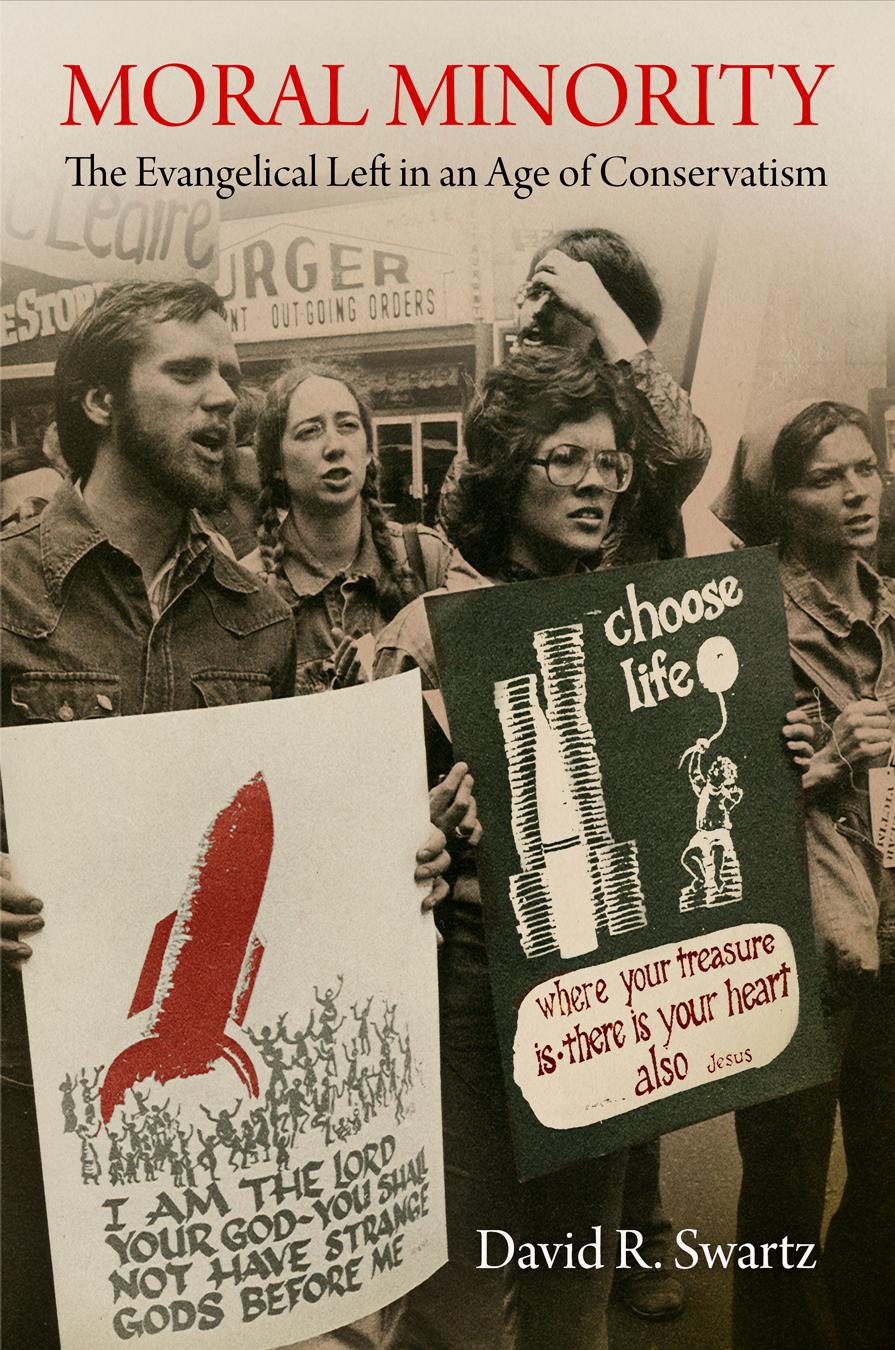
In 1973, nearly a decade before the height of the Moral Majority, a group of progressive activists assembled in a Chicago YMCA to strategize about how to move the nation in a more evangelical direction through political action. When they emerged, the Washington Post predicted that the new evangelical left could "shake both political and religious life in America." The following decades proved the Post both right and wrong—evangelical participation in the political sphere was intensifying, but in the end it was the religious right, not the left, that built a viable movement and mobilized electorally. How did the evangelical right gain a moral monopoly and why were evangelical progressives, who had shown such promise, left behind?
In Moral Minority, the first comprehensive history of the evangelical left, David R. Swartz sets out to answer these questions, charting the rise, decline, and political legacy of this forgotten movement. Though vibrant in the late nineteenth century, progressive evangelicals were in eclipse following religious controversies of the early twentieth century, only to reemerge in the 1960s and 1970s. They stood for antiwar, civil rights, and anticonsumer principles, even as they stressed doctrinal and sexual fidelity. Politically progressive and theologically conservative, the evangelical left was also remarkably diverse, encompassing groups such as Sojourners, InterVarsity Christian Fellowship, Evangelicals for Social Action, and the Association for Public Justice. Swartz chronicles the efforts of evangelical progressives who expanded the concept of morality from the personal to the social and showed the way—organizationally and through political activism—to what would become the much larger and more influential evangelical right. By the 1980s, although they had witnessed the election of Jimmy Carter, the nation's first born-again president, progressive evangelicals found themselves in the political wilderness, riven by identity politics and alienated by a skeptical Democratic Party and a hostile religious right.
In the twenty-first century, evangelicals of nearly all political and denominational persuasions view social engagement as a fundamental responsibility of the faithful. This most dramatic of transformations is an important legacy of the evangelical left.
Before Memmo my notes were scattered across PDFs. Now a workspace pulls everything into one place — I see exactly what's still left to study.
Memmo's summaries are gold before exams. I don't have to re-read 800 pages two weeks before — just the important parts.
The AI chat has saved me the night before an exam more than once. I just keep asking until I get it — no waiting on a study group to reply.
The quizzes hit exactly what I need to know. Memmo tracks what I get stuck on — so I only practice what's worth it.
Flashcards with spaced repetition are magic. Memmo knows when I'm about to forget something and brings it back.
The AI podcasts are my favorite. I listen on my way to school and get a recap without sitting at a computer.

Handbok i kvalitativa metoder
281 kr

Hållbar utveckling: en introduktion för ingenjörer och andra problemlösare
334 kr

Brymans Samhällsvetenskapliga metoder
390 kr

Projektledning
491 kr

Den orättvisa hälsan: om socioekonomiska skillnader i hälsa och livslängd
326 kr

Vetenskapsteori för nybörjare
196 kr

Organizational Leadership
429 kr

På väg mot läraryrket
172 kr

Det sociala livet i skolan: Socialpsykologiska perspektiv
253 kr

Betygsättningens didaktik
151 kr

Personality
402 kr

Studying Leadership
404 kr

Managing Innovation
477 kr

Introduktion till samhällsvetenskaplig metod
347 kr

The Psychology of Sex and Gender
698 kr

Evidens och kunskap för socialt arbete
207 kr

Introduction to Leadership
605 kr