
Before Memmo my notes were scattered across PDFs. Now a workspace pulls everything into one place — I see exactly what's still left to study.
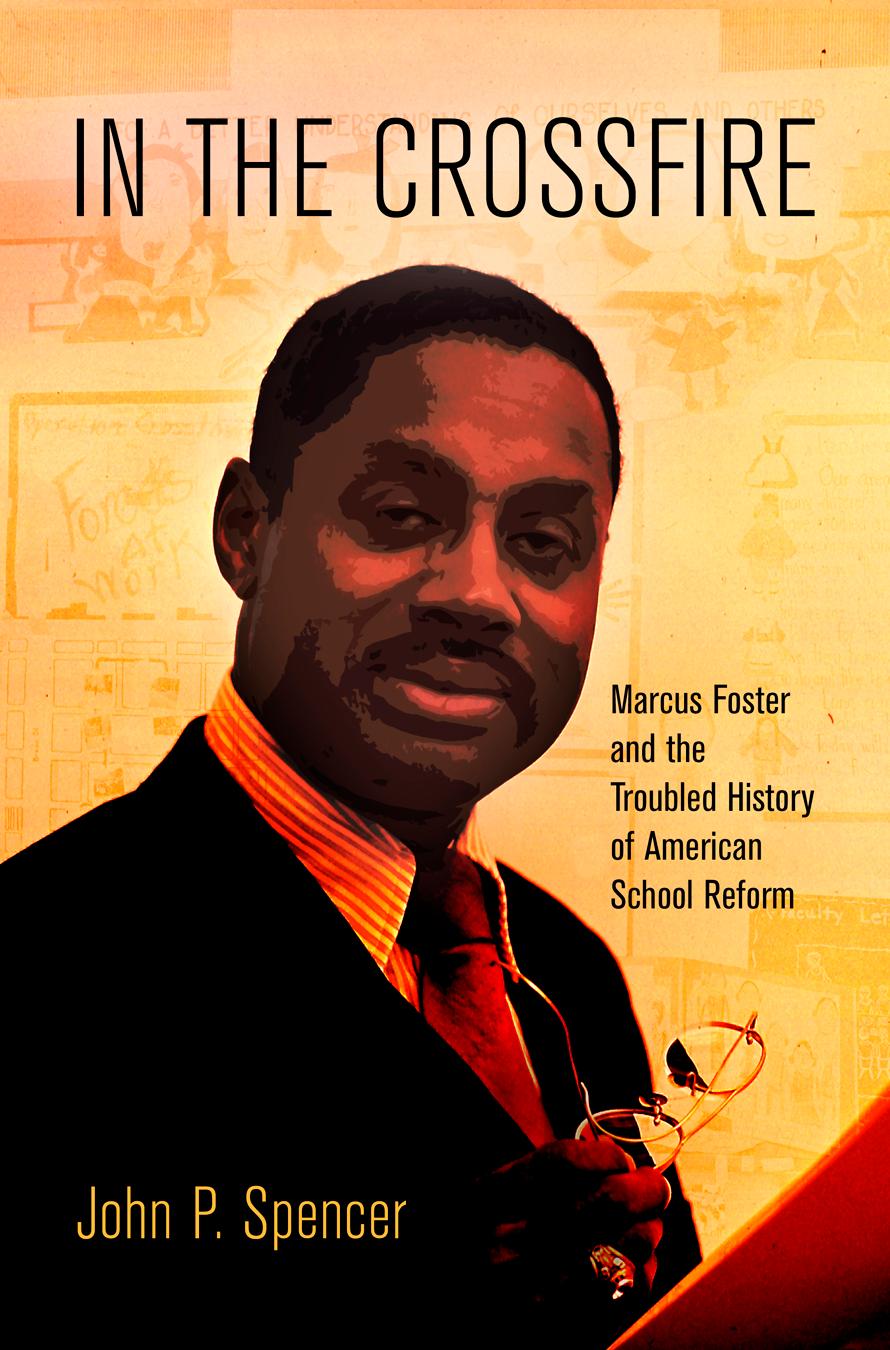
As media reports declare crisis after crisis in public education, Americans find themselves hotly debating educational inequalities that seem to violate their nation's ideals. Why does success in school track so closely with race and socioeconomic status? How to end these apparent achievement gaps? In the Crossfire brings historical perspective to these debates by tracing the life and work of Marcus Foster, an African American educator who struggled to reform urban schools in the 1960s and early 1970s.
As a teacher, principal, and superintendent—first in his native Philadelphia and eventually in Oakland, California—Foster made success stories of urban schools and children whom others had dismissed as hopeless, only to be assassinated in 1973 by the previously unknown Symbionese Liberation Army in a bizarre protest against an allegedly racist school system. Foster's story encapsulates larger social changes in the decades after World War II: the great black migration from South to North, the civil rights movement, the decline of American cities, and the ever-increasing emphasis on education as a ticket to success. Well before the accountability agenda of the No Child Left Behind Act or the rise of charter schools, Americans came into sharp conflict over urban educational failure, with some blaming the schools and others pointing to conditions in homes and neighborhoods. By focusing on an educator who worked in the trenches and had a reputation for bridging divisions, In the Crossfire sheds new light on the continuing ideological debates over race, poverty, and achievement.
Foster charted a course between the extremes of demanding too little and expecting too much of schools as agents of opportunity in America. He called for accountability not only from educators but also from families, taxpayers, and political and economic institutions. His effort to mobilize multiple constituencies was a key to his success—and a lesson for educators and policymakers who would take aim at achievement gaps without addressing the full range of school and nonschool factors that create them.
Before Memmo my notes were scattered across PDFs. Now a workspace pulls everything into one place — I see exactly what's still left to study.
Memmo's summaries are gold before exams. I don't have to re-read 800 pages two weeks before — just the important parts.
The AI chat has saved me the night before an exam more than once. I just keep asking until I get it — no waiting on a study group to reply.
The quizzes hit exactly what I need to know. Memmo tracks what I get stuck on — so I only practice what's worth it.
Flashcards with spaced repetition are magic. Memmo knows when I'm about to forget something and brings it back.
The AI podcasts are my favorite. I listen on my way to school and get a recap without sitting at a computer.

Handbok i kvalitativa metoder
281 kr

Hållbar utveckling: en introduktion för ingenjörer och andra problemlösare
334 kr

Brymans Samhällsvetenskapliga metoder
390 kr

Projektledning
491 kr

Den orättvisa hälsan: om socioekonomiska skillnader i hälsa och livslängd
326 kr

Organizational Leadership
429 kr

Vetenskapsteori för nybörjare
196 kr

På väg mot läraryrket
172 kr

Det sociala livet i skolan: Socialpsykologiska perspektiv
253 kr

Betygsättningens didaktik
151 kr

Personality
402 kr

Studying Leadership
404 kr

Managing Innovation
477 kr

Introduktion till samhällsvetenskaplig metod
347 kr

The Psychology of Sex and Gender
698 kr

Evidens och kunskap för socialt arbete
207 kr

Introduction to Leadership
605 kr