
Before Memmo my notes were scattered across PDFs. Now a workspace pulls everything into one place — I see exactly what's still left to study.
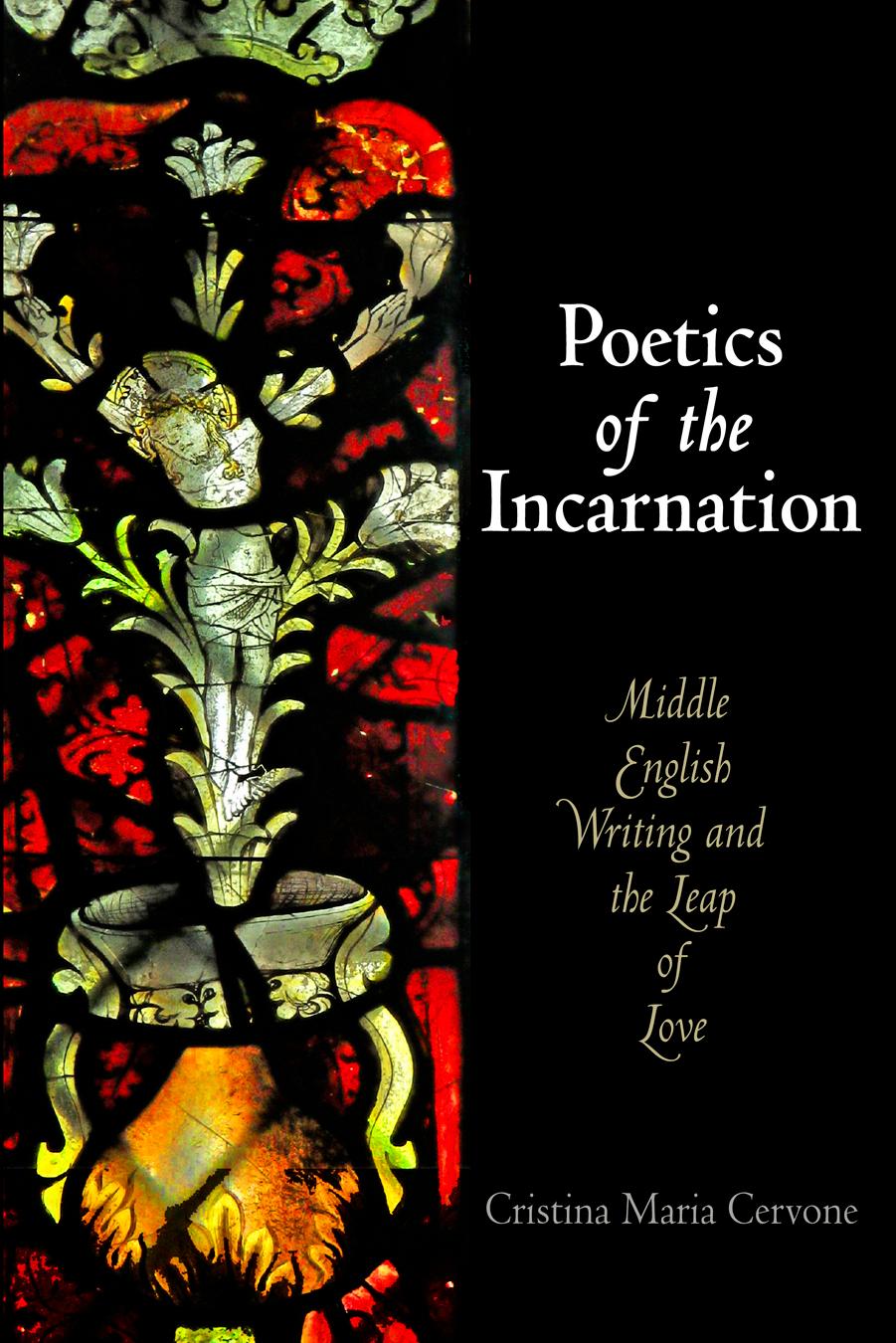
The Gospel of John describes the Incarnation of Christ as "the Word made flesh"—an intriguing phrase that uses the logic of metaphor but is not traditionally understood as merely symbolic. Thus the conceptual puzzle of the Incarnation also draws attention to language and form: what is the Word; how is it related to language; how can the Word become flesh? Such theological questions haunt the material imagery engaged by medieval writers, the structural forms that give their writing shape, and even their ideas about language itself. In Poetics of the Incarnation, Cristina Maria Cervone examines the work of fourteenth-century writers who, rather than approaching the mystery of the Incarnation through affective identification with the Passion, elected to ponder the intellectual implications of the Incarnation in poetical and rhetorical forms. Cervone argues that a poetics of the Incarnation becomes the grounds for working through the philosophical and theological implications of language, at a point in time when Middle English was emerging as a legitimate, if contested, medium for theological expression.
In brief lyrics and complex narratives, late medieval English writers including William Langland, Julian of Norwich, Walter Hilton, and the anonymous author of the Charters of Christ took the relationship between God and humanity as a jumping-off point for their meditations on the nature of language and thought, the elision between the concrete and the abstract, the complex relationship between acting and being, the work done by poetry itself in and through time, and the meaning latent within poetical forms. Where Passion-devoted writing would focus on the vulnerability and suffering of the fleshly body, these texts took imaginative leaps, such as when they depict the body of Christ as a lily or the written word. Their Incarnational poetics repeatedly call attention to the fact that, in theology as in poetics, form matters.
Before Memmo my notes were scattered across PDFs. Now a workspace pulls everything into one place — I see exactly what's still left to study.
Memmo's summaries are gold before exams. I don't have to re-read 800 pages two weeks before — just the important parts.
The AI chat has saved me the night before an exam more than once. I just keep asking until I get it — no waiting on a study group to reply.
The quizzes hit exactly what I need to know. Memmo tracks what I get stuck on — so I only practice what's worth it.
Flashcards with spaced repetition are magic. Memmo knows when I'm about to forget something and brings it back.
The AI podcasts are my favorite. I listen on my way to school and get a recap without sitting at a computer.

Handbok i kvalitativa metoder
281 kr

Hållbar utveckling: en introduktion för ingenjörer och andra problemlösare
334 kr

Brymans Samhällsvetenskapliga metoder
390 kr

Projektledning
491 kr

Den orättvisa hälsan: om socioekonomiska skillnader i hälsa och livslängd
326 kr

Vetenskapsteori för nybörjare
196 kr

Organizational Leadership
429 kr

På väg mot läraryrket
172 kr

Det sociala livet i skolan: Socialpsykologiska perspektiv
253 kr

Betygsättningens didaktik
151 kr

Personality
402 kr

Studying Leadership
404 kr

Managing Innovation
477 kr

Introduktion till samhällsvetenskaplig metod
347 kr

The Psychology of Sex and Gender
698 kr

Evidens och kunskap för socialt arbete
207 kr

Introduction to Leadership
605 kr