
Before Memmo my notes were scattered across PDFs. Now a workspace pulls everything into one place — I see exactly what's still left to study.
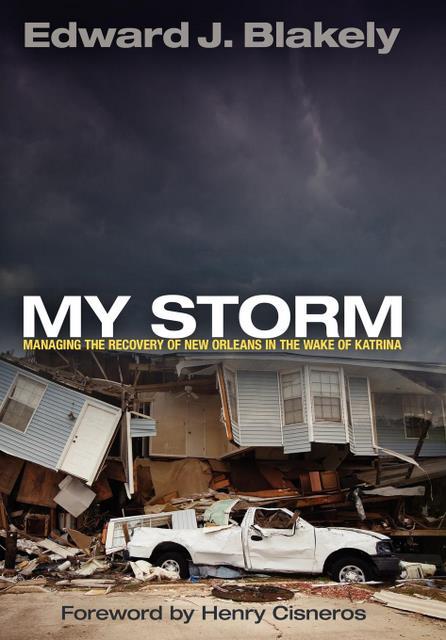
Edward J. Blakely has been called upon to help rebuild after some of the worst disasters in recent American history, from the San Francisco Bay Area's 1989 Loma Prieta earthquake to the September 11 attacks in New York. Yet none of these jobs compared to the challenges he faced in his appointment by New Orleans Mayor Ray Nagin as Director of the Office of Recovery and Development Administration following Hurricane Katrina.
In Katrina's wake, New Orleans and the Gulf Coast suffered a disaster of enormous proportions. Millions of pounds of water crushed the basic infrastructure of the city. A land area six times the size of Manhattan was flooded, destroying 200,000 homes and leaving most of New Orleans under water for 57 days. No American city had sustained that amount of destruction since the Civil War. But beneath the statistics lies a deeper truth: New Orleans had been in trouble well before the first levee broke, plagued with a declining population, crumbling infrastructure, ineffective government, and a failed school system. Katrina only made these existing problems worse. To Blakely, the challenge was not only to repair physical damage but also to reshape a city with a broken economy and a racially divided, socially fractured community.
My Storm is a firsthand account of a critical sixteen months in the post-Katrina recovery process. It tells the story of Blakely's endeavor to transform the shell of a cherished American city into a city that could not only survive but thrive. He considers the recovery effort's successes and failures, candidly assessing the challenges at hand and the work done—admitting that he sometimes stumbled, especially in managing press relations. For Blakely, the story of the post-Katrina recovery contains lessons for all current and would-be planners and policy makers. It is, perhaps, a cautionary tale.
Before Memmo my notes were scattered across PDFs. Now a workspace pulls everything into one place — I see exactly what's still left to study.
Memmo's summaries are gold before exams. I don't have to re-read 800 pages two weeks before — just the important parts.
The AI chat has saved me the night before an exam more than once. I just keep asking until I get it — no waiting on a study group to reply.
The quizzes hit exactly what I need to know. Memmo tracks what I get stuck on — so I only practice what's worth it.
Flashcards with spaced repetition are magic. Memmo knows when I'm about to forget something and brings it back.
The AI podcasts are my favorite. I listen on my way to school and get a recap without sitting at a computer.

Handbok i kvalitativa metoder
281 kr

Hållbar utveckling: en introduktion för ingenjörer och andra problemlösare
334 kr

Brymans Samhällsvetenskapliga metoder
390 kr

Projektledning
491 kr

Den orättvisa hälsan: om socioekonomiska skillnader i hälsa och livslängd
326 kr

Organizational Leadership
429 kr

Vetenskapsteori för nybörjare
196 kr

På väg mot läraryrket
172 kr

Det sociala livet i skolan: Socialpsykologiska perspektiv
253 kr

Betygsättningens didaktik
151 kr

Personality
402 kr

Studying Leadership
404 kr

Managing Innovation
477 kr

Introduktion till samhällsvetenskaplig metod
347 kr

The Psychology of Sex and Gender
698 kr

Evidens och kunskap för socialt arbete
207 kr

Introduction to Leadership
605 kr