
Before Memmo my notes were scattered across PDFs. Now a workspace pulls everything into one place — I see exactly what's still left to study.
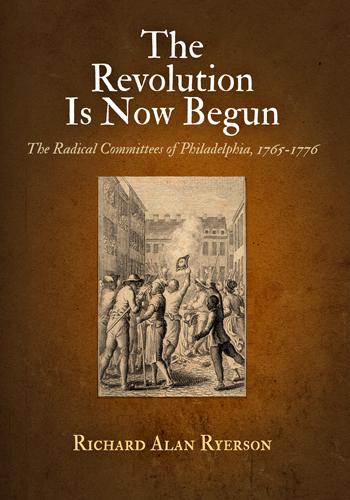
The success of the American Revolution is less likely to be understood through an examination of its ideological origins than through a close analysis of the political processes by which principles, beliefs, and anxieties were translated into revolutionary action. This book offers the first detailed profile of the several hundred obscure committeemen and propagandists who took up the new revolutionary ideology and carried it that one last step: out of the realm of rhetoric and into the domain of concrete change. And participatory democracy as a principle of American government owes its realization largely to these second-rank politicians and ordinary citizens, who provided the basic muscle of Revolutionary politics.
In the 1760s and early 1770s Pennsylvania lacked nearly every ingredient for revolution found elsewhere in the colonies: a strong dissenting tradition, widely felt economic grievances, or a legislature intimately acquainted with royal government. Only the painstaking enlistment of a strong leadership core, the construction of new political institutions, and the rapid mobilization of the majority of the community could overcome these deficiencies. In Pennsylvania British authority succumbed to the activity of a few hundred men who were drawn into public life by a handful of veteran politicians within just two years. To these men and to their committees Pennsylvania owes its revolution.
In his book Richard Alan Ryerson focuses on the daily business of politics in the Revolutionary period—the art of motivation for radical political purposes—and its economic and social dimensions in the most prominent American city of the time. How were the colonists mobilized for resistance? What was the political process? Who were the disaffected people who became the radical leaders of the Philadelphia community?
To answer these questions, Ryerson compares campaigning styles, nomination and election procedures, and local political organizations in the colonial era with their counterparts during the Revolution. He also examines the age, economic status, religious faith, and national origins of the men who formed the radical committees of Philadelphia between 1765 and 1776.
Before Memmo my notes were scattered across PDFs. Now a workspace pulls everything into one place — I see exactly what's still left to study.
Memmo's summaries are gold before exams. I don't have to re-read 800 pages two weeks before — just the important parts.
The AI chat has saved me the night before an exam more than once. I just keep asking until I get it — no waiting on a study group to reply.
The quizzes hit exactly what I need to know. Memmo tracks what I get stuck on — so I only practice what's worth it.
Flashcards with spaced repetition are magic. Memmo knows when I'm about to forget something and brings it back.
The AI podcasts are my favorite. I listen on my way to school and get a recap without sitting at a computer.

Handbok i kvalitativa metoder
281 kr

Hållbar utveckling: en introduktion för ingenjörer och andra problemlösare
334 kr

Brymans Samhällsvetenskapliga metoder
390 kr

Projektledning
491 kr

Den orättvisa hälsan: om socioekonomiska skillnader i hälsa och livslängd
326 kr

Organizational Leadership
429 kr

Vetenskapsteori för nybörjare
196 kr

På väg mot läraryrket
172 kr

Det sociala livet i skolan: Socialpsykologiska perspektiv
253 kr

Betygsättningens didaktik
151 kr

Personality
402 kr

Studying Leadership
404 kr

Managing Innovation
477 kr

Introduktion till samhällsvetenskaplig metod
347 kr

The Psychology of Sex and Gender
698 kr

Evidens och kunskap för socialt arbete
207 kr

Introduction to Leadership
605 kr