
Before Memmo my notes were scattered across PDFs. Now a workspace pulls everything into one place — I see exactly what's still left to study.
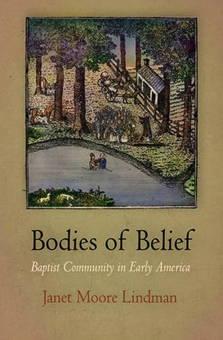
The American Baptist church originated in British North America as "little tabernacles in the wilderness," isolated seventeenth-century congregations that had grown into a mainstream denomination by the early nineteenth century. The common view of this transition casts these evangelicals as radicals who were on society's fringe during the colonial period, only to become conservative by the nineteenth century after they had achieved social acceptance. In Bodies of Belief, Janet Moore Lindman challenges this accepted, if oversimplified, characterization of early American Baptists by arguing that they struggled with issues of equity and power within the church during the colonial period, and that evangelical religion was both radical and conservative from its beginning.
Bodies of Belief traces the paradoxical evolution of the Baptist religion, including the struggles of early settlement and church building, the varieties of theology and worship, and the multivalent meaning of conversation, ritual, and godly community. Lindman demonstrates how the body—both individual bodies and the collective body of believers—was central to the Baptist definition and maintenance of faith. The Baptist religion galvanized believers through a visceral transformation of religious conversion, which was then maintained through ritual. Yet the Baptist body was differentiated by race and gender. Although all believers were spiritual equals, white men remained at the top of a rigid church hierarchy. Drawing on church books, associational records, diaries, letters, sermon notes, ministerial accounts, and early histories from the mid-Atlantic and the Chesapeake as well as New England, this innovative study of early American religion asserts that the Baptist religion was predicated simultaneously on a radical spiritual ethos and a conservative social outlook.
Before Memmo my notes were scattered across PDFs. Now a workspace pulls everything into one place — I see exactly what's still left to study.
Memmo's summaries are gold before exams. I don't have to re-read 800 pages two weeks before — just the important parts.
The AI chat has saved me the night before an exam more than once. I just keep asking until I get it — no waiting on a study group to reply.
The quizzes hit exactly what I need to know. Memmo tracks what I get stuck on — so I only practice what's worth it.
Flashcards with spaced repetition are magic. Memmo knows when I'm about to forget something and brings it back.
The AI podcasts are my favorite. I listen on my way to school and get a recap without sitting at a computer.

Handbok i kvalitativa metoder
281 kr

Hållbar utveckling: en introduktion för ingenjörer och andra problemlösare
334 kr

Brymans Samhällsvetenskapliga metoder
390 kr

Projektledning
491 kr

Den orättvisa hälsan: om socioekonomiska skillnader i hälsa och livslängd
326 kr

Organizational Leadership
429 kr

Vetenskapsteori för nybörjare
196 kr

På väg mot läraryrket
172 kr

Det sociala livet i skolan: Socialpsykologiska perspektiv
253 kr

Betygsättningens didaktik
151 kr

Personality
402 kr

Studying Leadership
404 kr

Managing Innovation
477 kr

Introduktion till samhällsvetenskaplig metod
347 kr

The Psychology of Sex and Gender
698 kr

Evidens och kunskap för socialt arbete
207 kr

Introduction to Leadership
605 kr